
Quick Answer
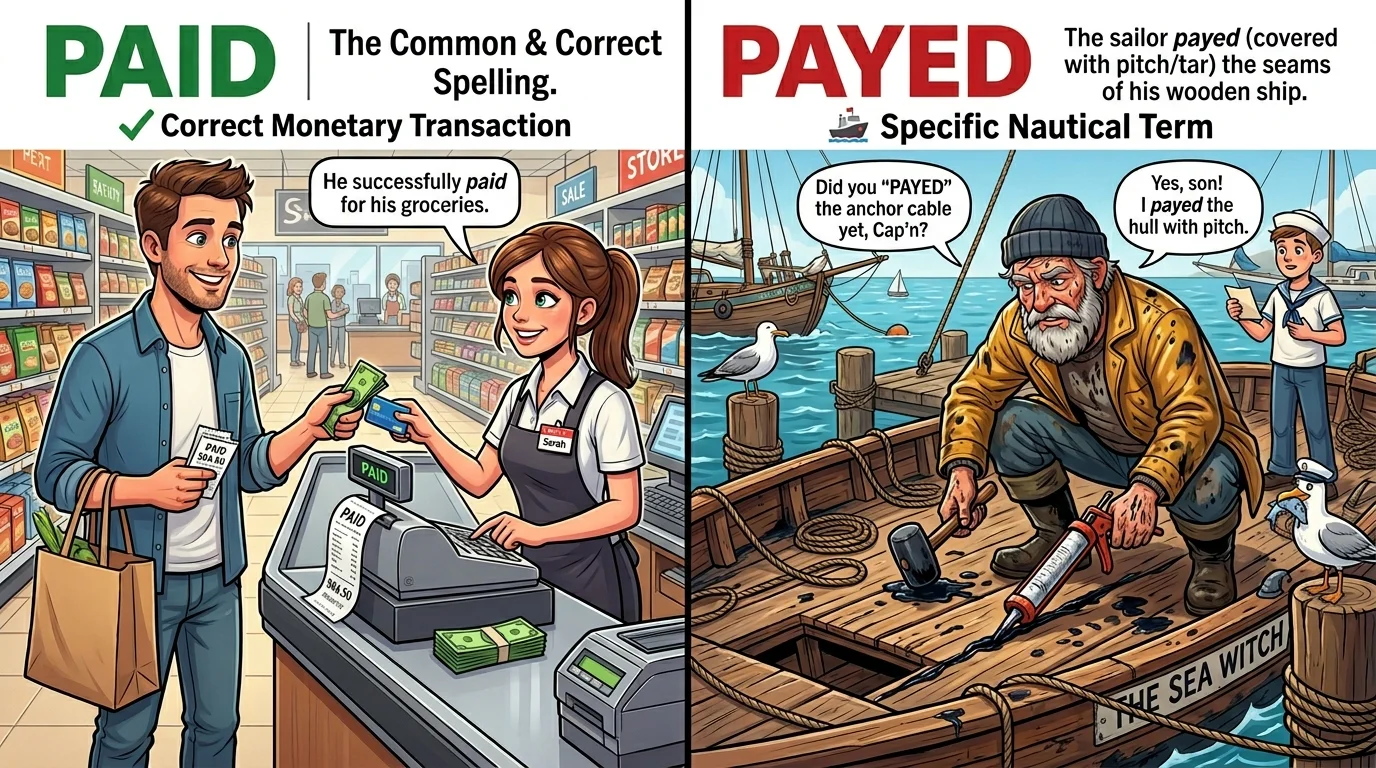
Paid is the correct past tense and past participle of the verb pay in almost every situation.
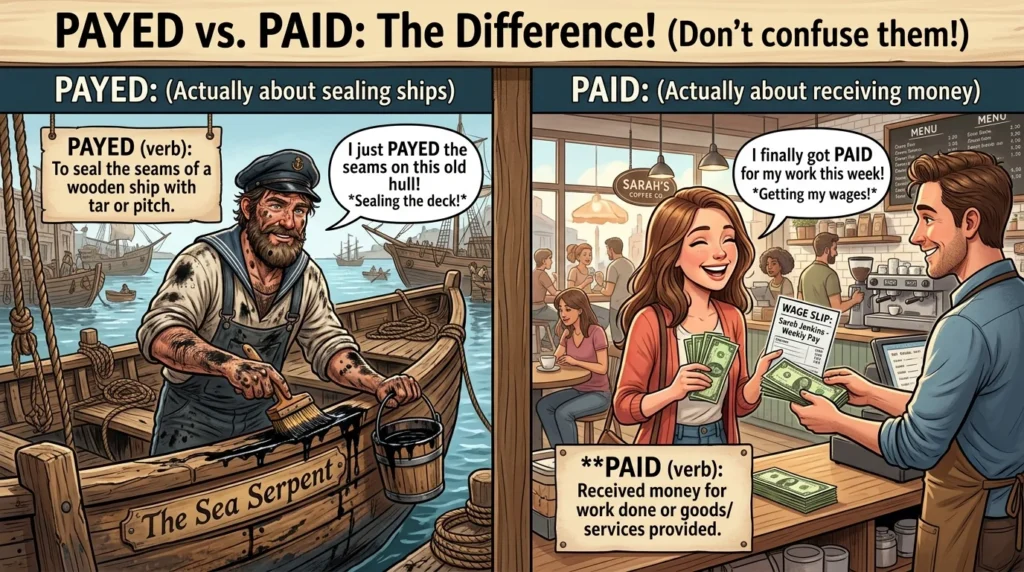
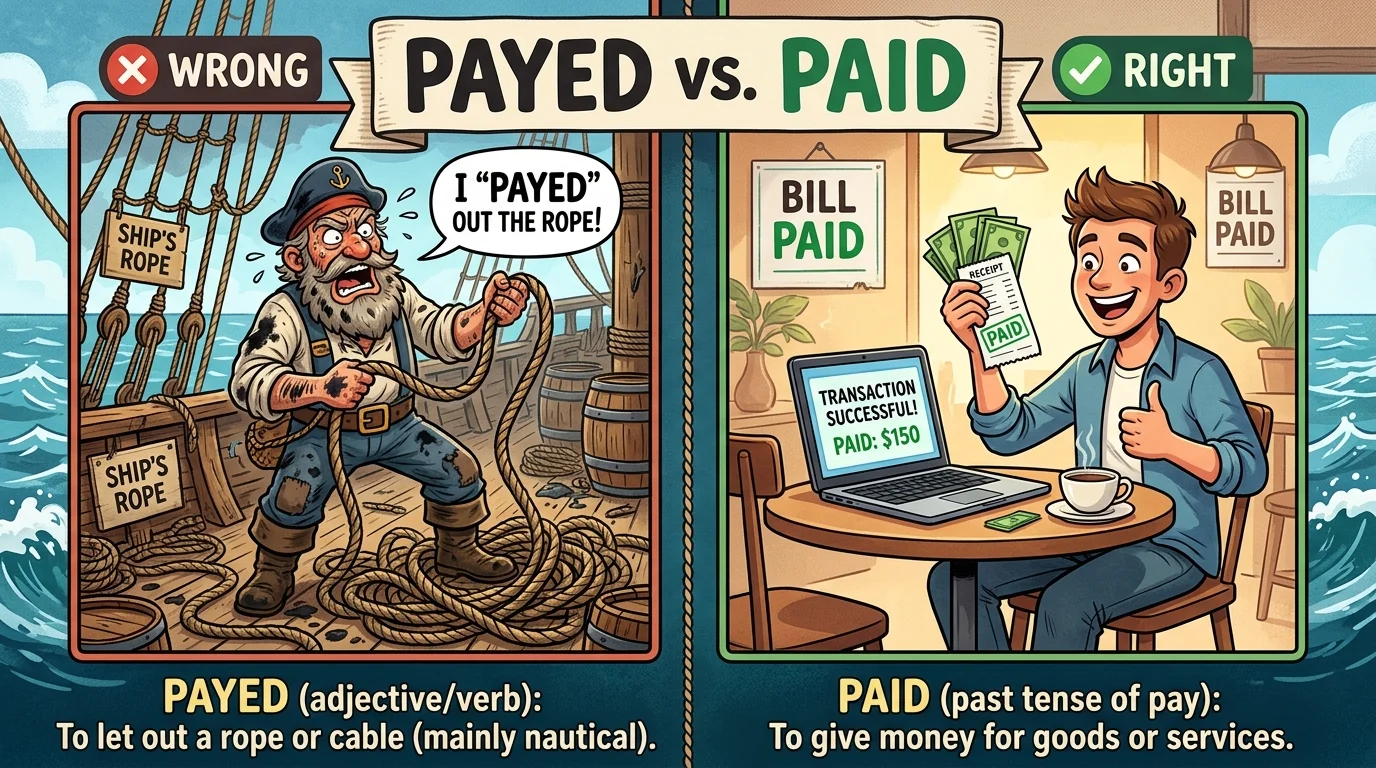
Payed is a rare word used mainly in nautical contexts, where it means to let out rope, chain, or cable or to seal a wooden ship with tar or pitch.
Examples:
- I paid the electricity bill yesterday.
- The sailors payed out the anchor chain.
For money and everyday situations, use paid, not payed.
What Does Paid Mean?
Paid is the standard past tense and past participle of the verb pay.
Definition
Paid means:
- Gave money for something
- Received money for work or services
- Settled a debt or obligation
- Suffered a consequence
Usage Rules
Use paid when discussing:
- Bills and expenses
- Salaries and wages
- Purchases
- Debts and obligations
- Figurative consequences
Examples of Paid
- She paid for dinner.
- They paid their taxes on time.
- The company paid its employees early.
- He paid dearly for his mistake.
Key Insight
Whenever money, payment, compensation, or consequences are involved, paid is almost always the correct word.
What Does Payed Mean?
Payed is a legitimate word, but it has a highly specialized meaning.
Definition
Payed means:
- Letting out rope, chain, or cable gradually
- Coating a wooden ship with tar, pitch, or waterproof material
Usage Rules
Use payed only in specialized contexts such as:
- Sailing
- Maritime operations
- Historical shipbuilding
Examples of Payed
- The crew payed out the anchor chain.
- The sailors carefully payed out the rope.
- The workers payed the seams of the wooden vessel with tar.
Key Insight
Unless you’re writing about ships, ropes, anchors, or maritime activities, you almost certainly want paid, not payed.
Payed vs Paid: Key Differences
Although both words come from the verb pay, their meanings and uses are entirely different.
Quick Differences
- Paid is the standard past tense of pay.
- Payed is a rare nautical term.
- Paid relates to money, compensation, and obligations.
- Payed relates to ropes, cables, and ships.
| Feature | Payed | Paid |
|---|---|---|
| Correct for Money? | No | Yes |
| Main Meaning | Let out rope or seal ships | Gave money or settled an obligation |
| Usage Frequency | Very rare | Extremely common |
| Context | Nautical and maritime | Everyday English |
| Example | The sailors payed out the rope. | She paid the rent. |
Real-World Usage Examples
Example 1
Incorrect: I payed my rent yesterday.
Correct: I paid my rent yesterday.
🎯 Lesson: Financial transactions require paid.
Example 2
Incorrect: The company payed all its employees.
Correct: The company paid all its employees.
🎯 Lesson: Salaries and compensation use paid.
Example 3
Captain: Lower the anchor slowly.
Crew Member: We have payed out enough chain.
🎯 Lesson: Maritime activities can correctly use payed.
Example 4
Friend: Did you buy the concert tickets?
You: Yes, I paid for them online.
🎯 Lesson: Everyday purchases always use paid.
Common Mistakes
Mistake 1: Assuming Payed Is the Regular Past Tense
Incorrect:
- I payed for lunch.
Correct:
- I paid for lunch.
Why it happens: Many English verbs form the past tense by adding -ed, but pay is an irregular verb.
Mistake 2: Using Payed in Business Writing
Incorrect:
- The customer payed the invoice.
Correct:
- The customer paid the invoice.
Why it happens: Spell-checkers may not always explain the difference because payed is technically a real word.
Mistake 3: Thinking Payed Is Always Wrong
Incorrect:
- The sailors paid out the rope.
Correct:
- The sailors payed out the rope.
Why it happens: Most people are unaware of the specialized nautical meaning of payed.
Memory Tricks
Trick 1
Money has “ai” in paid because you pay to gain something.
Think:
Paid = bills, purchases, salaries, and expenses.
Trick 2
Payed = P for Port and P for Pirates.
Associate payed with ships, anchors, ropes, and sailing.
Trick 3
Remember this sentence:
You paid your bills, but sailors payed out the rope.
Expert Insights
English contains several irregular verbs whose past tense forms do not follow the standard -ed pattern. The verb pay developed the irregular form paid, which became the accepted standard for financial and everyday usage.
The form payed survived only in maritime language. Historically, sailors used the term when releasing rope or waterproofing wooden vessels with tar or pitch.
Because the nautical meaning is rare, many writers incorrectly assume payed is simply another acceptable spelling of paid. In modern English, however, paid is the correct choice in nearly every situation.