
Quick Answer
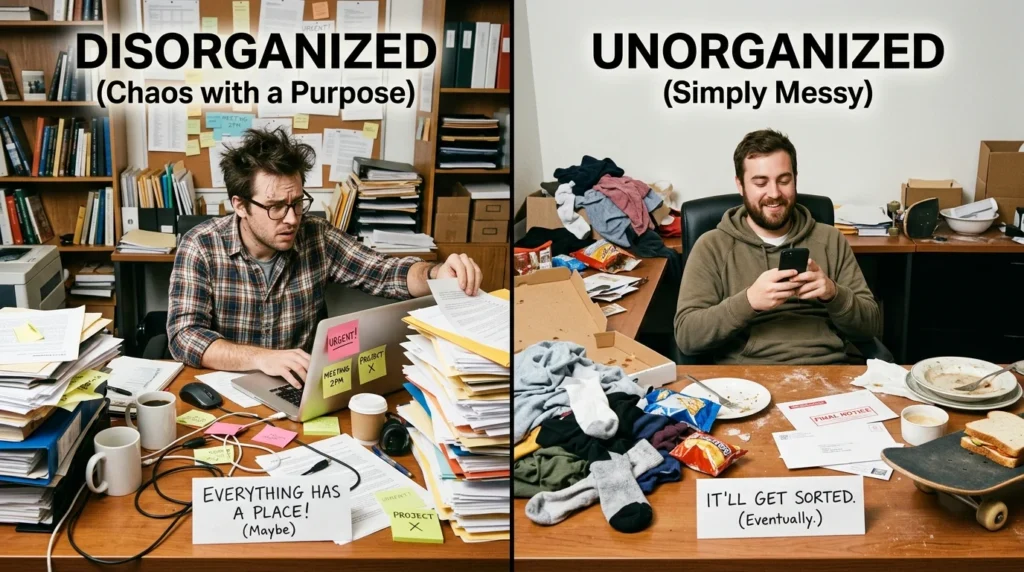
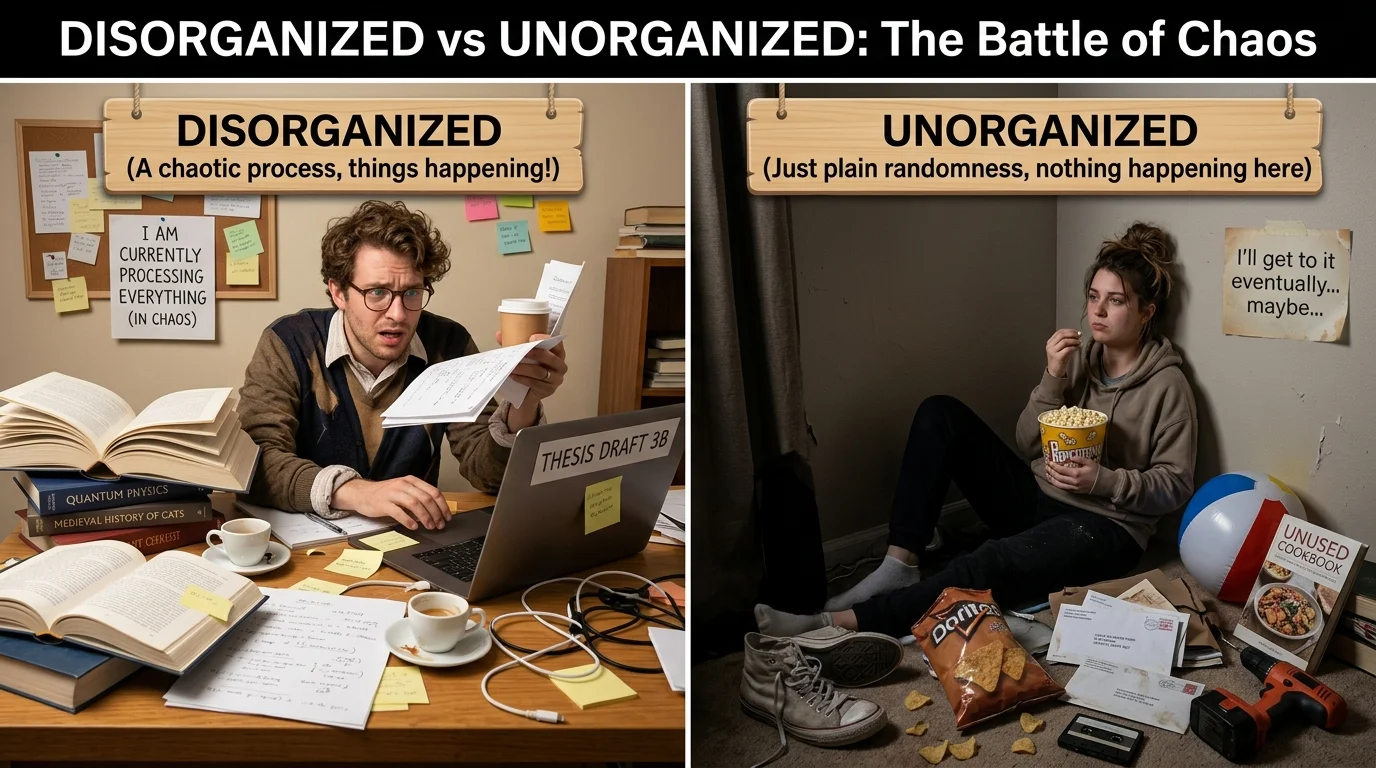
Disorganized means messy, chaotic, or lacking order and structure.
Unorganized means not organized yet or not formally arranged or structured.
Examples:
- My desk is completely disorganized.
- The volunteers were still unorganized when the event planning began.
A simple rule is:
- Disorganized = Messy or chaotic
- Unorganized = Not yet organized
What Does Disorganized Mean?
Disorganized is an adjective that describes something lacking order, structure, or efficiency.
Definition
Disorganized means:
- Messy and chaotic
- Poorly arranged
- Lacking structure
- Inefficient or confused
Usage Rules
Use disorganized when discussing:
- Messy rooms or workspaces
- Chaotic plans and schedules
- Poor management and systems
- Confused thinking or behavior
Examples of Disorganized
- His office is extremely disorganized.
- The meeting became disorganized after the manager left.
- She felt disorganized and overwhelmed by her workload.
- The company’s filing system is completely disorganized.
Key Insight
Disorganized usually suggests that order existed or should exist, but it is absent or has broken down.
What Does Unorganized Mean?
Unorganized is an adjective meaning not organized, not yet arranged, or not formally structured.
Definition
Unorganized means:
- Not yet arranged
- Not formally established
- Lacking official organization
- Not systematically planned
Usage Rules
Use unorganized when discussing:
- Groups that have not formed structures
- Activities that have not been arranged
- Areas without formal systems
- Situations that are simply not organized yet
Examples of Unorganized
- The volunteers remained unorganized during the early stages of planning.
- The committee is still unorganized.
- Some rural markets operate in an unorganized sector.
- The notes are unorganized because I haven’t sorted them yet.
Key Insight
Unorganized often implies an absence of organization rather than chaos or disorder.
Disorganized vs Unorganized: Key Differences
Although both words involve a lack of organization, their meanings and tones differ.
Quick Differences
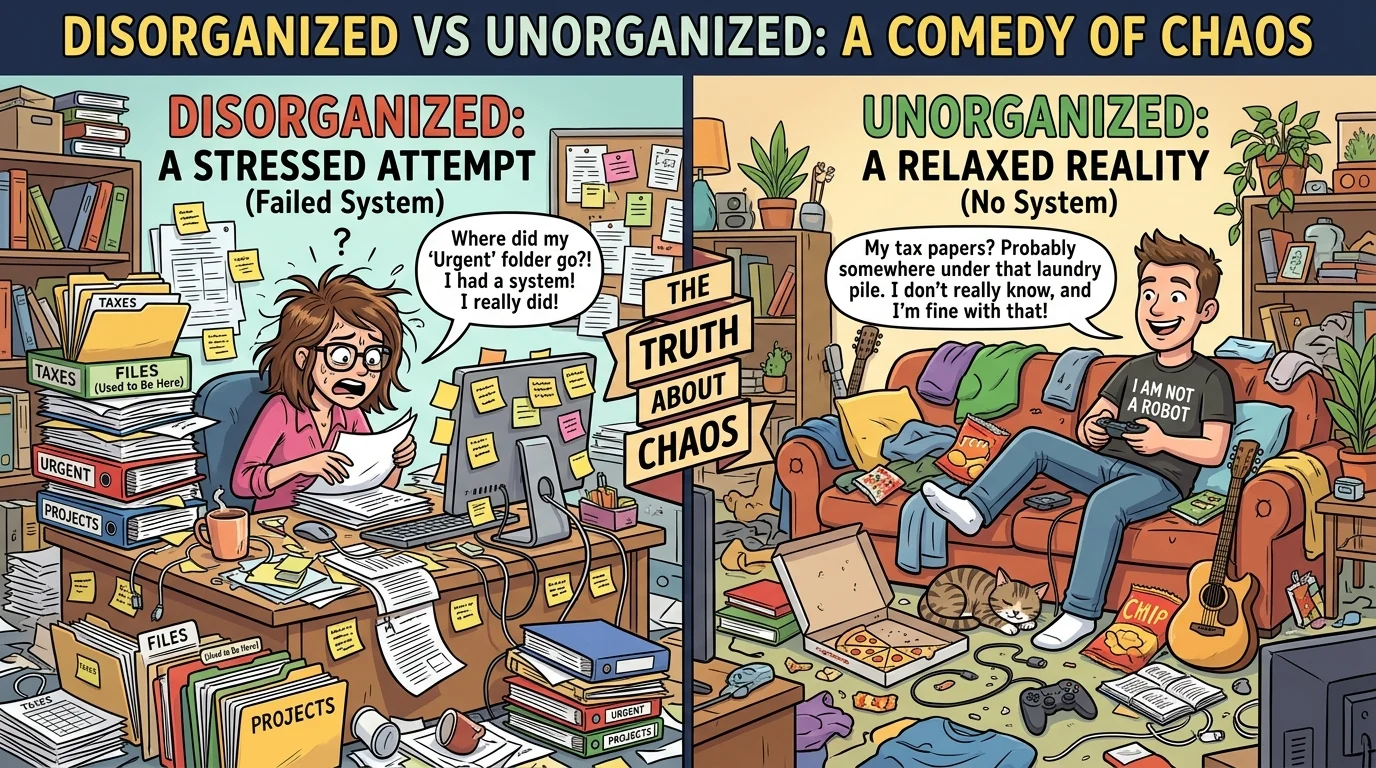
- Disorganized means messy or chaotic.
- Unorganized means not yet organized or not formally structured.
- Disorganized often carries a negative tone.
- Unorganized is generally more neutral.
| Feature | Disorganized | Unorganized |
|---|---|---|
| Main Meaning | Messy and chaotic | Not organized yet |
| Tone | Negative | Usually neutral |
| Focus | Disorder and confusion | Absence of structure |
| Common Context | Rooms, plans, management | Groups, systems, sectors |
| Example | The office is disorganized. | The committee is unorganized. |
Real-World Usage Examples
Example 1
Incorrect: My desk is unorganized and papers are everywhere.
Better: My desk is disorganized and papers are everywhere.
🎯 Lesson: A messy and chaotic situation usually requires disorganized.
Example 2
Incorrect: The volunteer group is disorganized because it hasn’t been officially formed yet.
Better: The volunteer group is unorganized because it hasn’t been officially formed yet.
🎯 Lesson: A group that has not been structured yet is generally unorganized.
Example 3
Friend: Why can’t you find your documents?
You: My files are completely disorganized.
🎯 Lesson: Disorder and confusion require disorganized.
Example 4
Friend: Has the club elected officers yet?
You: No, it’s still unorganized.
🎯 Lesson: Something not formally arranged is unorganized.
Common Mistakes
Mistake 1: Using Unorganized for Chaos
Incorrect:
- The classroom was unorganized, with books scattered everywhere.
Better:
- The classroom was disorganized, with books scattered everywhere.
Why it happens: Both words involve a lack of organization, making the distinction easy to overlook.
Mistake 2: Using Disorganized for Something Not Yet Established
Incorrect:
- The association is disorganized because it has not officially formed.
Better:
- The association is unorganized because it has not officially formed.
Why it happens: Writers focus on the absence of organization rather than whether chaos actually exists.
Mistake 3: Assuming the Words Are Completely Interchangeable
Incorrect assumption:
- Disorganized and unorganized always mean exactly the same thing.
Correct:
- Their meanings overlap, but they often carry different shades of meaning.
Why it happens: Dictionaries sometimes define both as lacking organization, but actual usage is more nuanced.
Memory Tricks
Trick 1
Disorganized = Disorder
Both words start with dis-.
Think:
Disorganized = Disorder and chaos.
Trick 2
Unorganized = Not Yet Organized
Think:
Unorganized = Organization hasn’t happened yet.
Trick 3
Remember this sentence:
The newly formed club was unorganized, and eventually it became disorganized after poor management.
Expert Insights
The prefixes dis- and un- contribute to the subtle difference between these words.
- Dis- often suggests disruption, reversal, or disorder.
- Un- generally means simply “not.”
As a result:
- Disorganized implies confusion, messiness, or broken organization.
- Unorganized often means that organization does not yet exist or has not been established.
In modern English, the words occasionally overlap, and some dictionaries treat them as near synonyms. However, skilled writers often preserve the distinction because it adds precision and clarity.