

Quick Answer
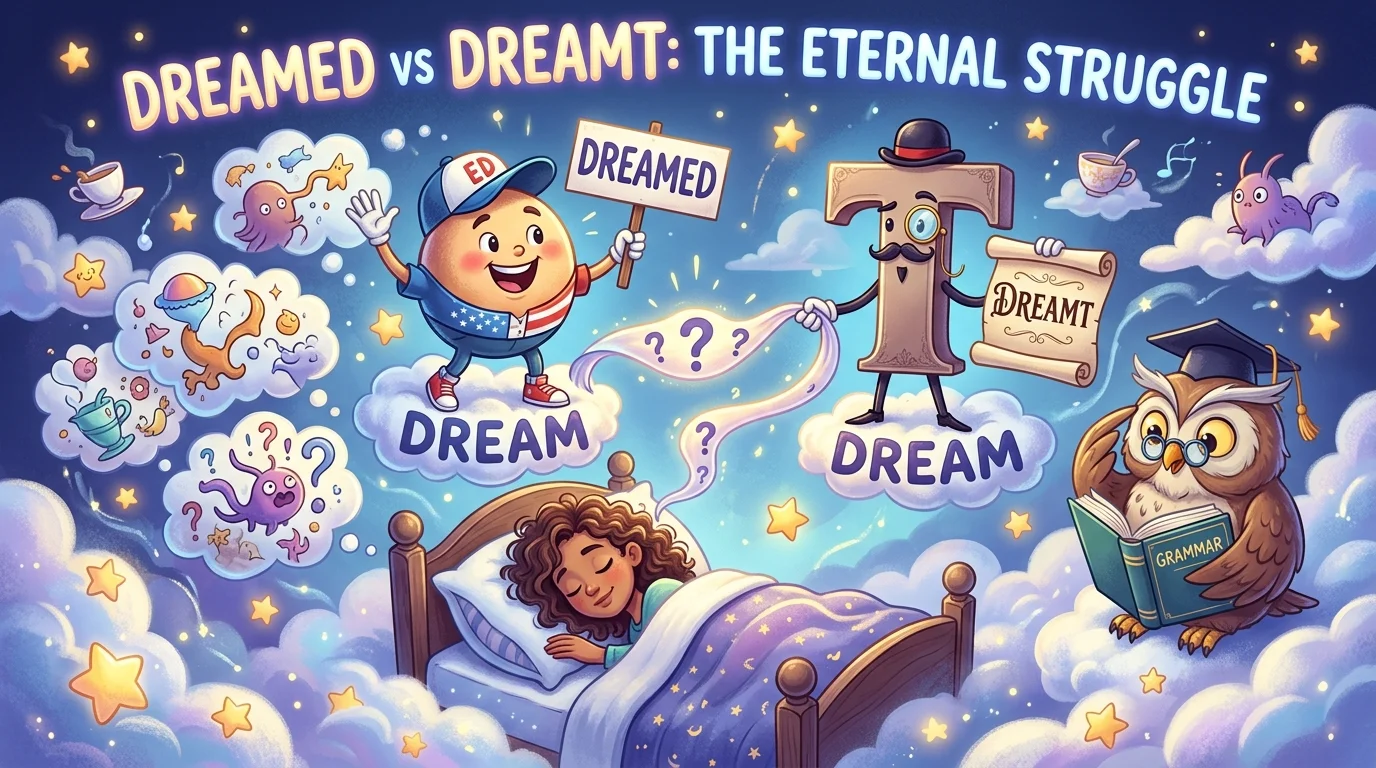
Dreamed and dreamt are both correct past tense and past participle forms of the verb dream.
- Dreamed is more common in American English.
- Dreamt is more common in British English.
- Both words mean that someone experienced dreams while sleeping or imagined something.
Example:
- I dreamed about visiting Paris.
- I dreamt about visiting Paris.
Both sentences are correct.
What Does Dreamed Mean?
Dreamed is the regular past tense and past participle form of the verb dream. It follows the standard English pattern of adding -ed to a verb.
Definition
Dreamed means:
- Experienced images or thoughts while sleeping
- Imagined or hoped for something
- Thought deeply about a goal or possibility
Usage Rules
You can use dreamed in both formal and informal writing. It is especially preferred in:
- American English
- Academic writing
- Business communication
- Professional documents
Examples of Dreamed
- I dreamed about my childhood home.
- She dreamed of becoming a doctor.
- We dreamed that we were flying over the mountains.
Key Insight
If you’re writing primarily for an American audience, dreamed is usually the safer and more natural choice.
What Does Dreamt Mean?
Dreamt is an irregular past tense and past participle form of dream.
Definition
Like dreamed, dreamt means:
- Having dreams while sleeping
- Imagining future possibilities
- Desiring or wishing for something
Usage Rules
Dreamt is commonly used in:
- British English
- Australian English
- Irish English
- Literary and creative writing
Examples of Dreamt
- I dreamt of exploring ancient castles.
- She dreamt about her grandmother.
- They dreamt that they won the championship.
Key Insight
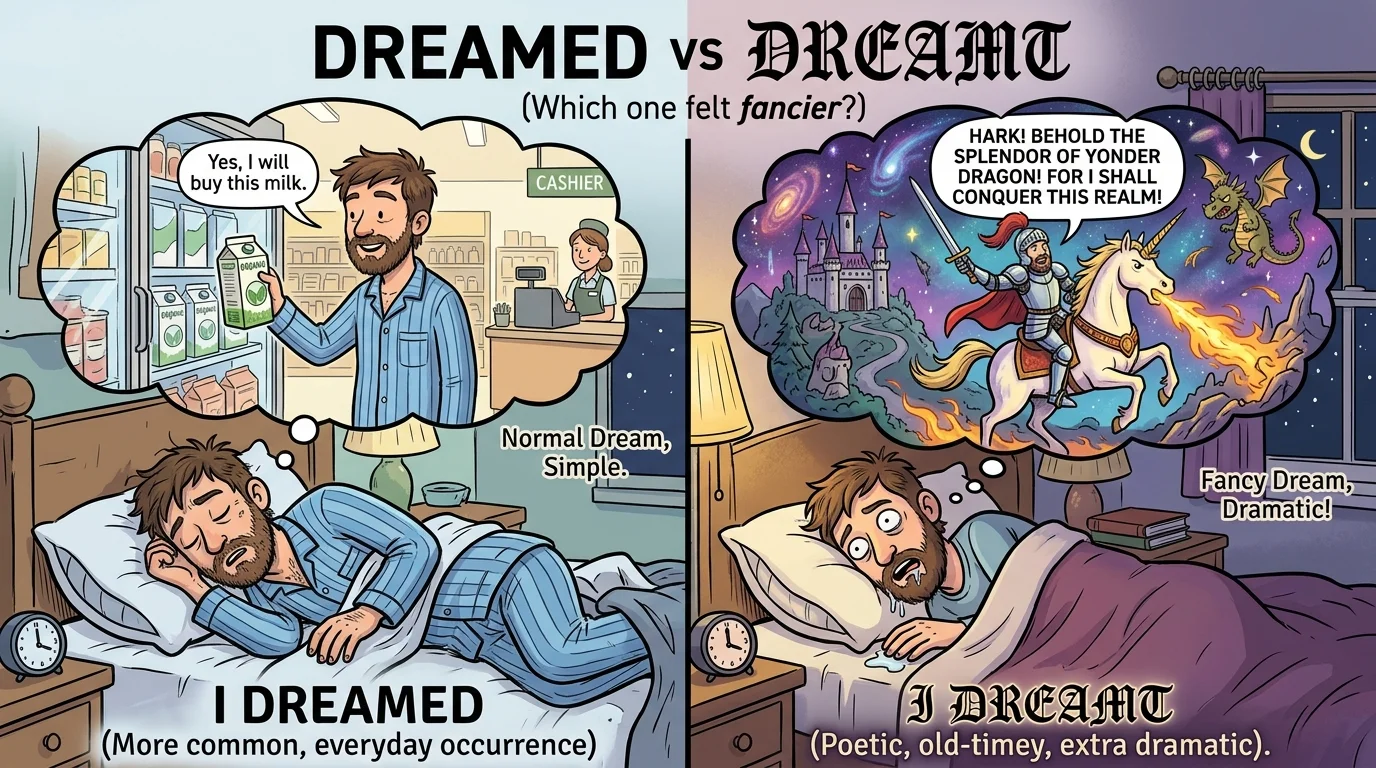
Many writers prefer dreamt because it sounds more poetic and traditional.
Dreamed vs Dreamt: Key Differences
Although both words have the same meaning, they differ in style and regional preference.
Quick Differences
- Meaning: Identical
- Grammar: Both are correct past forms of dream
- American English: Usually uses dreamed
- British English: Often uses dreamt
- Tone: Dreamt can sound slightly more literary
| Feature | Dreamed | Dreamt |
|---|---|---|
| Meaning | Past form of dream | Past form of dream |
| Correctness | Correct | Correct |
| American English | Preferred | Less common |
| British English | Accepted | Preferred |
| Tone | Modern and neutral | Traditional and literary |
| Example | I dreamed of success. | I dreamt of success. |
Real-World Usage Examples
Example 1
Incorrect: I dreamt about winning the lottery in my American English essay.
Correct: I dreamed about winning the lottery.
🎯 Lesson: Use dreamed when writing for an American audience.
Example 2
Incorrect: I dreamed of dragons in my British novel.
Correct: I dreamt of dragons.
🎯 Lesson: In British and literary contexts, dreamt often sounds more natural.
Example 3
Friend: Did you dream anything last night?
You: Yes, I dreamed that I was on a beach.
🎯 Lesson: Everyday American conversations commonly use dreamed.
Example 4
Friend: Did you have any strange dreams?
You: I dreamt that I could fly.
🎯 Lesson: British speakers frequently prefer dreamt.
Common Mistakes
Mistake 1: Thinking One Is Wrong
Many people believe only one form is correct.
Correction: Both dreamed and dreamt are grammatically correct.
Mistake 2: Mixing Regional Styles
Using dreamt in a piece intended entirely for an American audience can sometimes sound unusual.
Correction: Maintain consistency based on your audience.
Mistake 3: Assuming Different Meanings
Some learners think dreamed and dreamt mean different things.
Correction: They have exactly the same meaning.
Why This Happens
English contains many verbs that have both regular and irregular past forms, creating confusion among writers and learners.
Memory Tricks
Trick 1
Dreamed = -ed ending = standard American preference.
Trick 2
Dreamt = sounds older and more literary = often British.
Trick 3
Remember this phrase:
Americans usually dreamed. Britons often dreamt.
Expert Insights
The verb dream belongs to a group of English verbs that allow both regular and irregular past forms.
Similar examples include:
- Learned and learnt
- Burned and burnt
- Spoiled and spoilt
Over time, American English generally favored regular -ed endings, while British English preserved many traditional forms ending in -t.
This is why dreamed dominates in American publications, whereas dreamt remains widely used in British writing and literature.