

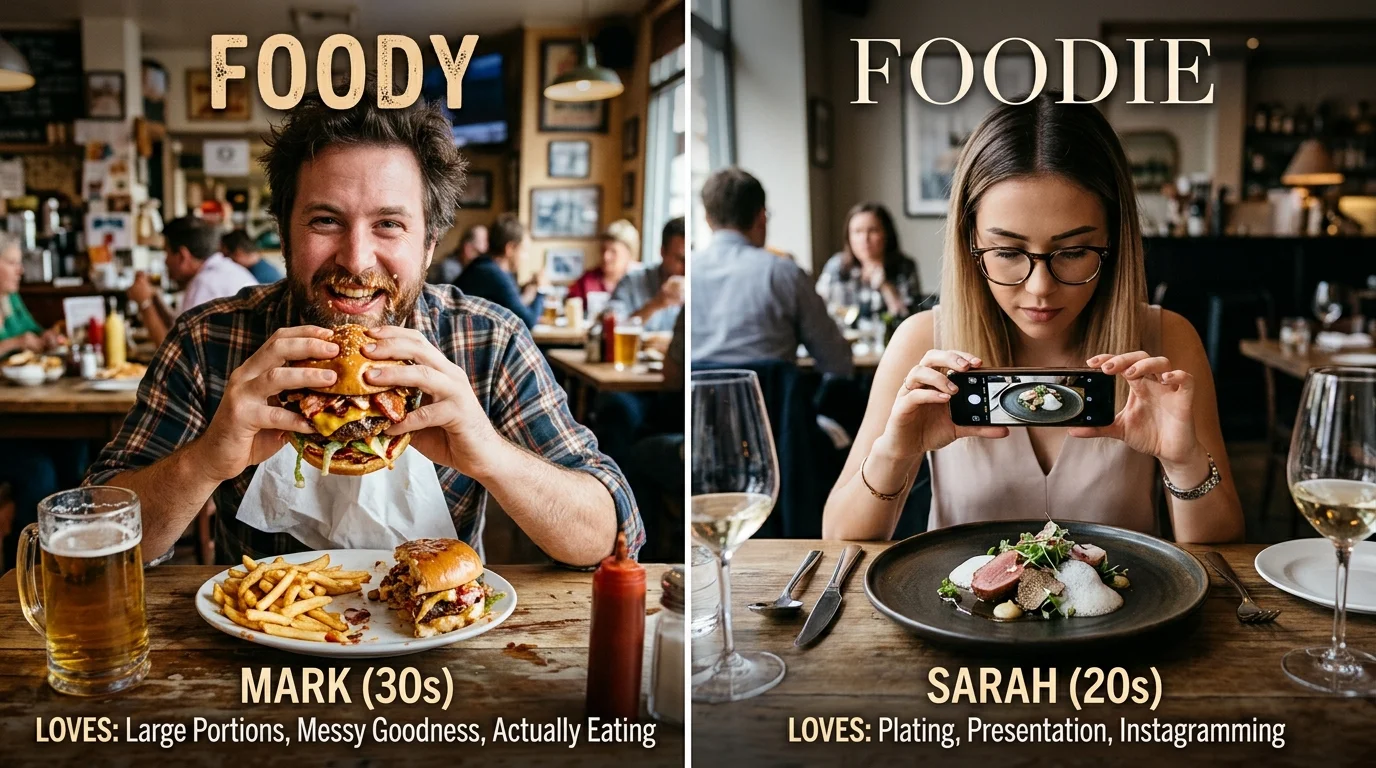
Quick Answer Section
Foodie is the standard and widely accepted word for someone who has a strong interest in food and enjoys exploring different dishes and culinary experiences.
Foody is an uncommon spelling and is usually considered a variant or misspelling of foodie. In most situations, you should use foodie.
Deep Explanation: Foody
Definition
Foody is an alternative spelling of foodie. However, it is far less common and is generally not preferred in modern English.
Usage Rules
- Appears occasionally in informal writing.
- Sometimes used as a personal stylistic choice.
- Rarely found in dictionaries or professional publications.
- May be considered incorrect by some readers.
Context
The word foody sometimes appears on blogs, usernames, social media profiles, and business names. However, it lacks the widespread acceptance of foodie.
Examples
- She describes herself as a foody on her travel blog.
- The restaurant attracts every local foody in town.
- His Instagram bio says he’s a passionate foody.
Key Insight
While readers usually understand the meaning of foody, using it in formal or professional writing can appear unconventional.
Deep Explanation: Foodie
Definition
A foodie is a person who has a keen interest in food, cooking, dining experiences, and discovering new cuisines.
Usage Rules
- Widely accepted in modern English.
- Used in dictionaries, magazines, and news articles.
- Appropriate in both casual and professional contexts.
- Recognized internationally.
Context
A foodie enjoys more than simply eating. The term often refers to someone who appreciates culinary culture, ingredients, restaurants, and unique food experiences.
Examples
- She’s a true foodie who travels to try regional dishes.
- Every foodie should visit the city’s famous food market.
- He became a foodie after learning to cook international recipes.
Key Insight
Foodie is the standard term and the safest choice for almost every writing situation.
SERP-DOMINATING COMPARISON SECTION
Key Differences
- Meaning: Both refer to someone who loves food.
- Acceptance: Foodie is standard; foody is not.
- Usage: Foodie appears in mainstream English; foody appears rarely.
- Context: Foodie works in formal and informal settings; foody is mostly informal.
- Common Mistake: People sometimes assume both spellings are equally correct.
| Feature | Foody | Foodie |
|---|---|---|
| Meaning | Person who loves food | Person who loves food |
| Usage | Uncommon variant | Standard English term |
| Acceptance | Limited | Widely accepted |
| Context | Mainly informal | Formal and informal |
| Example | She is a foody. | She is a foodie. |
Real-World Usage Scenarios
Example 1
Person A: My sister is a huge foody.
Person B: Most people would say she’s a huge foodie.
🎯 Lesson: Foodie is the preferred spelling.
Example 2
Person A: Are you a foodie?
Person B: Absolutely. I love trying dishes from different cultures.
🎯 Lesson: Foodie naturally describes someone passionate about food.
Example 3
Person A: I’m creating a food blog called “The Traveling Foody.”
Person B: That’s fine for branding, but foodie is the standard word.
🎯 Lesson: Creative names can use foody, but standard English favors foodie.
Example 4
Person A: Is he just a picky eater?
Person B: No, he’s a foodie who enjoys exploring culinary experiences.
🎯 Lesson: A foodie appreciates food culture and discovery.
Common Mistakes
Mistake 1: Assuming Both Spellings Are Equally Standard
Incorrect assumption: Foody and foodie are interchangeable.
Correction: Use foodie in most writing situations.
Mistake 2: Using Foody in Professional Writing
Example:
“Our magazine targets foodies.” ✔️
“Our magazine targets foodys.” ❌
Why It Happens
People often create foody by adding the suffix -y to food. However, English adopted foodie as the accepted form.
Memory Tricks
Trick 1
Foodie contains “ie,” just like “cookie” and “selfie.”
These words feel friendly and informal, which matches the personality of a food enthusiast.
Trick 2
Remember this sentence:
If you love food, you’re a foodie, not a foody.
Trick 3
When in doubt, choose foodie because it is the spelling most readers expect to see.
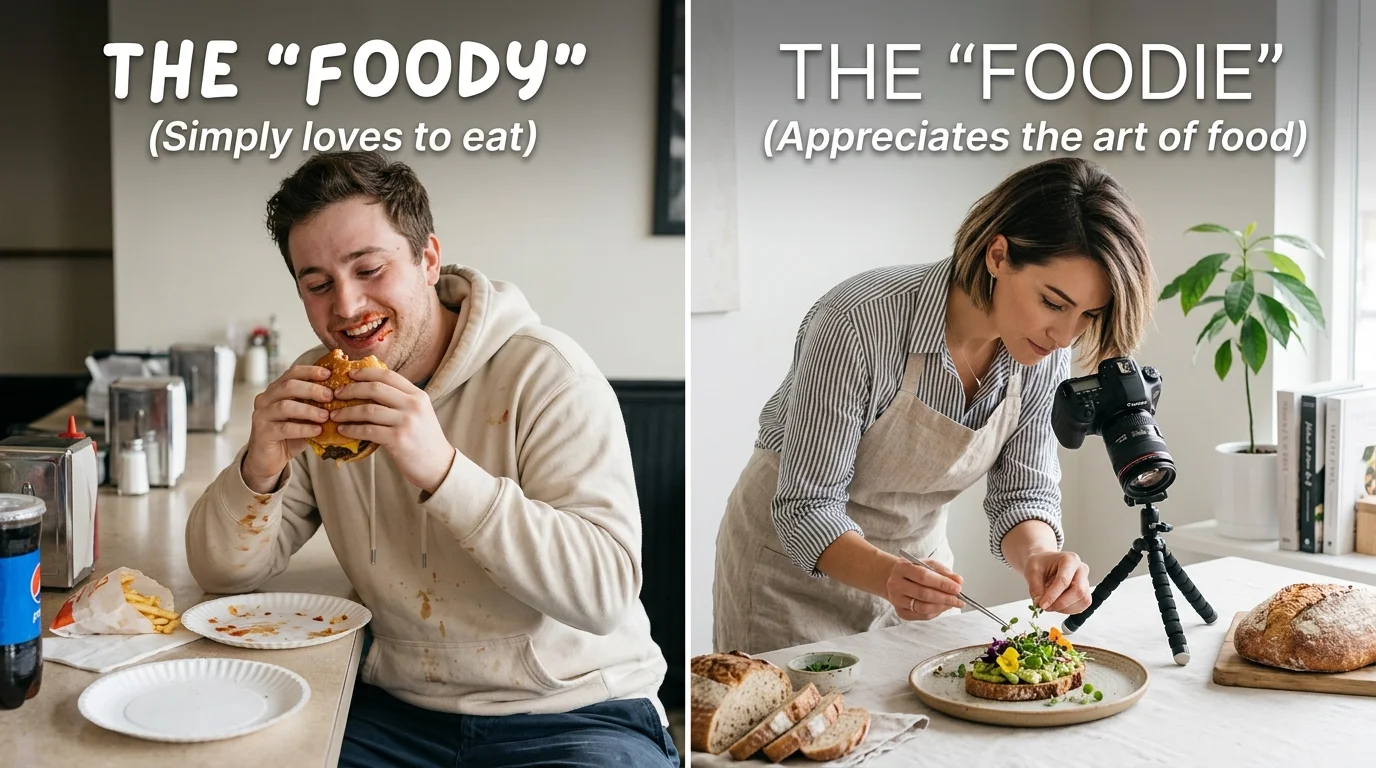
Expert Insight Section
The word foodie emerged in the late twentieth century as food culture became increasingly popular. It evolved into a widely recognized term describing people who actively seek new culinary experiences.
Although foody occasionally appears online and in branding, language usage trends overwhelmingly favor foodie. Modern dictionaries, publications, and style guides generally recognize foodie as the standard spelling.
From an English usage perspective, foodie has become the accepted lexical form, while foody remains a rare variant with limited usage.