
Quick Answer
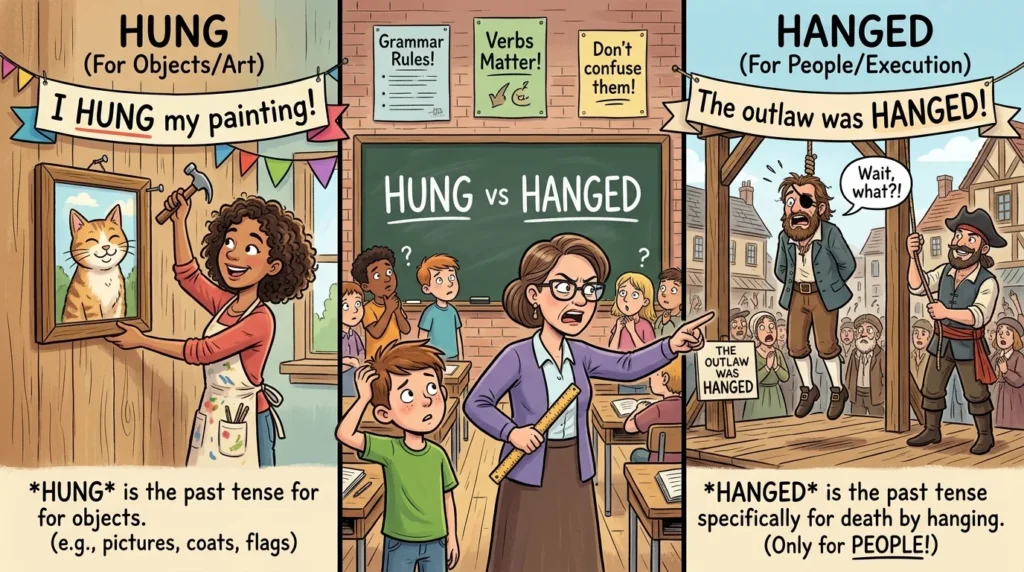
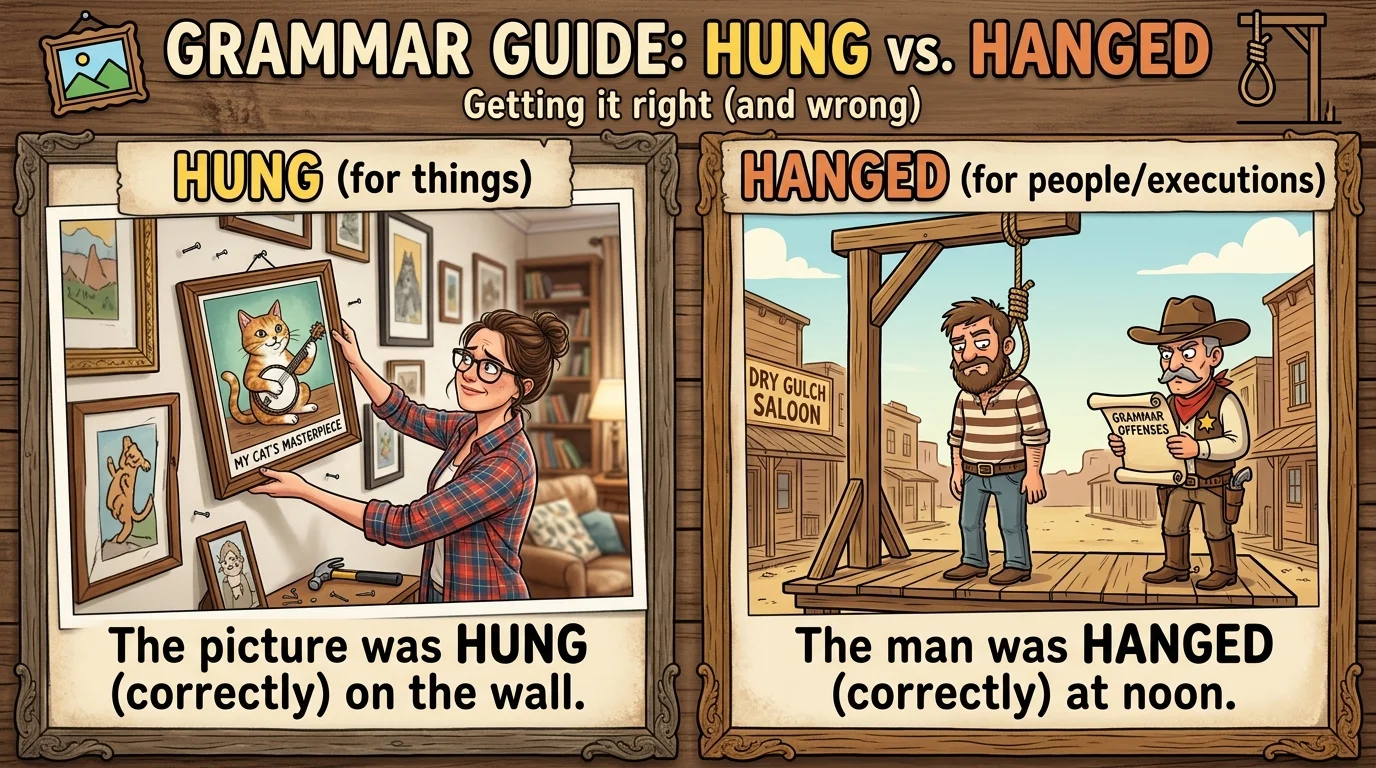
Hung is the standard past tense and past participle of hang for most situations, including pictures, clothes, decorations, and objects.
Hanged is used specifically when referring to a person being executed by hanging.
Simple rule: If it’s an object, use hung. If it’s an execution, use hanged.
What Does Hung Mean?
Definition
Hung is the usual past tense and past participle of the verb hang, meaning to suspend or attach something from above.
Usage Rules
Use hung when talking about:
- Hanging pictures or artwork
- Hanging clothes
- Decorating rooms
- Suspending objects
- Objects being attached from above
Real Examples
- She hung a beautiful painting on the wall.
- I hung my jacket in the closet.
- They hung lights around the garden.
- The flag was hung above the entrance.
- He hung the mirror in the living room.
Key Insights
The word hung commonly appears in:
- Home decoration
- Interior design
- Fashion and clothing
- Everyday conversations
- Literature and storytelling
Key idea: If something is suspended or attached, hung is almost always the correct choice.
What Does Hanged Mean?
Definition
Hanged is the past tense and past participle of hang used specifically for execution by hanging.
Usage Rules
Use hanged only when:
- Referring to capital punishment
- Describing historical executions
- Discussing legal or historical events involving execution by hanging
Real Examples
- The criminal was hanged for treason.
- Several prisoners were hanged during that period of history.
- The historical records state that he was hanged in the eighteenth century.
- The novel describes a man who was hanged after his trial.
Key Insights
The word hanged commonly appears in:
- History books
- Legal discussions
- Historical fiction
- Crime and justice topics
- Academic writing
Key idea: Hanged is reserved for executions involving hanging.
Hung vs Hanged: Key Differences
Comparison Table
| Feature | Hung | Hanged |
|---|---|---|
| Meaning | Suspended or attached from above | Executed by hanging |
| Usage | Objects, decorations, clothing, pictures | People executed by hanging |
| Context | Everyday English | Historical and legal contexts |
| Frequency | Very common | Relatively rare |
| Example | She hung the painting on the wall. | The prisoner was hanged. |
Quick Differences
- Hung = suspended objects.
- Hanged = execution by hanging.
- Hung is used in everyday situations.
- Hanged is used mainly in historical or legal contexts.
- The words are not interchangeable.
Real-World Usage Scenarios
Example 1
Incorrect:
“He hanged his coat in the closet.”
Correct:
“He hung his coat in the closet.”
🎯 Lesson: Clothing and objects are hung, not hanged.
Example 2
Incorrect:
“The prisoner was hung for treason.”
Correct:
“The prisoner was hanged for treason.”
🎯 Lesson: Executions require hanged.
Example 3
Mother:
“I hung the family photographs yesterday.”
🎯 Lesson: Pictures and decorations use hung.
Example 4
Historian:
“The accused man was hanged in 1750.”
🎯 Lesson: Historical executions use hanged.
Example 5
Friend:
“I hung my backpack by the door.”
🎯 Lesson: Everyday objects use hung.
Common Mistakes People Make
Mistake 1: Using Hanged for Objects
Incorrect:
“She hanged the picture above the fireplace.”
Correct:
“She hung the picture above the fireplace.”
Why It Happens
People assume all past forms of hang follow the same rule.
Mistake 2: Using Hung for Executions
Incorrect:
“The criminal was hung.”
Correct:
“The criminal was hanged.”
Why It Happens
Because hung is much more common in everyday English, people often use it automatically.
Mistake 3: Thinking Hanged Is Incorrect
Incorrect:
“Hanged isn’t a real word.”
Correct:
Hanged is a legitimate English word with a specific legal and historical meaning.
Why It Happens
Many people rarely encounter discussions of historical executions.
Memory Tricks to Remember the Difference
Trick 1
Hung = Household Objects
Think:
Pictures, coats, and decorations are hung.
Trick 2
Hanged = Human Execution
Think:
Hanged has extra letters because it refers to a serious and specific event involving people.
Trick 3
Remember this phrase:
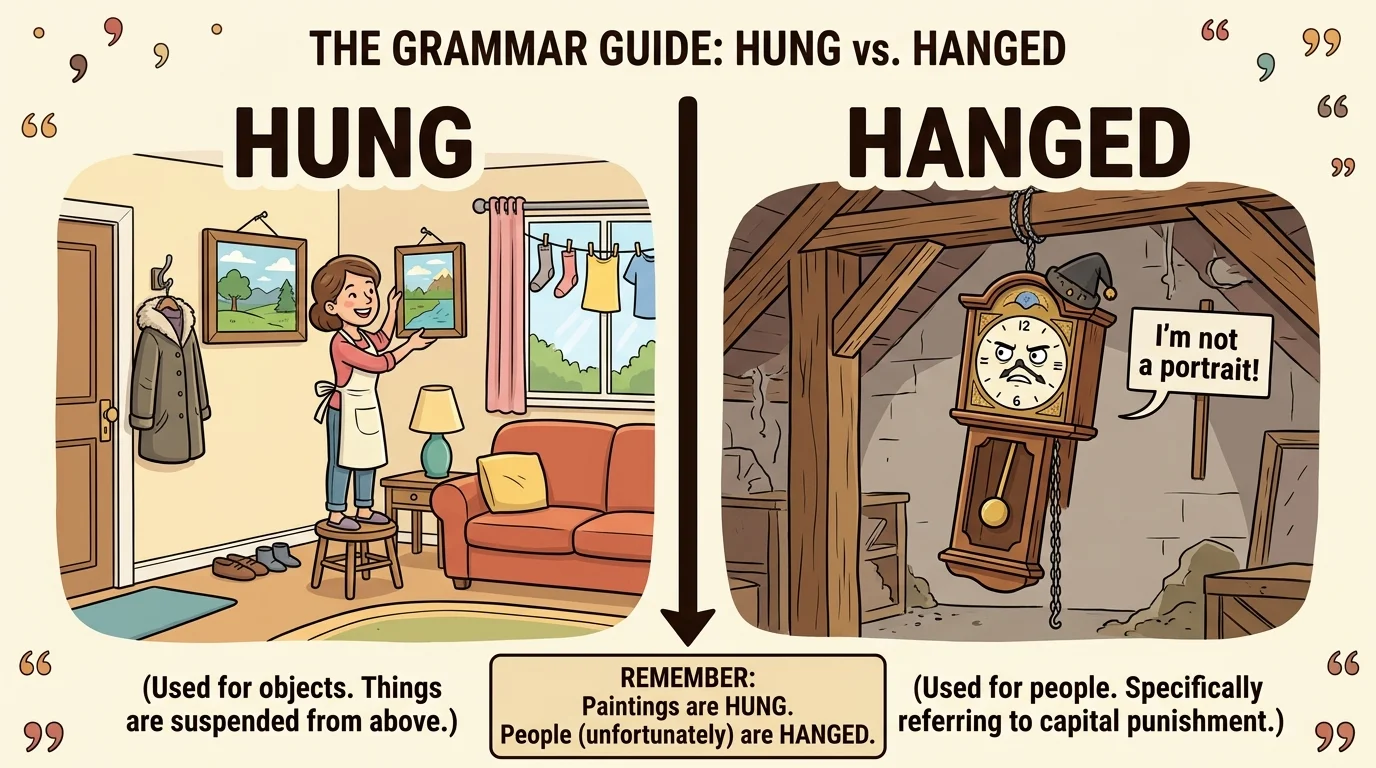
Objects are hung. People executed by hanging are hanged.
Expert Insight: Why Hung and Hanged Are Commonly Confused
Historically, English used both hung and hanged more broadly. Over time, however, usage became specialized.
Modern English reserves hanged almost exclusively for executions by hanging. In nearly every other situation, hung is considered the correct form.
This distinction has become a widely accepted grammatical convention and is followed by major dictionaries, style guides, and professional writers.
Understanding the context immediately solves the confusion:
- Objects and decorations → hung
- Execution by hanging → hanged