
Quick Answer
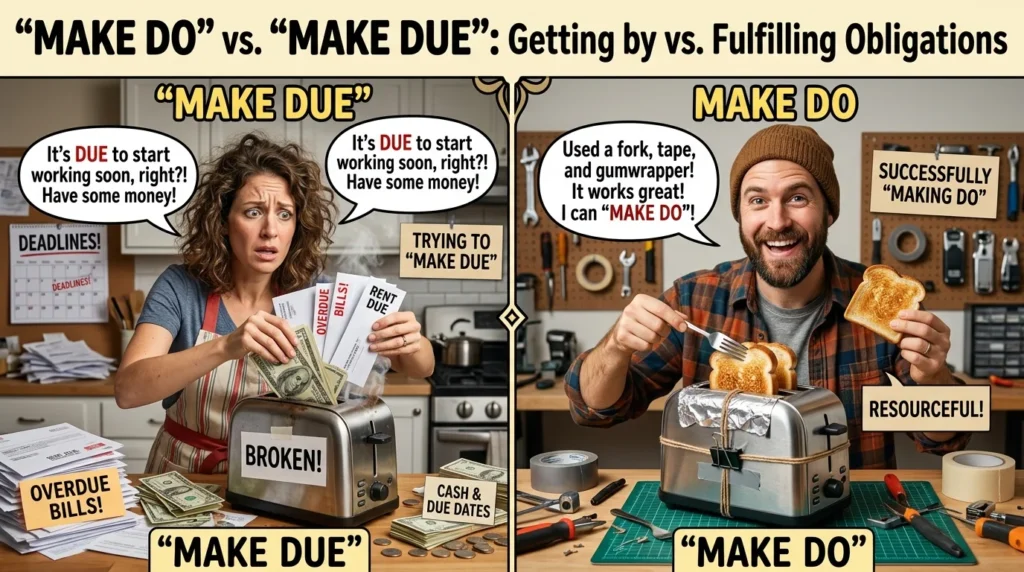
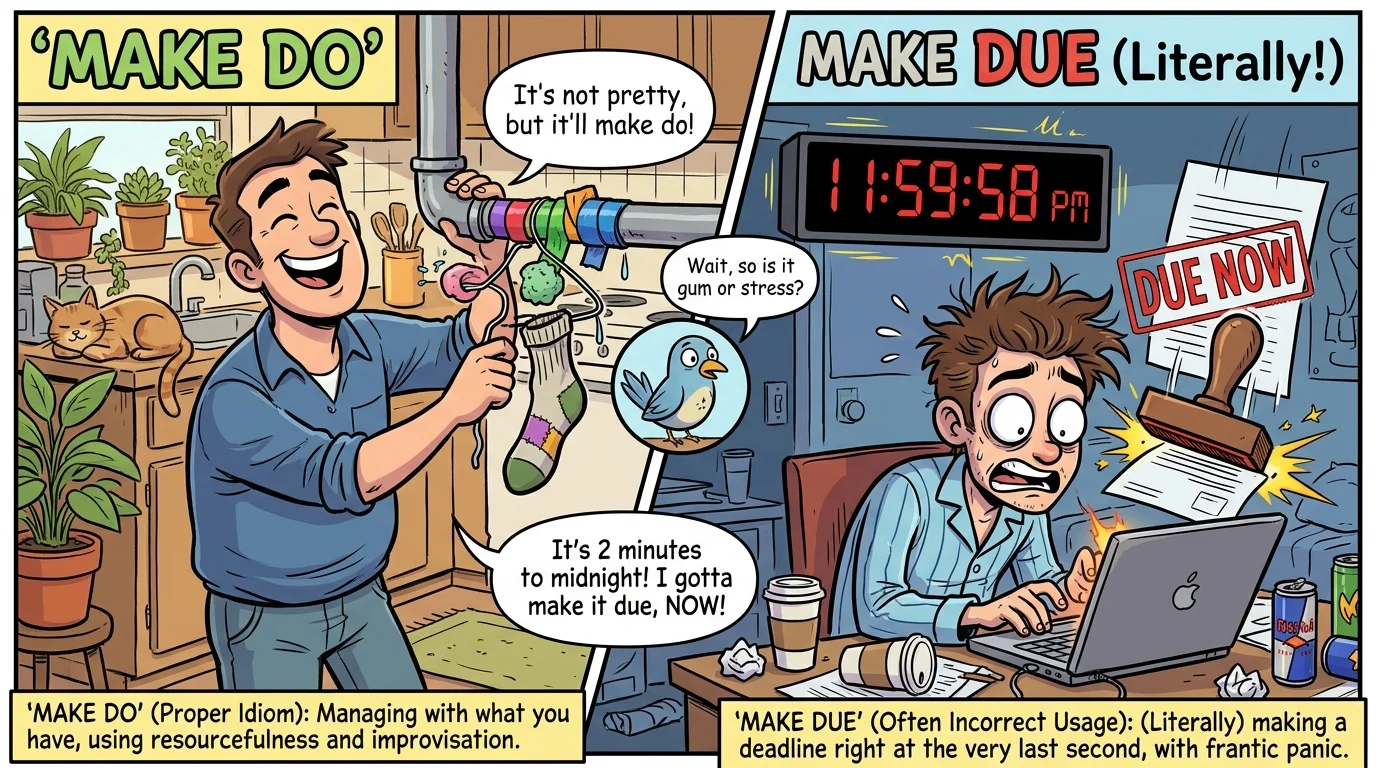
Make do is the correct idiom. It means to manage with something that is available, even if it is not ideal.
Make due is usually incorrect and is commonly considered a misspelling of make do.
Examples:
- We didn’t have enough chairs, so we had to make do with stools.
- We couldn’t buy a new car, so we made do with the old one.
In almost every situation, the phrase you want is make do, not make due.
What Does Make Do Mean?
Make do is an idiomatic expression meaning to cope, manage, or get by with what you have.
Definition
Make do means:
- To use available resources instead of something better
- To manage despite limitations
- To get by with an imperfect situation
Usage Rules
Use make do when:
- Something better is unavailable
- You must work with limited resources
- You need to adapt to a difficult situation
Examples of Make Do
- We forgot our blankets, so we had to make do with our jackets.
- Since the printer broke, we made do without printed copies.
- They couldn’t afford a larger apartment and had to make do with a small one.
- During the storm, the family made do with candles.
Key Insight
The phrase often appears with with.
Pattern:
Make do with + available thing
Examples:
- Make do with leftovers.
- Make do with fewer supplies.
- Make do with what you have.
What Does Make Due Mean?
Make due is usually an incorrect expression.
Definition
In most situations, make due has no accepted idiomatic meaning in standard English.
Usage Rules
Writers often mistakenly use due because it sounds identical to do.
Examples of incorrect usage:
- We had to make due with old equipment.
- She made due with the smaller room.
Both sentences should use make do.
Key Insight
Due generally relates to:
- Deadlines
- Expected payments
- Something owed
- Scheduled events
Examples:
- The report is due tomorrow.
- Rent is due on the first of every month.
- The train’s delay was due to bad weather.
These meanings have nothing to do with coping with limited resources.
Make Do vs Make Due: Key Differences
Although the phrases sound the same, they are entirely different in correctness and meaning.
Quick Differences
- Make do is a correct idiom.
- Make due is usually incorrect.
- Make do means to manage with what is available.
- Due refers to deadlines, obligations, or causes.
| Feature | Make Do | Make Due |
|---|---|---|
| Correct Expression | Yes | Usually no |
| Meaning | Manage with available resources | Generally incorrect |
| Part of Speech | Idiomatic phrase | Misused phrase |
| Common Usage | Very common | Common mistake |
| Example | We made do with what we had. | Usually considered incorrect. |
Real-World Usage Examples
Example 1
Incorrect: We had to make due with an old computer.
Correct: We had to make do with an old computer.
🎯 Lesson: Coping with limited resources requires make do.
Example 2
Incorrect: Since we ran out of ingredients, we made due.
Correct: Since we ran out of ingredients, we made do.
🎯 Lesson: The idiom is always make do.
Example 3
Friend: Did you buy new camping equipment?
You: No, we made do with what we already had.
🎯 Lesson: The phrase means managing with existing resources.
Example 4
Friend: When is your assignment due?
You: It’s due next Friday.
🎯 Lesson: Here, due refers to a deadline, not the idiom make do.
Common Mistakes
Mistake 1: Writing “Make Due”
Incorrect:
- We made due with an old television.
Correct:
- We made do with an old television.
Why it happens: The words do and due are pronounced the same.
Mistake 2: Assuming Due Means “Manage”
Incorrect:
- They had to make due during the power outage.
Correct:
- They had to make do during the power outage.
Why it happens: Writers confuse similar-sounding words without considering their meanings.
Mistake 3: Using Due Instead of Do in Formal Writing
Incorrect:
- The company made due with fewer employees.
Correct:
- The company made do with fewer employees.
Why it happens: Spell-checkers may not flag the mistake because due is a correctly spelled English word.
Memory Tricks
Trick 1
Make do = Do your best with what you have.
The word do literally reminds you to do the best you can.
Trick 2
Due = Deadlines and obligations.
Think:
- Homework is due.
- Bills are due.
- Payments are due.
None of these meanings relate to coping with limited resources.
Trick 3
Remember this sentence:
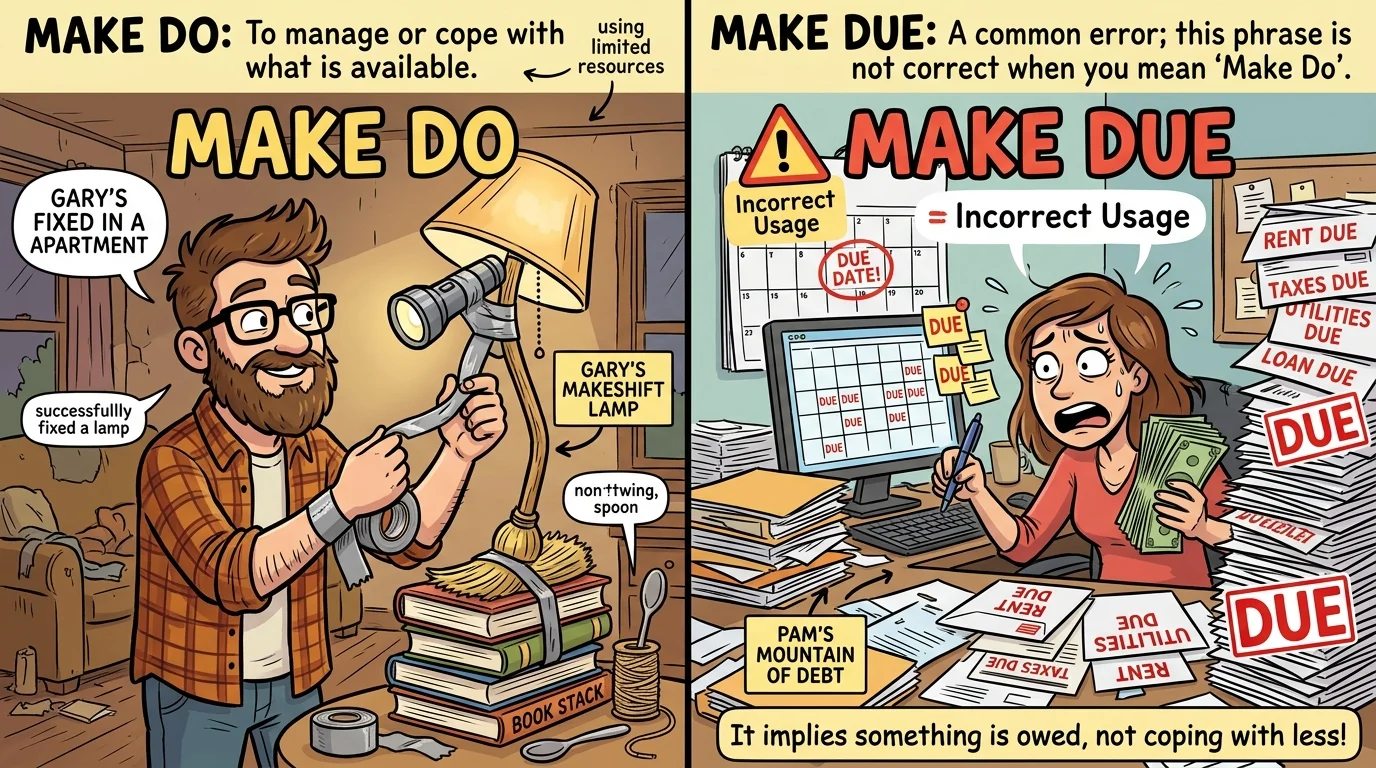
When resources are limited, you make do. When assignments have deadlines, they are due.
Expert Insights
The expression make do has existed in English for centuries and originally meant to manage satisfactorily under difficult circumstances. Over time, it became a common idiom associated with resourcefulness and adaptability.
The confusion with make due arises because do and due are homophones—they sound identical but have different meanings and spellings.
Modern style guides and dictionaries overwhelmingly recognize make do as the standard expression. In professional and academic writing, make due is generally considered an error.