
Quick Answer
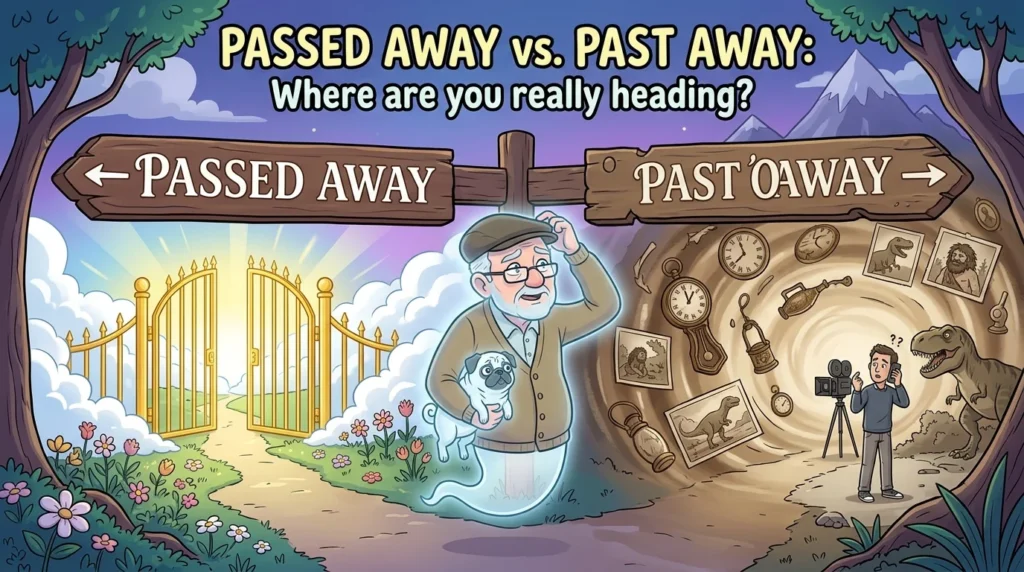
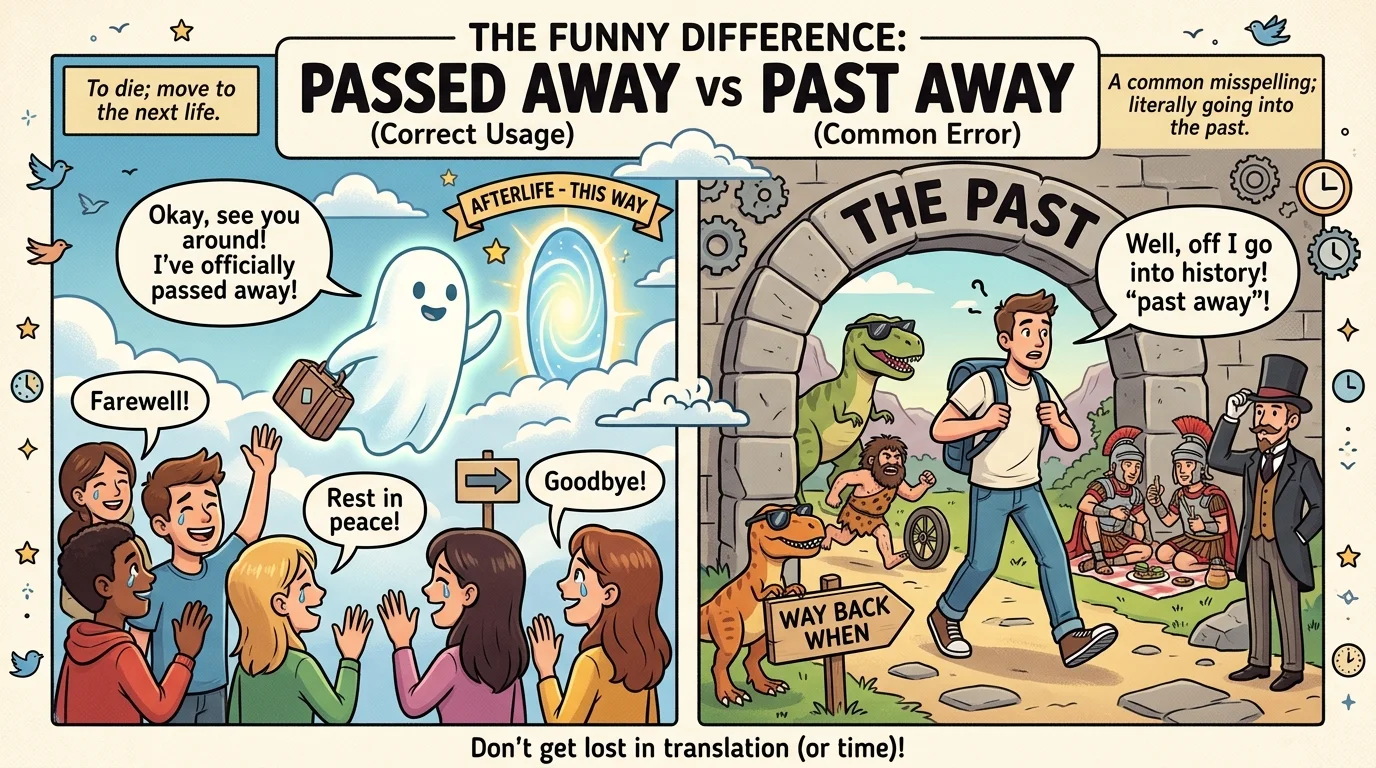
Passed away is the correct phrase. It is a polite and respectful expression that means someone has died.
Past away is incorrect because the word past is usually used as a noun, adjective, adverb, or preposition and does not form the phrasal verb that means “to die.”
Examples:
- Correct: My grandfather passed away last year.
- Incorrect: My grandfather past away last year.
Deep Explanation: Past Away
Past away is grammatically incorrect when referring to death.
The confusion happens because past and passed are pronounced the same in English. Since they are homophones, many writers accidentally choose the wrong spelling.
What Does “Past” Mean?
The word past usually refers to:
- A previous time
- Something that has already happened
- Movement beyond a particular point
Examples:
- Let’s forget the past.
- She walked past the store.
- In past years, the company expanded quickly.
None of these meanings relate to death.
Incorrect Examples
❌ My aunt past away yesterday.
❌ His father past away in June.
❌ We were saddened to hear that she past away.
All of these sentences should use passed away instead.
Deep Explanation: Passed Away
Passed away is the correct expression.
It is a respectful and gentle way to say that someone has died. The phrase is commonly used in conversations, sympathy messages, obituaries, and formal announcements.
Why People Say “Passed Away”
Many people prefer passed away because it sounds softer and more compassionate than directly saying died.
Correct Examples
✅ My grandmother passed away peacefully.
✅ We were sorry to hear that your uncle passed away.
✅ The famous author passed away at the age of 85.
Key Insight
Passed away is considered a euphemism, meaning it uses gentler language to discuss a difficult topic.
Past Away vs Passed Away: Key Differences
Quick Differences
- Past away is incorrect.
- Passed away is correct.
- Passed away means someone has died.
- Past refers to previous time or movement beyond something.
| Feature | Past Away | Passed Away |
|---|---|---|
| Meaning | Incorrect phrase | A polite expression meaning “died” |
| Grammar | Incorrect in this context | Correct phrase |
| Usage | Should be avoided | Common in speech and writing |
| Context | Spelling error | Sympathy messages and formal announcements |
| Example | He past away yesterday. ❌ | He passed away yesterday. ✅ |
Real-World Usage Scenarios
Example 1
Person A: Why weren’t you at work?
Person B: My grandfather passed away last week.
🎯 Lesson: Use passed away when respectfully referring to someone’s death.
Example 2
Sympathy Message:
I was deeply saddened to hear that your mother passed away. My thoughts are with you and your family.
🎯 Lesson: Passed away is appropriate in condolence messages.
Example 3
News Report:
The celebrated actor passed away at the age of 90.
🎯 Lesson: Professional publications use passed away as a respectful alternative to died.
Example 4
Incorrect:
My neighbor past away last month.
Correct:
My neighbor passed away last month.
🎯 Lesson: Replace past away with passed away every time.
Common Mistakes
Mistake 1: Writing “Past Away”
❌ My uncle past away.
✅ My uncle passed away.
Why it happens: The words past and passed sound identical.
Mistake 2: Confusing “Past” and “Passed”
❌ She past me on the road.
✅ She passed me on the road.
Why it happens: Both words are pronounced the same but have different grammatical functions.
Mistake 3: Avoiding “Passed Away” in Formal Writing
Some people think passed away is informal.
In reality, it is widely accepted in:
- Obituaries
- Sympathy cards
- News articles
- Formal announcements
Memory Tricks
Remember this simple rule:
Passed comes from the verb pass.
If the sentence involves an action, you usually need passed.
Think:
Someone passes through life and then passes away.
Another easy trick:
Passed = Verb
Past = Time or position
Expert Insight
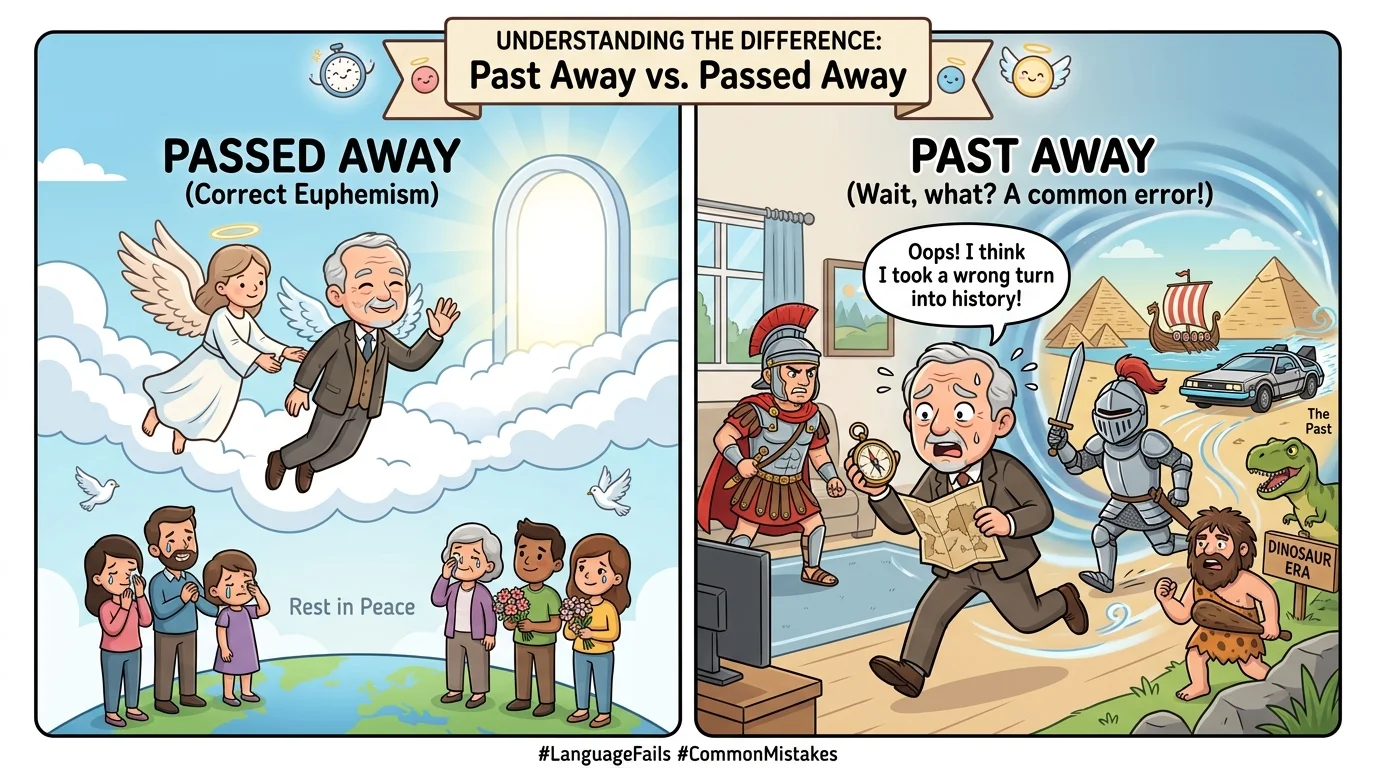
The confusion surrounding past away vs passed away exists because English contains many homophones—words that sound alike but have different meanings and spellings.
The word passed is the past tense of the verb pass, which means to move, proceed, or transition. Over time, the expression passed away developed as a gentle and respectful euphemism for death.
Dictionaries, grammar guides, educational institutions, and professional publishers consistently recognize passed away as the correct expression.
Using past away in writing is considered a spelling error and can make formal communication appear less polished.