
Quick Answer
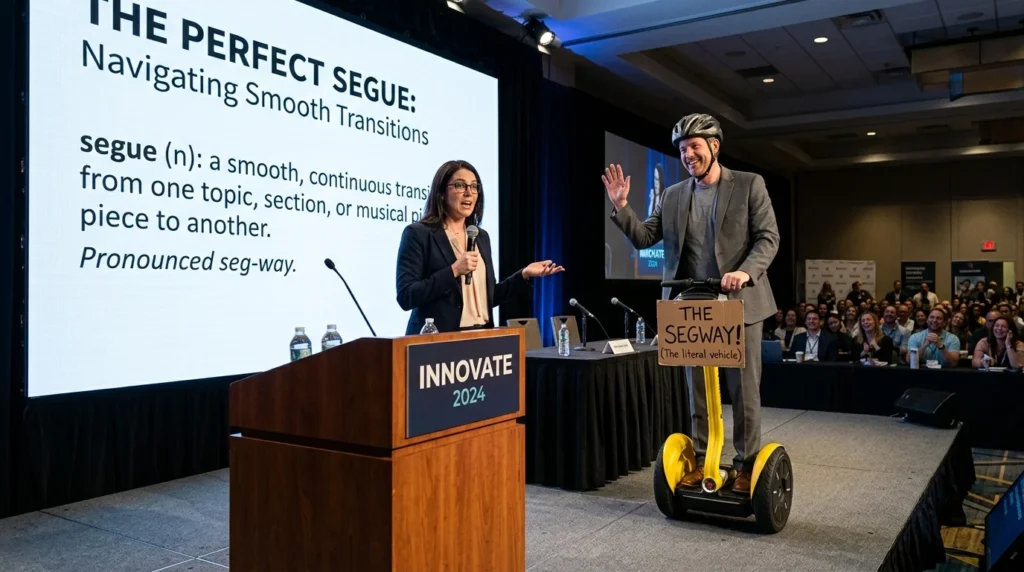
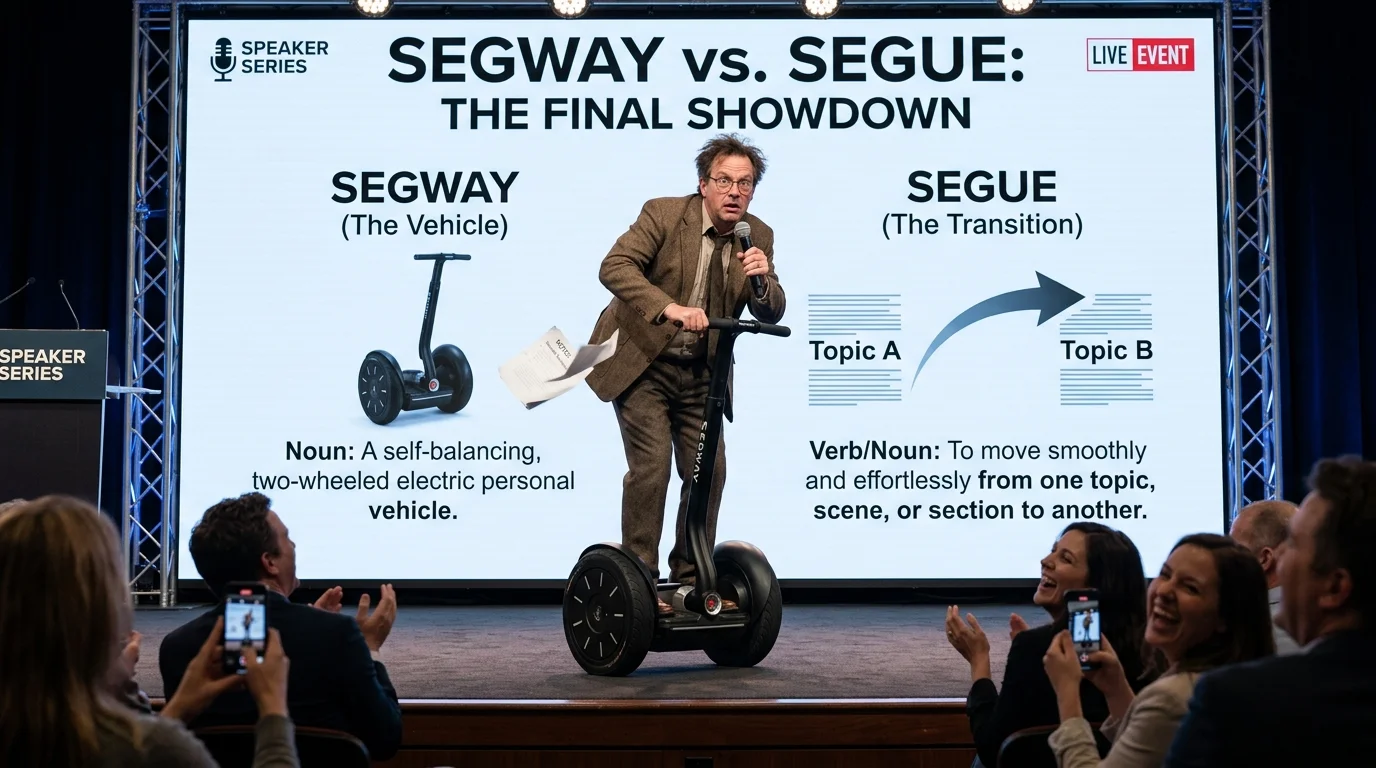
Segue means a smooth transition from one topic, activity, or section to another.
Segway is a brand name for a two-wheeled self-balancing personal transporter.
Examples:
- The speaker used a funny story to segue into the next topic.
- Tourists rode Segways around the city.
A simple rule is:
- Segue = Smooth transition
- Segway = The ride with wheels
What Does Segue Mean?
Segue is a verb and noun that refers to a smooth, uninterrupted transition.
Definition
Segue means:
- To move smoothly from one topic to another
- A transition between ideas or activities
- A seamless connection between sections
Usage Rules
Use segue when discussing:
- Writing and public speaking
- Presentations and speeches
- Conversations
- Music and storytelling
- Smooth transitions between ideas
Examples of Segue
- The presenter segued into the final section of the lecture.
- Let me segue into another important point.
- The documentary uses interviews as a segue between topics.
- The conversation naturally segued toward travel.
Key Insight
If you could replace the word with transition, segue is usually the correct choice.
What Does Segway Mean?
Segway is a trademarked brand name for a self-balancing personal transportation device.
Definition
Segway means:
- A self-balancing two-wheeled vehicle
- A personal transportation device
- A brand name associated with electric mobility
Usage Rules
Use Segway when discussing:
- Personal transportation
- Electric mobility devices
- Guided city tours
- Recreational riding
Examples of Segway
- We rented Segways during our vacation.
- The tour guide showed us how to ride a Segway.
- Several police departments use Segways for patrols.
- She bought a Segway for commuting.
Key Insight
If the sentence involves wheels, riding, or transportation, the correct word is Segway.
Segway vs Segue: Key Differences
Although these words sound identical, they have completely different meanings.
Quick Differences
- Segue means a transition.
- Segway is a transportation device.
- Segue is used in speaking and writing.
- Segway is used in discussions about mobility and vehicles.
| Feature | Segway | Segue |
|---|---|---|
| Main Meaning | Personal transporter | Smooth transition |
| Type | Brand name and vehicle | Verb and noun |
| Common Context | Transportation and tours | Writing and speaking |
| Related Idea | Riding and commuting | Connecting ideas |
| Example | She rode a Segway downtown. | The speaker segued into another topic. |
Real-World Usage Examples
Example 1
Incorrect: Let me segway into my next point.
Correct: Let me segue into my next point.
🎯 Lesson: Moving from one idea to another requires segue.
Example 2
Incorrect: The tourists rented several segues.
Correct: The tourists rented several Segways.
🎯 Lesson: Riding devices are called Segways.
Example 3
Teacher: We’ve discussed grammar. Now let’s segue into punctuation.
🎯 Lesson: Segue creates a smooth transition between topics.
Example 4
Friend: How did you get around the city tour?
You: We rode Segways.
🎯 Lesson: Segway refers to the vehicle.
Common Mistakes
Mistake 1: Writing Segway Instead of Segue
Incorrect:
- I’d like to segway into another subject.
Correct:
- I’d like to segue into another subject.
Why it happens: Both words are pronounced exactly the same.
Mistake 2: Using Segue for the Vehicle
Incorrect:
- We rented a segue for sightseeing.
Correct:
- We rented a Segway for sightseeing.
Why it happens: People are more familiar with the vehicle’s name and assume the transition word has the same spelling.
Mistake 3: Assuming Segway Is a Verb Meaning Transition
Incorrect assumption:
- Segway is the correct spelling for transitions.
Correct:
- Segue is the proper word for transitions in speech and writing.
Why it happens: The popularity of the transportation brand has influenced spelling habits.
Memory Tricks
Trick 1
Segue = Sequence of Ideas
Think:
Segue = Smoothly connecting ideas.
Trick 2
Segway = Way to Travel
The word contains way, which can remind you of roads and movement.
Think:
Segway = A way to ride around.
Trick 3
Remember this sentence:
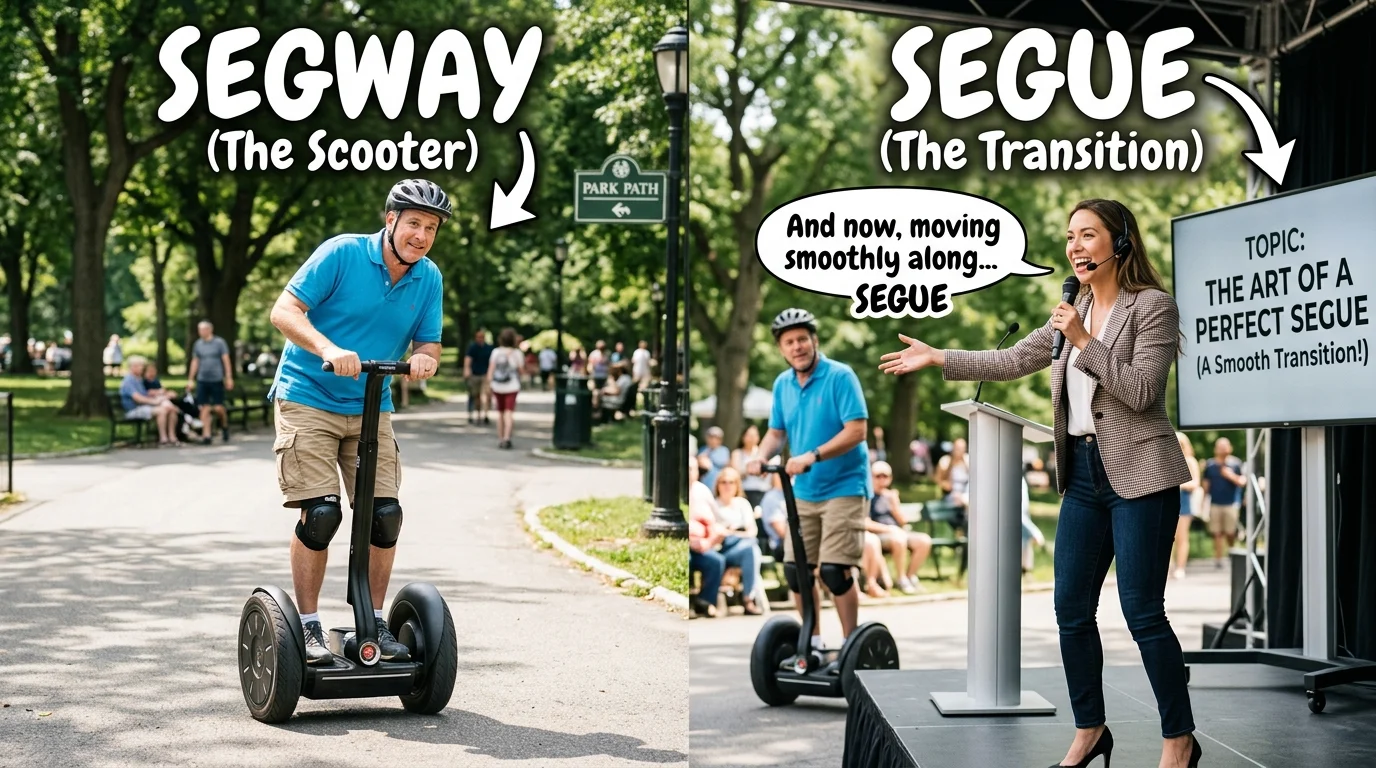
I rode a Segway to the conference and then used a segue to introduce my next topic.
Expert Insights
The word segue originated in music and later became a common term in writing and public speaking. It refers to a smooth transition that occurs without interruption.
Segway, on the other hand, is a modern trademarked brand name for a personal transportation device. Because the words are pronounced identically, many English speakers mistakenly spell segue as segway.
In professional, academic, and business writing, using segue correctly demonstrates attention to detail and strengthens credibility.