
Quick Answer
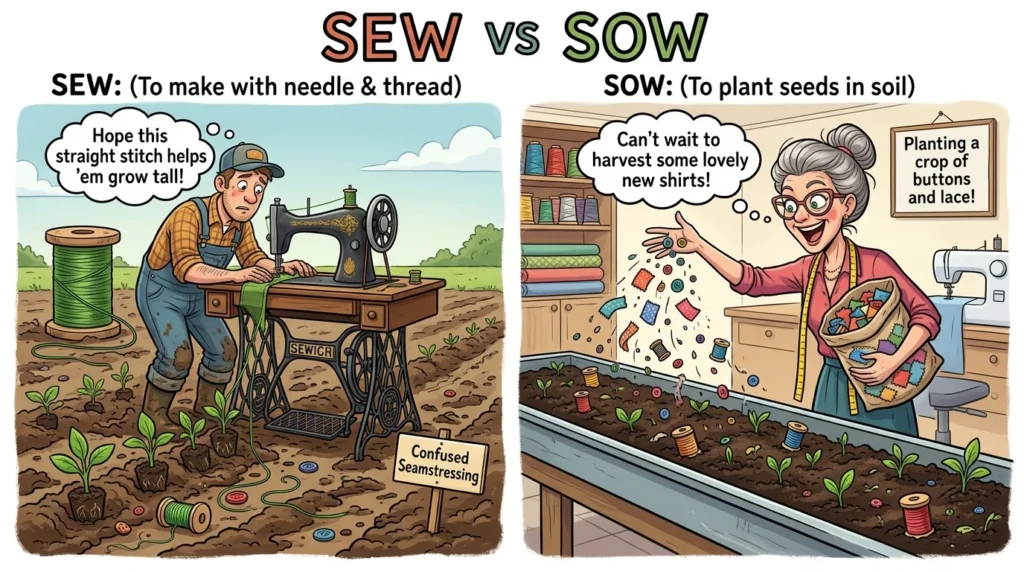
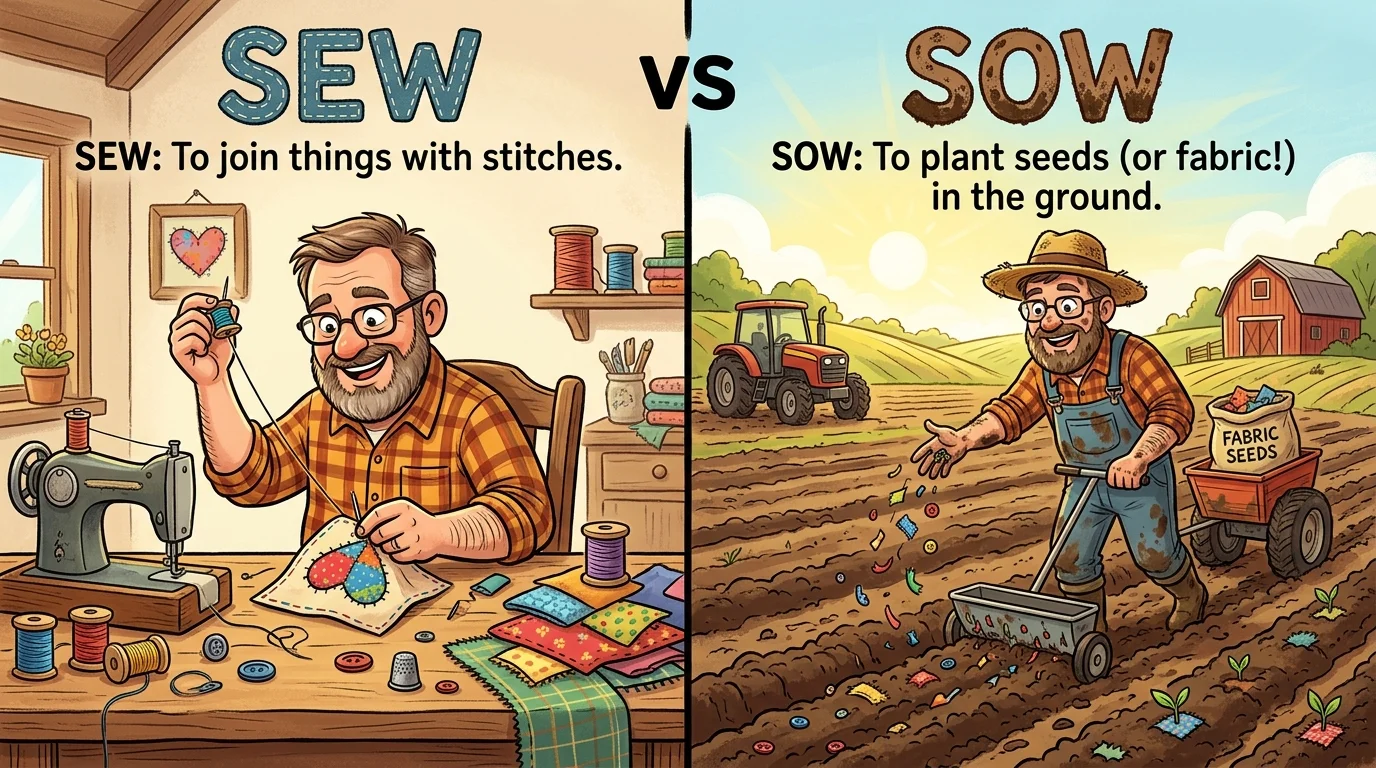
Sew means to join, make, or repair something using a needle and thread.
Sow means to plant seeds in the ground or to start something that will produce future results.
Simple rule: If you’re working with fabric and thread, use sew. If you’re planting seeds or creating future consequences, use sow.
What Does Sew Mean?
Definition
Sew is a verb that means to make, repair, or join materials using a needle and thread.
Usage Rules
Use sew when talking about:
- Making clothes
- Repairing torn fabric
- Joining pieces of material
- Needlework and embroidery
- Using a sewing machine
Real Examples
- My grandmother can sew beautiful dresses.
- I need to sew a button back onto my shirt.
- She learned to sew when she was a child.
- He used a machine to sew the curtains.
Key Insights
The word sew commonly appears in:
- Fashion and clothing
- Tailoring and dressmaking
- Arts and crafts
- Home repairs
- Textile industries
Key idea: To sew means to work with fabric, thread, and stitching.
What Does Sow Mean?
Definition
Sow is a verb that means to plant seeds in the ground or to introduce something that will grow or develop later.
Usage Rules
Use sow when referring to:
- Planting seeds
- Farming and gardening
- Creating future outcomes
- Spreading ideas, emotions, or conflict
Real Examples
- Farmers sow wheat in the spring.
- We plan to sow vegetable seeds this weekend.
- His comments helped sow doubt among the team.
- Kind actions often sow the seeds of friendship.
Key Insights
The word sow commonly appears in:
- Agriculture and gardening
- Literature and speeches
- Religious and philosophical discussions
- Business and leadership
- Figurative expressions
Key idea: To sow means to plant something that can grow and produce results.
Sew vs Sow: Key Differences
Comparison Table
| Feature | Sew | Sow |
|---|---|---|
| Meaning | To stitch or repair with needle and thread | To plant seeds or create future outcomes |
| Function | Making or repairing fabric | Planting or initiating growth |
| Common Context | Clothing, tailoring, crafts | Farming, gardening, ideas, emotions |
| Tools | Needle, thread, sewing machine | Seeds, soil, farming tools |
| Example | She can sew a dress. | Farmers sow corn every year. |
Quick Differences
- Sew = stitching fabric.
- Sow = planting seeds.
- Sew uses needles and thread.
- Sow uses seeds and soil.
- Sow can also be used figuratively.
Real-World Usage Scenarios
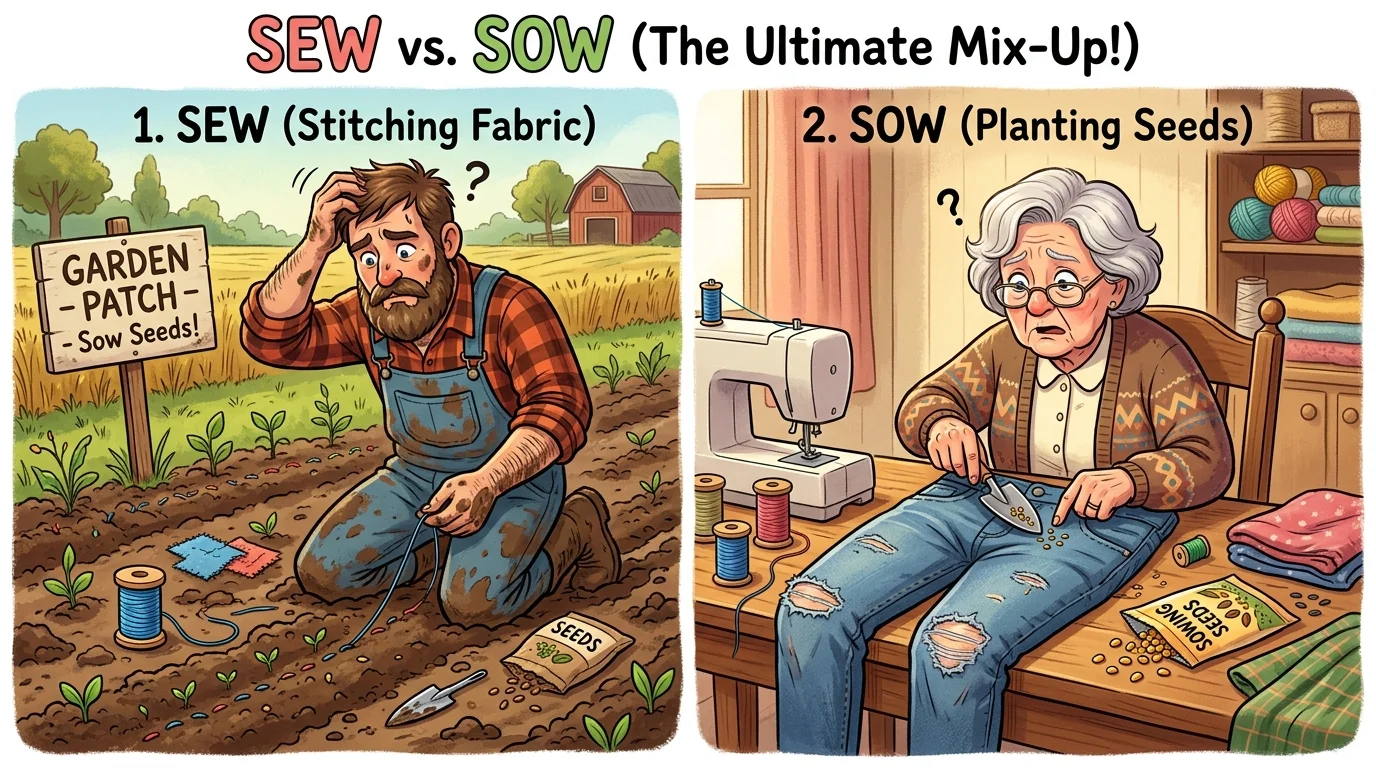
Example 1
Incorrect:
“I need to sow a button onto my shirt.”
Correct:
“I need to sew a button onto my shirt.”
🎯 Lesson: Clothing repairs require sew, not sow.
Example 2
Incorrect:
“The farmer will sew corn in the field.”
Correct:
“The farmer will sow corn in the field.”
🎯 Lesson: Planting seeds requires sow.
Example 3
Mother:
“Can you sew this torn pocket for me?”
Daughter:
“Sure, I’ll get the needle and thread.”
🎯 Lesson: Fabric repairs involve sew.
Example 4
Gardener:
“We’ll sow the flower seeds tomorrow.”
🎯 Lesson: Seeds are always sown, not sewn.
Example 5
Manager:
“We don’t want to sow confusion among our employees.”
🎯 Lesson: Sow can also mean creating ideas, feelings, or consequences.
Common Mistakes People Make
Mistake 1: Using Sow Instead of Sew
Incorrect:
“I learned to sow clothes from my grandmother.”
Correct:
“I learned to sew clothes from my grandmother.”
Why It Happens
Both words sound similar, causing people to choose the wrong spelling.
Mistake 2: Using Sew Instead of Sow
Incorrect:
“The farmers are sewing rice seeds.”
Correct:
“The farmers are sowing rice seeds.”
Why It Happens
People often focus on pronunciation rather than meaning.
Mistake 3: Forgetting the Figurative Meaning of Sow
Incorrect:
“Sow only refers to farming.”
Correct:
Sow can also mean starting ideas, emotions, or situations that will grow over time.
Why It Happens
Many learners know the agricultural meaning but overlook its figurative uses.
Memory Tricks to Remember the Difference
Trick 1
Sew = Shirt
Both words contain the letter S and relate to clothing.
Think:
Sew stitches shirts.
Trick 2
Sow = Seeds
Both words begin with S and relate to planting.
Think:
Sow seeds in the soil.
Trick 3
Remember this phrase:
Sew with thread. Sow with seeds.
Expert Insight: Why These Words Are Commonly Confused
The confusion between sew and sow largely comes from pronunciation. In many accents, the words sound similar, even though their meanings are completely unrelated.
Historically, sew comes from words associated with stitching and joining materials, while sow originates from agricultural terms meaning to scatter seeds. Over time, sow also developed figurative meanings, such as sowing discord, sowing hope, or sowing the seeds of change.
Understanding the object involved often makes the choice obvious:
- Fabric and thread → sew
- Seeds or future results → sow