
Quick Answer: Shiney vs Shiny
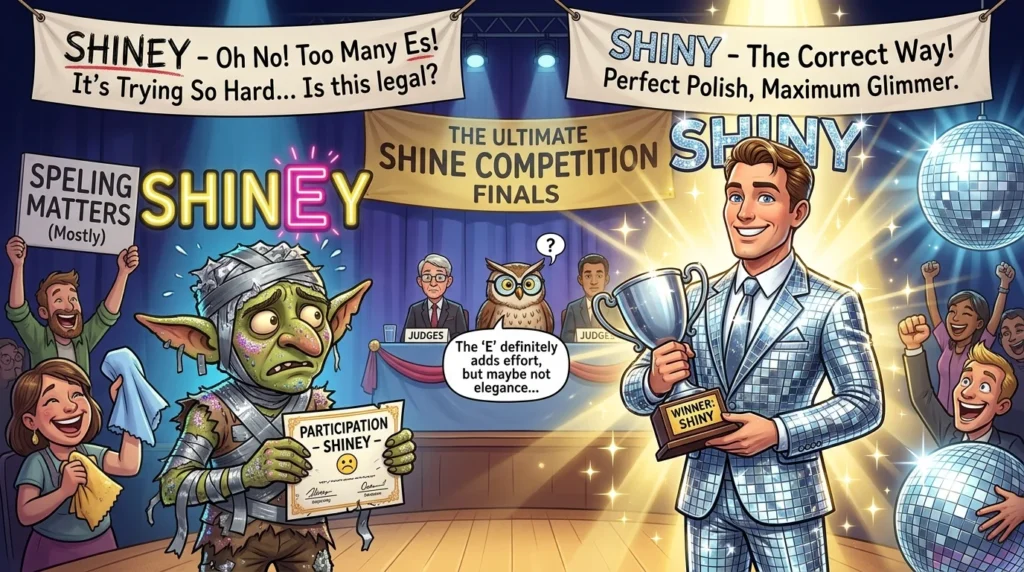
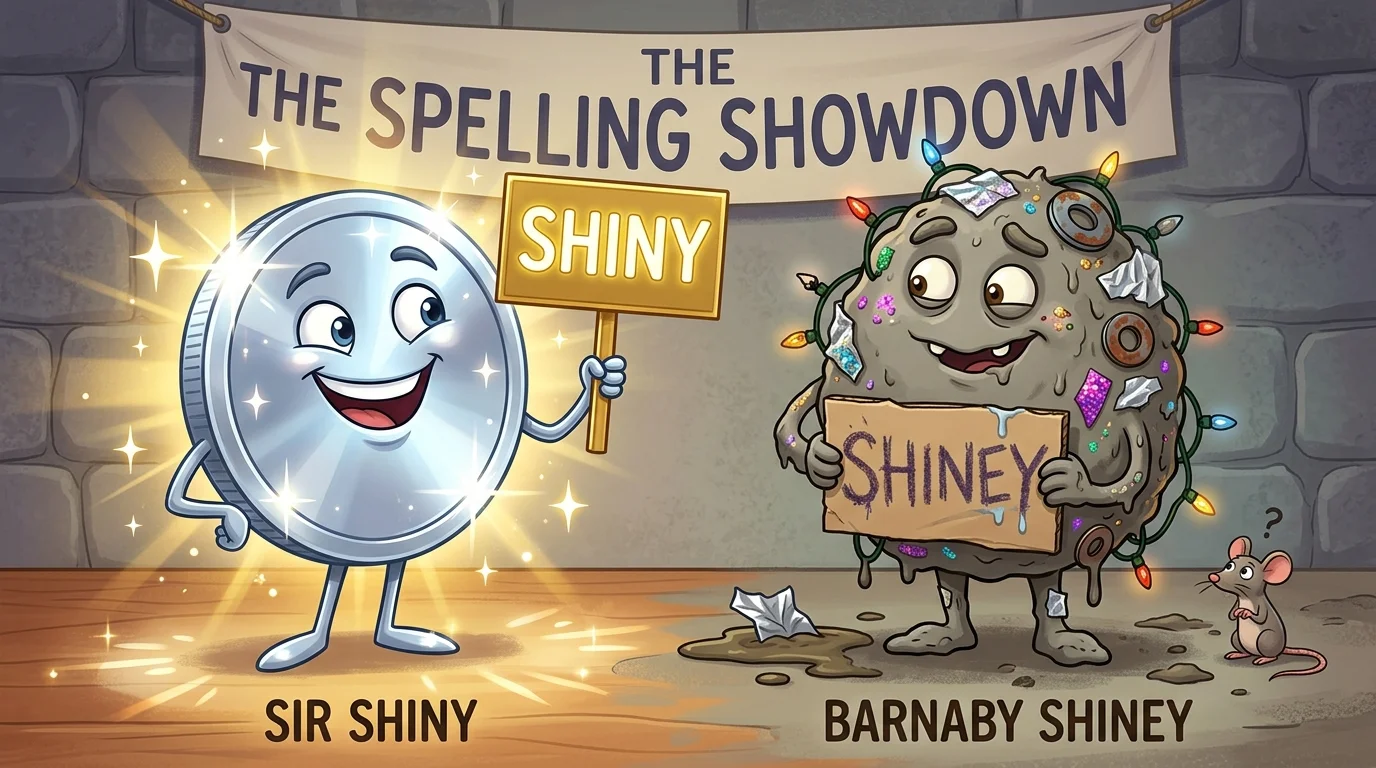
Shiny is the correct spelling. It describes something that reflects light, appears bright, or has a polished surface.
Shiney is not a standard English word and is usually considered a spelling mistake.
Example:
✔ She wore shiny black shoes.
✘ She wore shiney black shoes.
What Does Shiny Mean?
Definition
Shiny is an adjective used to describe something that reflects light or has a bright, glossy, or polished appearance.
Usage
The word is commonly used when talking about:
- Jewelry
- Cars
- Metal surfaces
- New objects
- Hair
- Fashion accessories
Examples
- The car looked shiny after being washed.
- He bought a shiny new bicycle.
- The diamond was shiny and beautiful.
- Her hair appeared shiny and healthy.
Key Insight
Shiny is the only standard spelling recognized by modern dictionaries and style guides.
What Does Shiney Mean?
Definition
Shiney is generally not recognized as a standard English word.
In most cases, it is simply a misspelling of shiny.
Usage
You may encounter shiney in:
- Typing errors
- Informal online posts
- Social media comments
- User-generated content
Examples
Incorrect:
- The floor looks shiney.
- She has shiney hair.
Correct:
- The floor looks shiny.
- She has shiny hair.
Key Insight
If you mean bright, glossy, or reflective, always use shiny.
Shiney vs Shiny: Key Differences
Quick Comparison
- Shiny = Correct spelling
- Shiney = Incorrect spelling
- Shiny = Accepted in dictionaries
- Shiney = Considered a misspelling
- Shiny = Used in formal and informal writing
- Shiney = Should generally be avoided
Comparison Table
| Feature | Shiney | Shiny |
|---|---|---|
| Valid English Word | No | Yes |
| Dictionary Recognition | No | Yes |
| Formal Writing | Incorrect | Correct |
| Meaning | Usually a misspelling | Bright, glossy, reflective |
| Professional Usage | Incorrect | Correct |
| Example | Shiney shoes | Shiny shoes |
Why Is It “Shiny” and Not “Shiney”?
The adjective shiny comes from the verb shine.
When forming adjectives from words ending in -e, English often drops the final e before adding -y:
- shine → shiny
- ice → icy
- slime → slimy
- bone → bony
Because of this spelling rule, the correct form becomes shiny, not shiney.
Real-World Usage Scenarios
Scenario 1: New Car
Incorrect:
“He bought a shiney sports car.”
Correct:
“He bought a shiny sports car.”
🎯 Lesson: Use shiny to describe polished or reflective objects.
Scenario 2: Jewelry
“The necklace looked shiny under the lights.”
🎯 Lesson: Shiny commonly describes reflective materials.
Scenario 3: Hair Care
“After using the conditioner, her hair looked shiny.”
🎯 Lesson: Shiny can describe healthy-looking hair.
Scenario 4: Household Cleaning
“The kitchen floor became shiny after mopping.”
🎯 Lesson: The word often refers to clean and polished surfaces.
Scenario 5: Product Marketing
“The company advertised its shiny new smartphone.”
🎯 Lesson: Shiny can also suggest something new and attractive.
Common Mistakes
Mistake 1: Keeping the Final E
Many writers assume the spelling should remain close to the root word shine.
Correction: Drop the final e and write shiny.
Mistake 2: Writing Based on Pronunciation
Because both spellings sound nearly identical, people often choose the wrong one.
Correction: Follow the standard spelling rule rather than pronunciation.
Mistake 3: Using Shiney in Professional Writing
Online misspellings can make shiney seem acceptable.
Correction: Always use shiny in formal, academic, and business writing.
Why This Happens
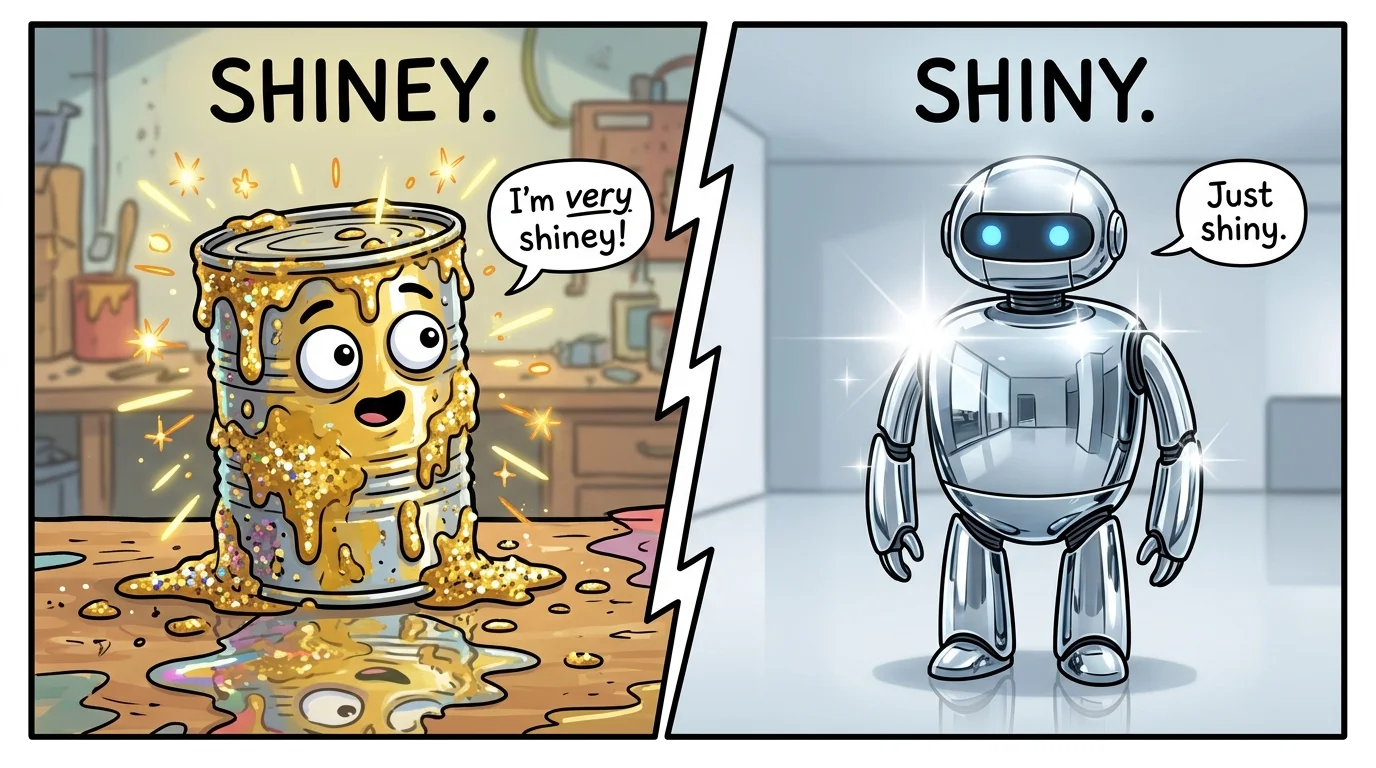
English learners often expect derived words to retain the original spelling completely. However, many words drop the final silent e before adding suffixes.
Easy Memory Tricks
Trick 1: Drop the E
Think:
Shine → Shiny
The silent e disappears.
Trick 2: Compare Similar Words
- ice → icy
- slime → slimy
- bone → bony
- shine → shiny
The pattern stays consistent.
Trick 3: Think of “Shiny Object”
The phrase “shiny object” is extremely common and always uses shiny.
Expert Insight: The Linguistic Rule Behind Shiny
The spelling shiny follows a standard English word-formation pattern in which a final silent e is dropped before adding the suffix -y. This process simplifies spelling while maintaining pronunciation.
Over time, dictionaries, publishers, educators, and style guides standardized shiny as the accepted form. As a result, shiney remains a common but incorrect variant.