
Quick Answer
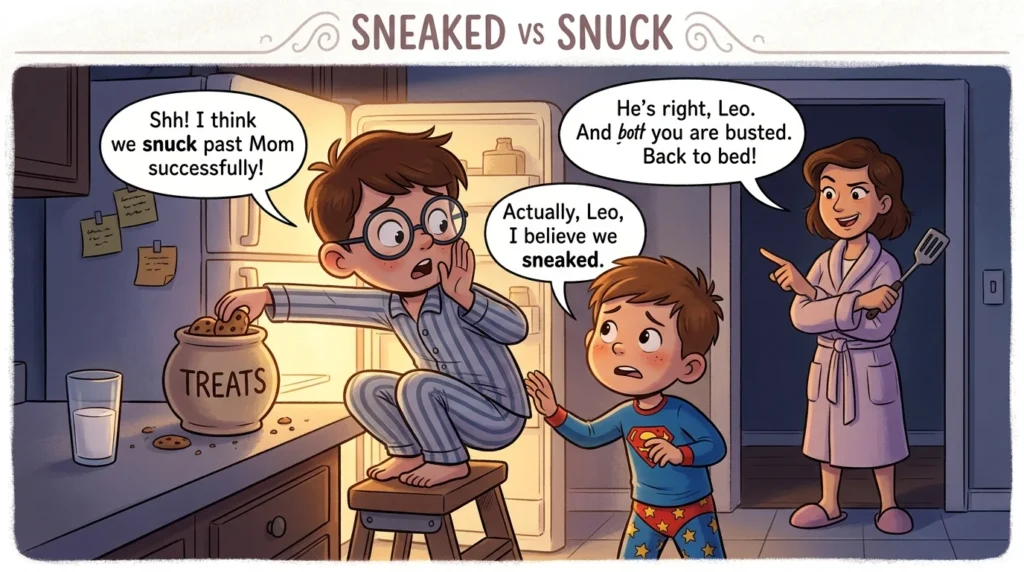
Both sneaked and snuck are correct past-tense and past-participle forms of sneak.
- Sneaked is the original and more traditional form.
- Snuck is newer and often sounds more informal and conversational.
Examples:
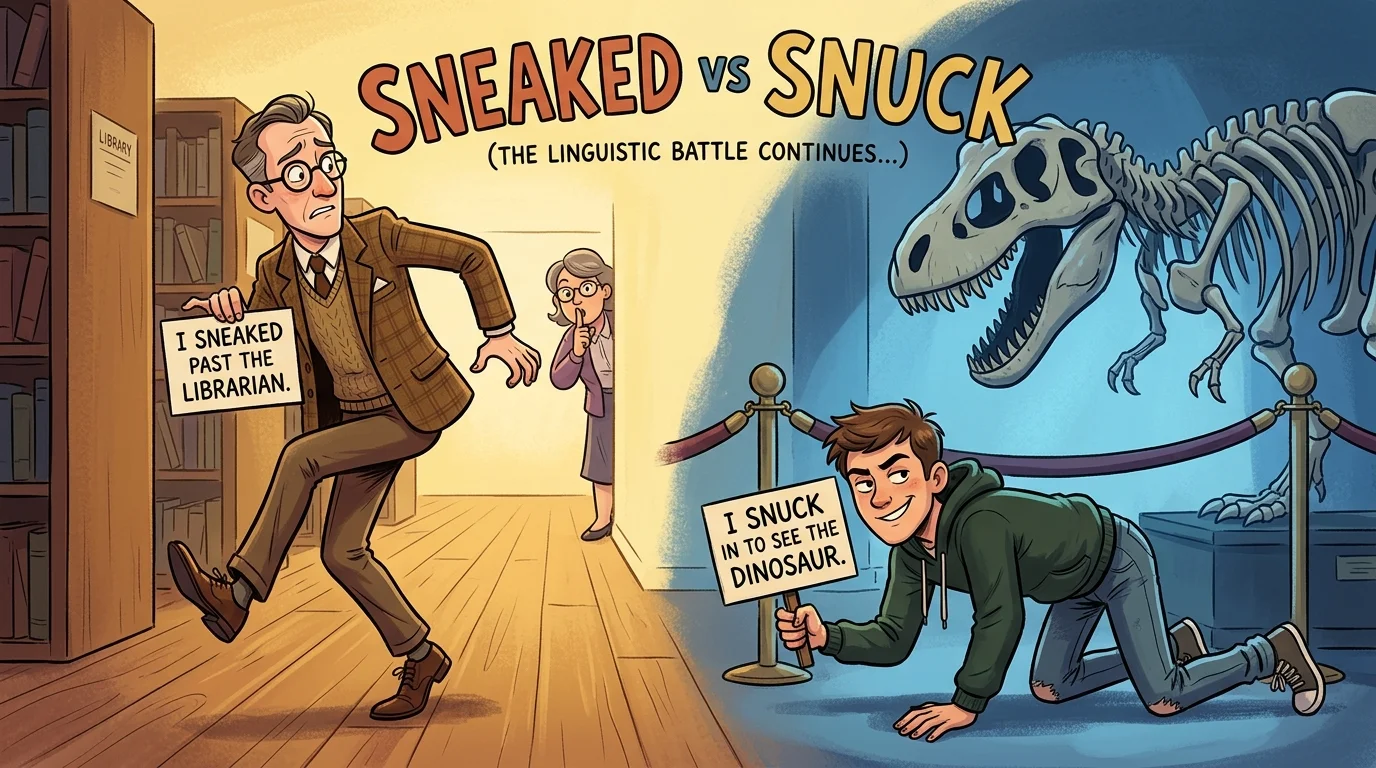
- She sneaked out of the house quietly.
- He snuck into the theater without buying a ticket.
A simple rule is:
- Formal writing → Sneaked
- Informal conversation → Sneaked or Snuck
What Does Sneaked Mean?
Sneaked is the traditional past tense and past participle of the verb sneak.
Definition
Sneaked means:
- Moved quietly and secretly
- Went somewhere without being noticed
- Did something in a hidden or stealthy manner
Usage Rules
Use sneaked when discussing:
- Secret movements
- Quiet actions
- Formal and professional writing
- Traditional grammar usage
Examples of Sneaked
- She sneaked out before sunrise.
- The child sneaked an extra cookie.
- He sneaked into the room quietly.
- Someone had sneaked a note onto my desk.
Key Insight
Sneaked is the older and more traditional form and is often preferred in formal, academic, and edited writing.
What Does Snuck Mean?
Snuck is also a correct past tense and past participle of sneak.
Definition
Snuck means:
- Moved secretly or quietly
- Went unnoticed
- Did something stealthily
Usage Rules
Use snuck when:
- Speaking casually
- Writing conversational English
- Using modern American English
- Creating an informal tone
Examples of Snuck
- He snuck out after everyone fell asleep.
- The cat snuck into the kitchen.
- She snuck a quick look at the answers.
- They had snuck into the concert.
Key Insight
Snuck carries exactly the same meaning as sneaked. The difference is mainly one of style and preference.
Sneaked vs Snuck: Key Differences
Although these forms share the same meaning, they differ in usage and tone.
Quick Differences
- Both forms are grammatically correct.
- Sneaked is the traditional form.
- Snuck is newer and often sounds more conversational.
- Sneaked is usually preferred in formal contexts.
| Feature | Sneaked | Snuck |
|---|---|---|
| Meaning | Moved secretly | Moved secretly |
| Grammar Status | Correct | Correct |
| Age of Form | Older and traditional | Newer and modern |
| Tone | Formal and neutral | Informal and conversational |
| Example | She sneaked into the room. | She snuck into the room. |
US vs UK Usage
Regional preferences also influence which form people use.
American English
Both forms are common, but snuck is extremely popular in everyday speech and informal writing.
Examples:
- He snuck out of class.
- She snuck a peek at the gift.
British English
British English generally favors sneaked, although snuck has become increasingly accepted.
Examples:
- The boy sneaked downstairs.
- Someone sneaked into the garden.
Key Insight
- American English: Sneaked and snuck are both common.
- British English: Sneaked is generally preferred.
Real-World Usage Examples
Example 1
Teacher: Who left the classroom?
Student: Jack sneaked out early.
🎯 Lesson: Sneaked works naturally in formal storytelling.
Example 2
Friend: How did you get inside?
You: I snuck in through the side entrance.
🎯 Lesson: Snuck sounds natural in casual conversation.
Example 3
Friend: Did anyone eat the cake?
You: Someone snuck a piece before dinner.
🎯 Lesson: Snuck often appears in informal speech.
Example 4
Manager: How did the document disappear?
Employee: Someone sneaked it off the desk.
🎯 Lesson: Formal situations often favor sneaked.
Common Mistakes
Mistake 1: Thinking Snuck Is Incorrect
Incorrect assumption:
- Snuck is not a real word.
Correct:
- Snuck is a standard and accepted form of sneak.
Why it happens: Older grammar teachings often favored only sneaked.
Mistake 2: Assuming One Form Has a Different Meaning
Incorrect assumption:
- Sneaked and snuck mean different things.
Correct:
- They have the same meaning.
Why it happens: The different spellings make them appear unrelated.
Mistake 3: Ignoring Audience and Tone
Less Formal:
- The suspect snuck away.
More Formal:
- The suspect sneaked away.
Why it happens: Writers sometimes overlook the style and tone of their audience.
Memory Tricks
Trick 1
Sneaked = Standard and Traditional
Think:
Sneaked = Safe choice for formal writing.
Trick 2
Snuck = Speech and Conversation
Think:
Snuck = Sounds casual and conversational.
Trick 3
Remember this sentence:
The child sneaked out of the house, but his friends said he had snuck away.
Both sentences describe the same action.
Expert Insights
The verb sneak originally formed its past tense as sneaked, following regular English patterns.
The form snuck emerged later by analogy with irregular verbs such as:
- Stick → Stuck
- Strike → Struck
Over time, snuck gained widespread acceptance, particularly in North America. Most modern dictionaries now recognize both forms as standard English.
Today:
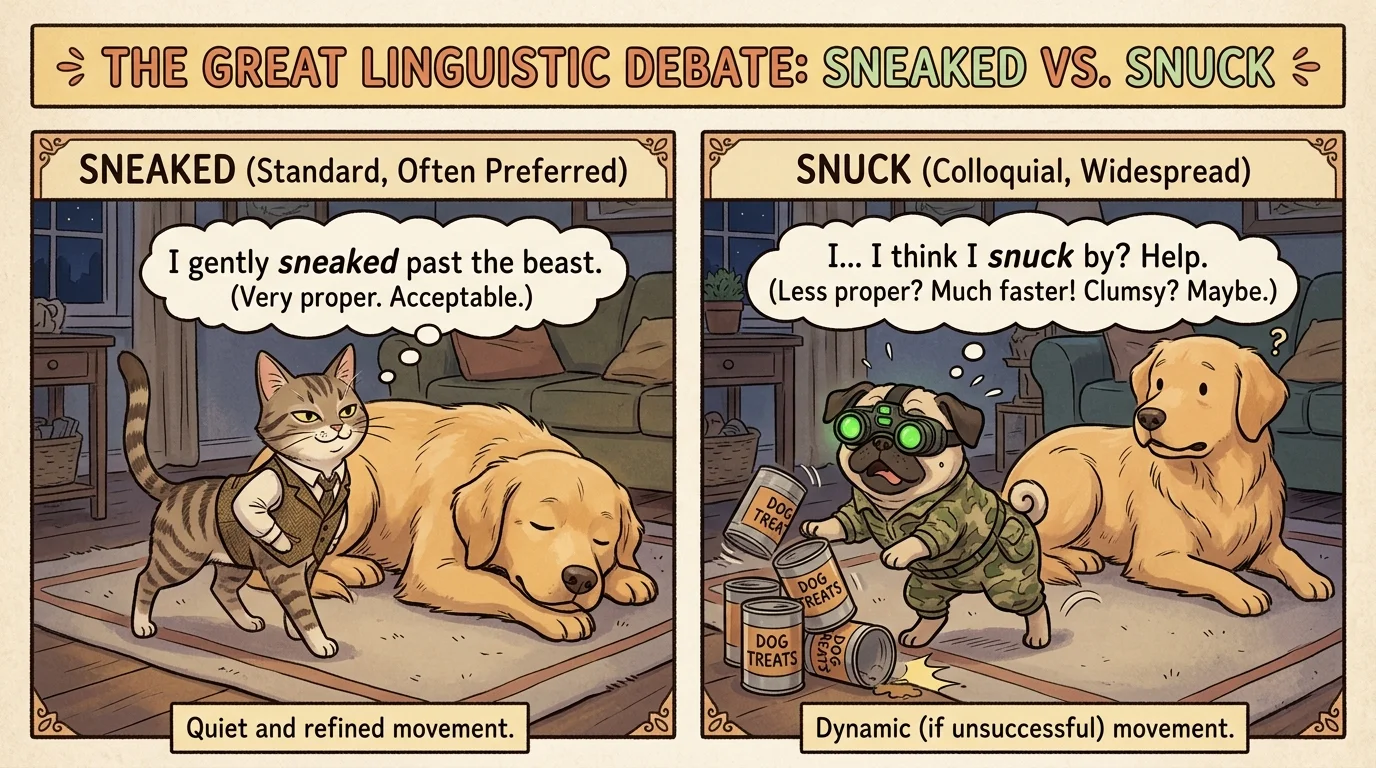
- Sneaked remains the traditional and often more formal option.
- Snuck is widely accepted and extremely common in everyday conversation.
Choosing between them is usually a matter of style rather than correctness.