
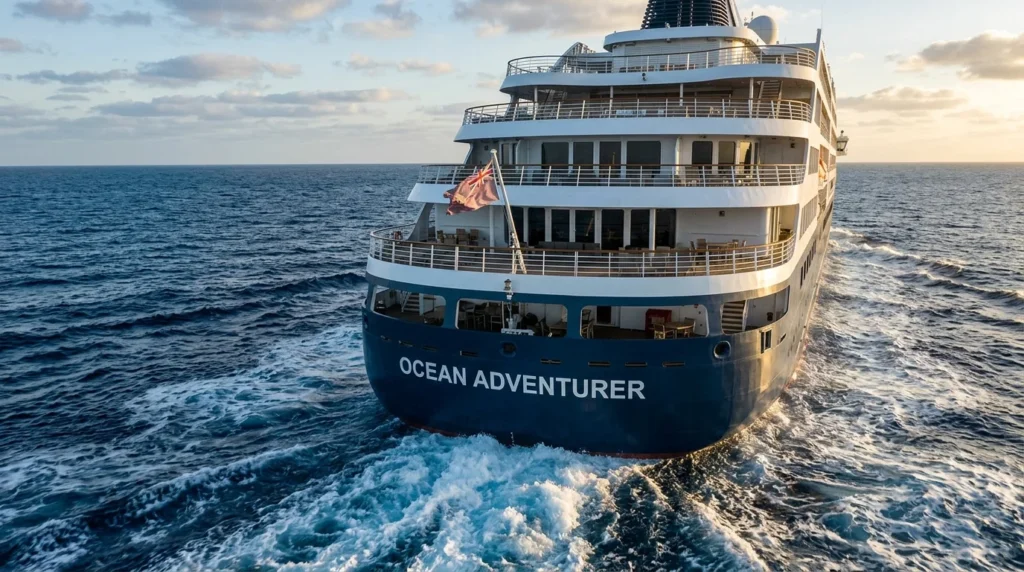
Quick Answer: Stern vs. Bow
The bow is the front end of a boat or ship, while the stern is the rear end.
🚢 Bow = front
🚢 Stern = back
For example:
The passengers gathered at the bow to watch the ship approach the harbor.
The engines are located toward the stern.
What Does “Bow” Mean?
In nautical terminology, the bow is the forward part of a boat or ship.
It is the end that generally faces the direction in which the vessel is traveling.
Examples
We stood at the bow and watched the waves.
The captain ordered the crew to move toward the bow.
The ship’s bow cut through the water.
🎯 Key Insight: If you’re facing the direction the vessel is moving, the bow is in front of you.
What Does “Stern” Mean?
The stern is the rear part of a boat or ship.
It is opposite the bow.
Examples
The passengers sat at the stern of the ferry.
The crew stored equipment near the stern.
A small boat was following behind the ship’s stern.
🎯 Key Insight: If the bow is the front, the stern is the back.
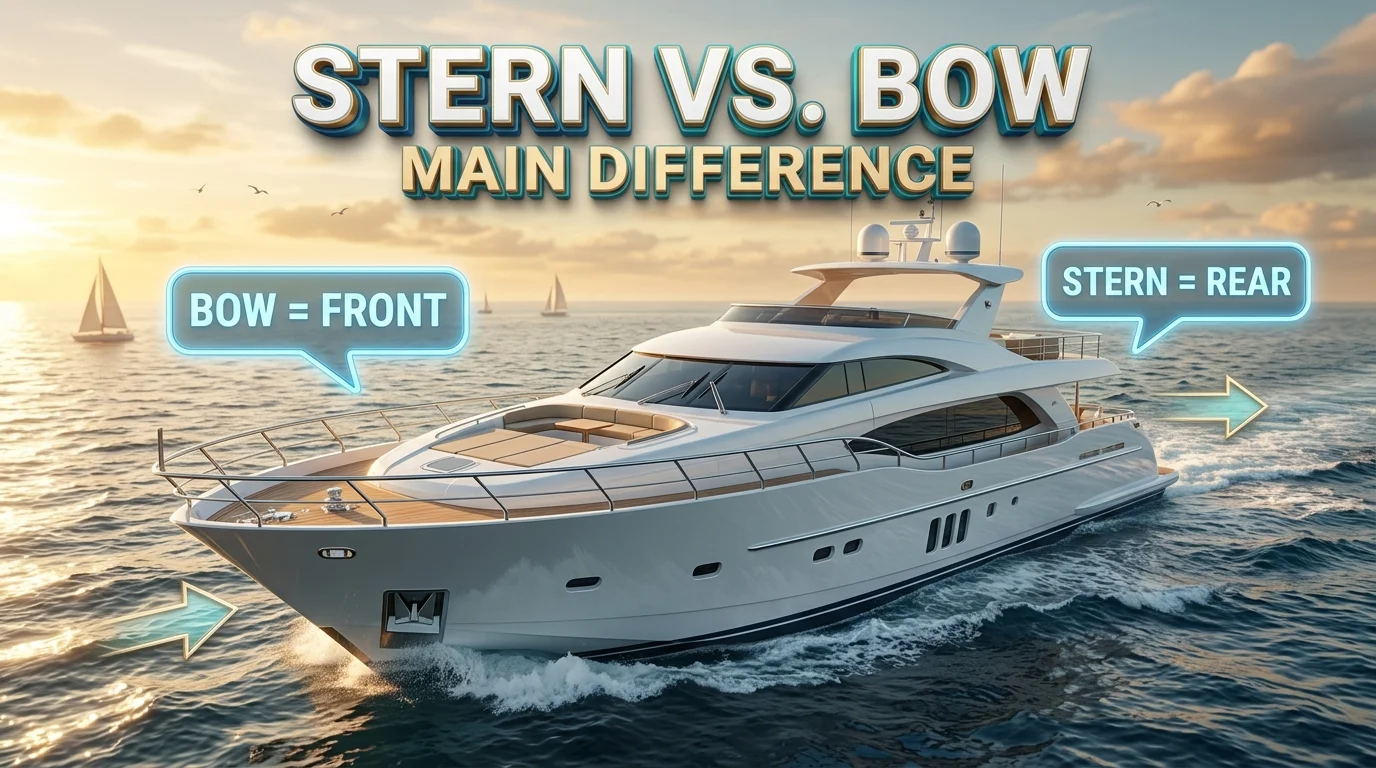
Stern vs. Bow: Main Difference
| Feature | Stern | Bow |
|---|---|---|
| Position | Back/rear | Front |
| Opposite | Bow | Stern |
| Direction | Behind the vessel’s center | Ahead of the vessel’s center |
| Common phrase | Aft of the vessel | Forward of the vessel |
| Example | Stern of the ship | Bow of the ship |
| Memory clue | Back | Front |
Bottom Line
Bow = front of the vessel
Stern = back of the vessel
Bow vs. Stern vs. Port vs. Starboard
Another common source of confusion is port and starboard.
These four terms describe different parts or directions on a vessel.
| Term | Meaning |
|---|---|
| Bow | Front |
| Stern | Back |
| Port | Left when facing the bow |
| Starboard | Right when facing the bow |
Simple Diagram
🎯 Lesson: Bow and stern describe front and back; port and starboard describe left and right.
What Does “Forward” Mean on a Ship?
In nautical language, forward means toward the bow.
For example:
The cabins are located forward.
This means the cabins are toward the front of the vessel.
Similarly, aft means toward the stern.
The dining area is located aft.
This means it is toward the rear.
Easy Formula
Forward → Bow
Aft → Stern
Stern vs. Bow: Real-World Usage Scenarios
Scenario 1: Watching the Ship
Let’s stand at the bow and watch the sunset.
🎯 Lesson: The bow is the front of the vessel.
Scenario 2: Sitting at the Back
We found seats near the stern.
🎯 Lesson: The stern is the rear.
Scenario 3: Giving Directions
Move forward toward the bow.
🎯 Lesson: Moving forward means moving toward the front.
Scenario 4: Describing Location
The equipment is stored aft.
🎯 Lesson: Aft means toward the stern.
Scenario 5: Comparing Two Areas
The swimming pool is closer to the stern than the bow.
🎯 Lesson: The stern is the back; the bow is the front.
Common Mistakes With Stern and Bow
Mistake 1: Thinking Stern Means Front
❌ The stern is the front of the ship.
Correct:
The stern is the back of the ship. ✅
🎯 Why it happens: “Stern” can sound formal and unfamiliar to people who aren’t accustomed to nautical vocabulary.
Mistake 2: Thinking Bow Means Back
❌ The bow is at the rear of the boat.
Correct:
The bow is at the front of the boat. ✅
Mistake 3: Confusing Stern With Port
These terms describe different things.
Stern = back
Port = left
They cannot be substituted for one another.
Mistake 4: Confusing Bow With Starboard
Likewise:
Bow = front
Starboard = right
They describe different dimensions of a vessel.
Stern vs. Bow in Different Types of Vessels
The terms bow and stern are used for many kinds of watercraft, including:
- Sailboats
- Motorboats
- Ferries
- Cruise ships
- Cargo ships
- Yachts
- Naval vessels
- Fishing boats
- Canoes and other small craft
Example
The kayak’s bow pointed toward the shore.
The ferry’s stern was facing the wake.
🎯 Lesson: The terms aren’t limited to large ships.
Why Is the Front Called the Bow?
The bow is the forward end of a vessel.
Its design is important because it interacts directly with the water as the vessel moves forward.
A ship’s bow may be shaped to help it:
- Move efficiently through water
- Reduce resistance
- Handle waves
- Improve stability
- Support navigation and maneuvering
So when someone refers to the bow, they’re not simply saying “front” in a casual sense—they’re identifying a specific part of the vessel.
Why Is the Back Called the Stern?
The stern is the rear end of the vessel.
Its design can accommodate important features such as:
- Propulsion systems
- Steering equipment
- Deck areas
- Cabins
- Storage
- Fishing or recreational areas
The exact configuration depends on the type of vessel.
Memory Tricks: Stern vs. Bow
🚢 Trick 1: Bow = Before You
Think:
Bow = what’s before you when the ship moves forward.
So:
Bow → front
🔙 Trick 2: Stern = Behind
Think:
Stern → rear
The stern is behind the bow.
⭐ One-Line Memory Trick
Bow goes first; stern follows.
Or simply:
Bow = front. Stern = back.
Expert Insight: Nautical Direction Is Vessel-Based
One important detail is that nautical directions are based on the vessel itself, rather than simply the direction a passenger happens to be facing.
For example, if you turn around while standing on a boat, the bow doesn’t suddenly become the direction in front of you.
The vessel’s:
Bow remains the bow.
Stern remains the stern.
This is why nautical terminology is more precise than simply saying “front” and “back.”
Quick Test: Stern or Bow?
1. “The front of the ship”
Answer: Bow ✅
2. “The rear of the ship”
Answer: Stern ✅
3. “Toward the front of the vessel”
Answer: Forward ✅
4. “Toward the rear of the vessel”
Answer: Aft ✅
5. “The left side when facing the bow”
Answer: Port ✅
6. “The right side when facing the bow”
Answer: Starboard ✅