
Shudder vs. Shutter
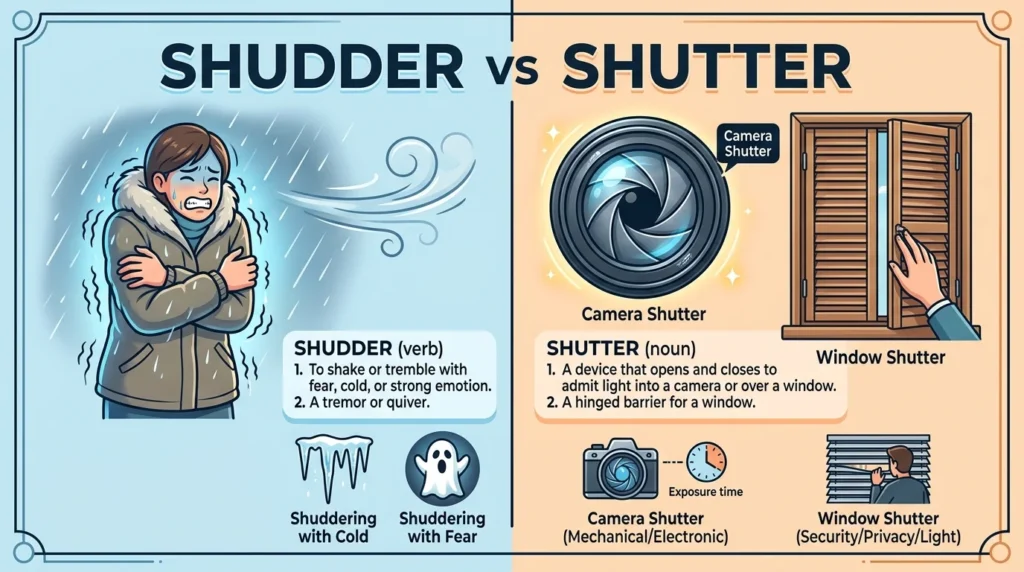
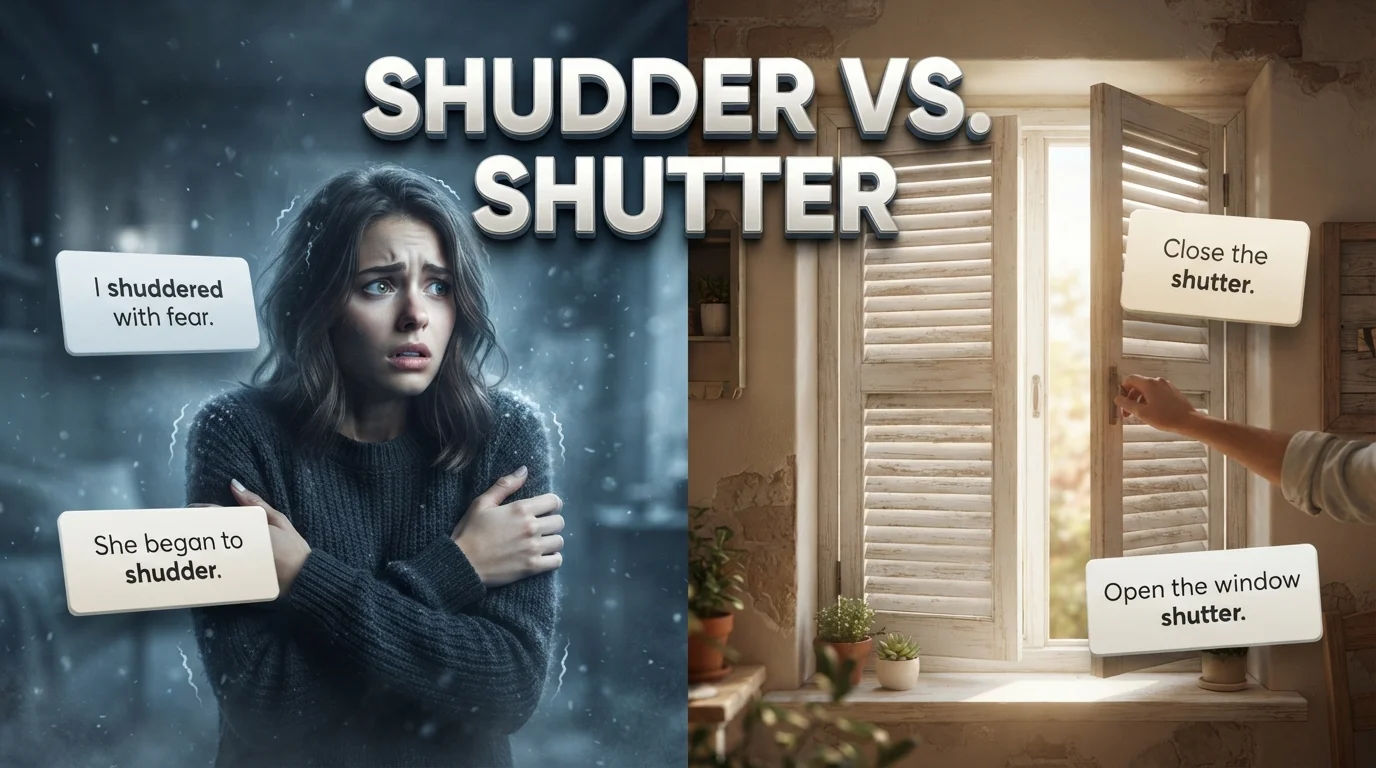
Shudder and shutter are different words with different meanings, even though they look and sound very similar. The easiest way to remember the difference is that shudder is usually connected with a sudden shaking or trembling, while shutter refers to something that closes or blocks an opening, such as a window covering or a camera mechanism.
Shudder: Meaning and Use
Shudder can be a verb or a noun. As a verb, it means to shake or tremble suddenly, often because of fear, cold, disgust, or a strong emotional reaction. As a noun, it refers to the brief shaking movement itself.
For example:
- I shuddered when I heard the strange noise downstairs.
- She shuddered at the thought of touching the spider.
- A cold shudder ran through him as he entered the dark room.
In these sentences, shudder describes a physical or emotional reaction. It does not refer to a window, door, or camera.
Common synonyms include tremble, quiver, shake, and shiver, although the exact meaning depends on context.
Shutter: Meaning and Use
Shutter can also be a noun or a verb, but its meanings are completely different from shudder.
As a noun, a shutter is a movable covering used to close a window or opening. In photography, the camera shutter is the mechanism that controls how long light reaches the camera sensor.
For example:
- Please close the shutters before the storm arrives.
- The old wooden shutters were painted white.
- The photographer adjusted the camera shutter before taking the picture.
As a verb, shutter can mean to close something or, especially in business contexts, to close an establishment permanently.
For example:
- The store was shuttered after years of declining sales.
- They shuttered the restaurant at the end of the month.
Shudder vs. Shutter: Examples
Compare these sentences:
Shudder:
I shuddered when I saw the snake.
Here, shuddered means the person involuntarily shook because of fear or disgust.
Shutter:
I closed the window shutter when I saw the storm approaching.
Here, shutter refers to the covering that closes the window.
Another useful comparison:
- The cold made him shudder. → He physically shook.
- The wind damaged the window shutter. → The window covering was damaged.
Camera Shutter vs. Shudder
The phrase camera shutter is particularly common in photography. The shutter controls the period during which light is allowed to reach the camera’s image sensor.
So:
- camera shutter ✅
- camera shudder ❌ when referring to the photographic mechanism
For example:
The photographer used a fast camera shutter speed to capture the moving athlete.
Shutter vs. Shudder: Easy Memory Trick
A simple way to remember the difference is:
Shudder = shake
Shutter = close
If a person shakes because of fear, cold, or disgust, use shudder.
If something closes a window, controls exposure in a camera, or causes a business to close, use shutter.
Is “Shudder” or “Shutter” Correct?
Neither word is universally “more correct.” The correct choice depends entirely on what you mean.
Use shudder when you are describing trembling or a sudden shaking reaction:
She shuddered at the frightening scene.
Use shutter when you mean a window covering, a camera mechanism, or the closing of a business:
The photographer pressed the button, and the camera shutter opened and closed.
The spelling difference is only one letter, but the meanings are quite distinct. If you are describing a physical or emotional shake, choose shudder; if you are talking about closing, a window covering, or photography, choose shutter.
Quick Answer: Shudder vs. Shutter
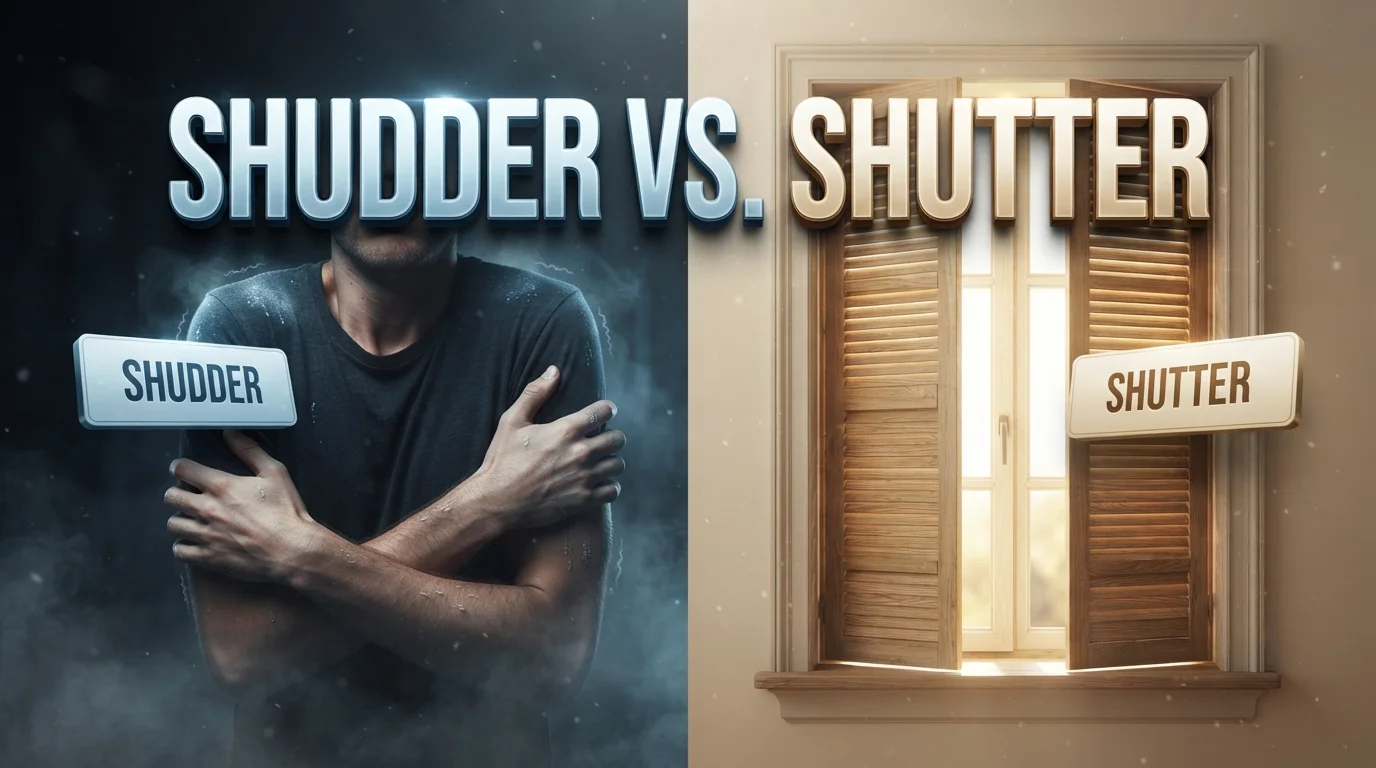
Shudder means to shake or tremble, usually because of fear, cold, disgust, shock, or another strong feeling.
Shutter is usually a cover or panel for a window, or a camera mechanism that controls exposure. As a verb, it can also mean to close something.
The easiest way to remember:
- Shudder = shake
- Shutter = shut
Think:
Shudder → trembling
Shutter → something that shuts
What Does “Shudder” Mean?
Shudder is primarily a verb meaning to shake or tremble suddenly and involuntarily. It can describe a physical reaction to fear, cold, disgust, or another strong emotion. It can also describe a machine, vehicle, or building shaking violently.
Examples of “Shudder”
- She shuddered when she heard the frightening story.
- I shudder at the thought of being trapped underground.
- The cold wind made him shudder.
- The old bus shuddered to a halt.
The word can also be a noun:
A shudder ran through her body.
As a noun, shudder means a sudden shaking movement or tremor.
Common Contexts for “Shudder”
Use shudder when the sentence involves:
- Fear
- Horror
- Cold
- Disgust
- Shock
- Strong emotions
- Trembling
- A violently shaking machine or vehicle
🎯 Key Insight: Shudder is about shaking.
What Does “Shutter” Mean?
Shutter is usually a noun referring to a movable cover or panel used to cover a window.
Examples of “Shutter”
- The wooden shutters protected the windows during the storm.
- She opened the shutters to let in some sunlight.
- The house had white shutters around every window.
The word also has an important meaning in photography.
A camera’s shutter is the mechanism that opens and closes to control how long light reaches the film or image sensor.
Examples in Photography
- The photographer adjusted the shutter speed.
- The camera shutter opened for a fraction of a second.
- A fast shutter speed can help freeze motion.
“Shutter” as a Verb
Shutter can also be used as a verb meaning to close, cover, or shut something.
For example:
The shop was shuttered after the storm.
They shuttered the windows before the hurricane arrived.
🎯 Key Insight: Shutter is connected to something that shuts or closes.
Shudder vs. Shutter: The Main Differences
The easiest distinction is based on the action or object involved.
Shudder
- Means shake or tremble
- Can be a verb or noun
- Often connected with fear, cold, disgust, or shock
- Can describe people, animals, machines, buildings, and vehicles
Shutter
- Usually means a window covering
- Also refers to a camera mechanism
- Can be a noun or verb
- Connected with closing, covering, windows, and photography
Comparison Table
| Feature | Shudder | Shutter |
|---|---|---|
| Meaning | Shake or tremble | Window covering or camera mechanism |
| Main function | Describes shaking | Covers, opens, or closes |
| Part of speech | Noun and verb | Noun and verb |
| Common context | Fear, cold, disgust, machines | Windows, cameras, buildings |
| Example | She shuddered with fear. | She closed the shutters. |
| Memory clue | Shudder → shake | Shutter → shut |
Real-World Usage Scenarios
Scenario 1: Fear
Incorrect:
She shuttered when she saw the spider.
Correct:
She shuddered when she saw the spider.
🎯 Lesson: A person shudders when they tremble because of fear or disgust.
Scenario 2: Window Covering
Incorrect:
The house had wooden shudders on the windows.
Correct:
The house had wooden shutters on the windows.
🎯 Lesson: Window coverings are shutters.
Scenario 3: Photography
The photographer increased the shutter speed to capture the moving car.
🎯 Lesson: In photography, the correct word is shutter.
Scenario 4: A Shaking Vehicle
The old truck shuddered as it climbed the steep hill.
🎯 Lesson: A machine or vehicle can shudder when it shakes violently.
Scenario 5: Closing a Business
The company shuttered its final store last year.
🎯 Lesson: As a verb, shuttered can mean closed down.
Common Mistakes With Shudder and Shutter
Mistake 1: Using “shutter” for fear
❌ The horror movie made me shutter.
✅ The horror movie made me shudder.
Why it happens:
The words are visually similar, and their pronunciation can be difficult to distinguish in some varieties of English.
Mistake 2: Using “shudder” for windows
❌ Close the shudders before the storm.
✅ Close the shutters before the storm.
Why it happens:
Both words begin with sh- and have similar endings, making them easy to mix up when writing from memory.
Mistake 3: “Shudder speed”
❌ The photographer changed the shudder speed.
✅ The photographer changed the shutter speed.
Why it happens:
Shutter speed is a photography term. It has nothing to do with trembling.
Mistake 4: “Shutter with fear”
❌ He shuttered with fear.
✅ He shuddered with fear.
Why it happens:
Fear causes a person to shudder, not shutter.
Shudder vs. Shutter: How to Choose the Right Word
Ask yourself one simple question:
Is something shaking?
If yes, use shudder.
The building shuddered during the earthquake.
She shuddered with fear.
Is something shutting or covering?
If yes, use shutter.
The shutters blocked the sunlight.
They shuttered the windows.
Is it photography?
Use shutter.
The camera has a fast shutter speed.
Memory Tricks: Shudder vs. Shutter
🫨 Trick 1: Shudder = Shake
Think:
Shudder → Shake
Both describe movement or trembling.
If someone is trembling with fear, they shudder.
🚪 Trick 2: Shutter = Shut
The word shutter contains shut.
Shutter → Shut
A shutter shuts or covers a window.
This is the easiest spelling trick for the pair.
📷 Trick 3: Camera = Shutter
Think of:
Shutter speed
If you’re talking about photography, cameras, exposure, or light, use shutter.
⭐ The One-Line Memory Trick
Shudder means shake; shutter helps shut.
Shudder vs. Shutter in Common Expressions
Expressions With “Shudder”
Shudder with fear
She shuddered with fear when she heard the noise.
Shudder at the thought
I shudder at the thought of repeating that experience.
A shudder ran through someone
A shudder ran through him as he remembered the incident.
These uses all involve fear, discomfort, or trembling.
Expressions With “Shutter”
Window shutters
The wooden shutters kept the room dark.
Shutter speed
The photographer used a fast shutter speed.
Shutter a business
The company decided to shutter the store.
These uses are connected to closing, covering, windows, cameras, or businesses.
Pronunciation: Shudder vs. Shutter
This is where the confusion becomes especially interesting.
In some varieties of English, particularly many forms of American English, shudder and shutter can sound the same or extremely similar because the t in shutter may be pronounced as a quick flap that resembles a d. They are therefore often treated as homophones in American pronunciation.
In other accents, the distinction may be more noticeable.
So don’t rely entirely on pronunciation. Meaning and spelling are the safest guides.
Expert Insight: Why Shudder and Shutter Are Confused
Shudder and shutter are a useful example of how pronunciation can create spelling confusion.
The two words have different origins and meanings. Shudder developed from Germanic roots associated with shaking, while shutter is related to shut and refers to something that closes or covers an opening.
That gives us a powerful semantic distinction:
Shudder → movement
Shutter → closure
This distinction remains useful even when the two words sound identical in a particular accent.
From a grammar perspective, both words can function as nouns and verbs, but their meanings remain distinct:
The machine shuddered. — verb
I felt a shudder. — noun
Close the shutter. — noun
They shuttered the store. — verb
Understanding the word’s role in the sentence is another way to avoid the spelling mistake.
Quick Test: Shudder or Shutter?
Choose the correct word.
- The frightening movie made her ________.
- The house has wooden ________ around the windows.
- The camera’s ________ speed was too slow.
- The old engine began to ________ violently.
- The company decided to ________ the failing store.
Answers
- shudder
- shutters
- shutter
- shudder
- shutter
The Pattern
Shudder = shake or tremble
Shutter = shut, cover, camera, or close