
Quick Answer
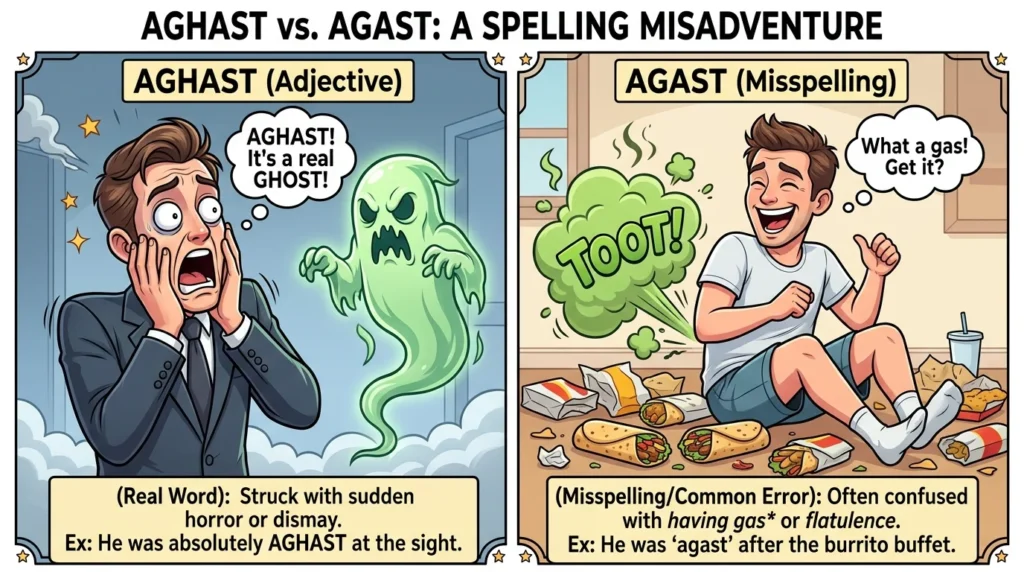
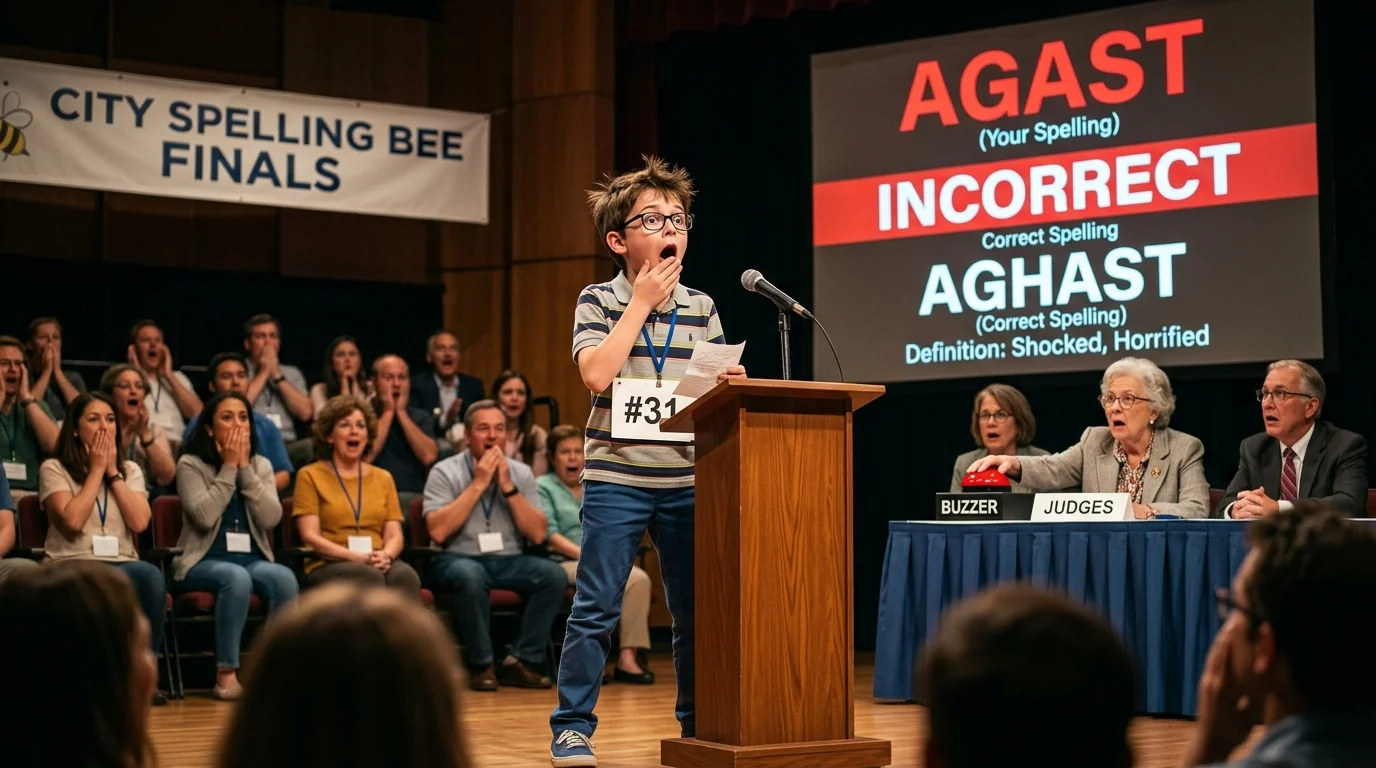
Aghast is the correct English word that means shocked, horrified, or filled with amazement.
Agast is generally considered an incorrect spelling in modern English and should usually be replaced with aghast.
If you’re writing contemporary English, use aghast.
What Does “Agast” Mean?
Definition
The word agast is an old or obsolete spelling that occasionally appeared in historical English texts.
Today, it is rarely recognized as standard English.
Usage Rules
In modern writing:
- Avoid using agast.
- Most dictionaries prefer aghast.
- Readers may assume agast is a typo.
Examples
Historical or outdated usage:
- He stood agast at the terrible news.
- The villagers were agast at the sight.
Modern English would typically replace both examples with aghast.
Key Insight
Unless you are quoting historical literature, agast is generally not the preferred spelling.
What Does “Aghast” Mean?
Definition
Aghast is an adjective that describes someone who is shocked, horrified, stunned, or filled with disbelief.
Usage Rules
Use aghast when describing:
- Extreme surprise
- Horror
- Shock
- Disbelief
- Emotional astonishment
Examples
- She was aghast when she heard the news.
- The audience looked aghast after the unexpected announcement.
- He stood aghast at the damage caused by the storm.
Key Insight
Aghast is the accepted modern spelling and appears frequently in books, journalism, and everyday English.
Agast vs Aghast: Key Differences
Bullet Point Differences
- Aghast is the standard modern spelling.
- Agast is considered obsolete or incorrect in most contexts.
- Aghast appears in modern dictionaries.
- Agast is rarely used today.
- Aghast is suitable for professional and academic writing.
- Agast may confuse readers.
Comparison Table
| Feature | Agast | Aghast |
|---|---|---|
| Modern English Usage | Rare | Common |
| Dictionary Acceptance | Limited | Standard |
| Meaning | Historical form of aghast | Shocked or horrified |
| Professional Writing | Avoid | Recommended |
| Reader Recognition | Low | High |
| Example | Obsolete usage | She was aghast at the news |
Real-World Usage Scenarios
Scenario 1
❌ I was agast when I saw the accident.
✅ I was aghast when I saw the accident.
🎯 Lesson: Use aghast to express shock or horror.
Scenario 2
❌ The teacher looked agast at the students’ behavior.
✅ The teacher looked aghast at the students’ behavior.
🎯 Lesson: Modern English prefers aghast.
Scenario 3
❌ Everyone was agast by the sudden announcement.
✅ Everyone was aghast by the sudden announcement.
🎯 Lesson: Aghast is the correct spelling for formal and informal writing.
Scenario 4
❌ She sounded agast after hearing the rumor.
✅ She sounded aghast after hearing the rumor.
🎯 Lesson: Replace agast with aghast in contemporary English.
Scenario 5
❌ The community was agast at the outcome.
✅ The community was aghast at the outcome.
🎯 Lesson: Use the standard dictionary spelling.
Common Mistakes
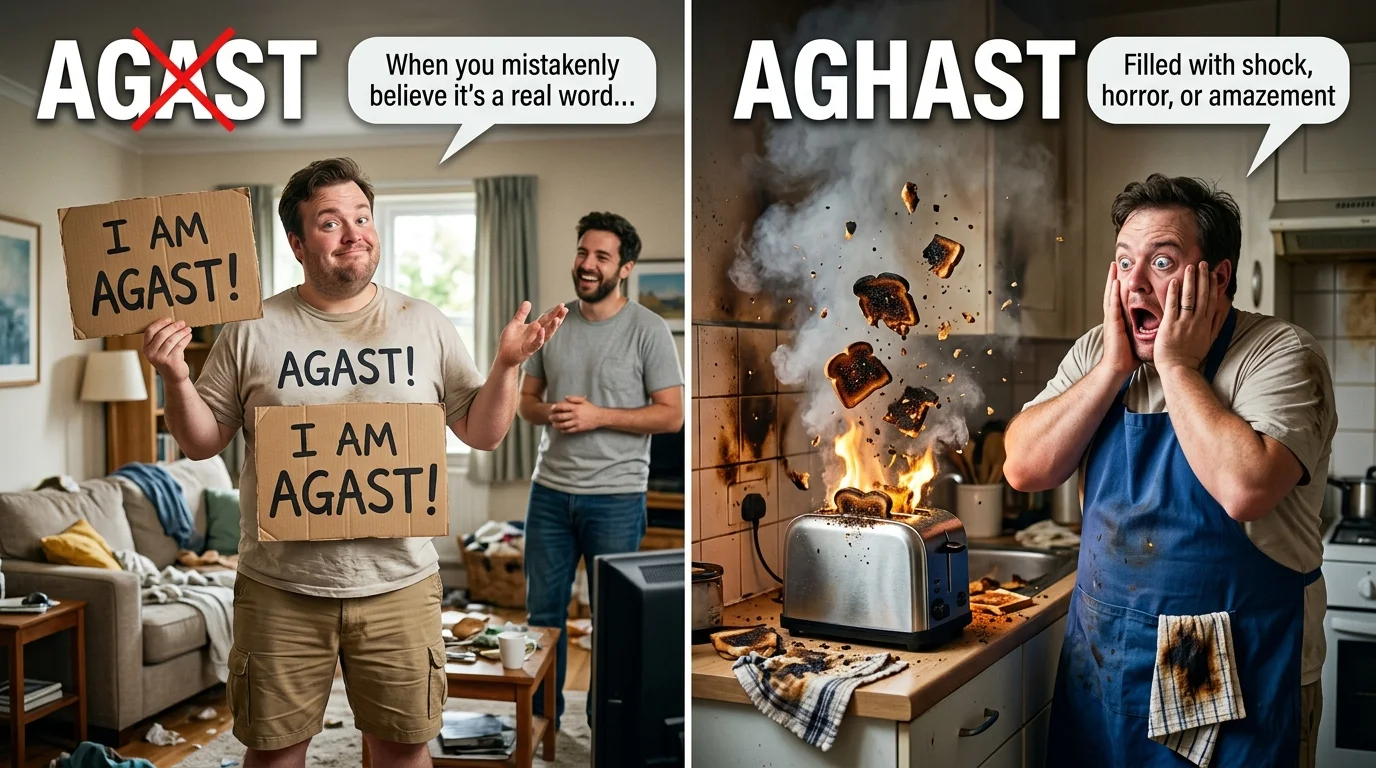
Mistake 1: Dropping the “H”
Many people accidentally write agast because the silent “h” in aghast is easy to overlook.
Why it happens:
The pronunciation does not strongly emphasize the “h.”
Correction:
Always spell the word as aghast.
Mistake 2: Assuming Agast Is a Modern Alternative
Some writers believe agast is simply a shorter version of aghast.
Why it happens:
Many English words have accepted spelling variations.
Correction:
Modern English overwhelmingly prefers aghast.
Mistake 3: Copying Historical Spellings
Older literature may contain alternative spellings.
Why it happens:
English spelling was less standardized in earlier centuries.
Correction:
Use aghast unless quoting historical sources.
Memory Tricks
Trick 1
Think of “Agh!”
When people are shocked, they might say:
“Agh!”
That sound appears at the beginning of aghast.
Trick 2
Aghast = Agh + Astonished
Both relate to shock and surprise.
Trick 3
If you’re expressing horror or disbelief, remember:
The correct modern spelling includes the letter H.
Expert Insight
The word aghast comes from older English forms related to fear, terror, and astonishment. Over time, English spelling became standardized, and aghast emerged as the dominant accepted form.
Although historical texts occasionally contain agast, modern dictionaries, style guides, publishers, and educational institutions overwhelmingly recommend aghast.
Because English spelling evolved over centuries, some obsolete forms survived in literature, but contemporary writing standards favor clarity and consistency. For that reason, professional writers, editors, and teachers use aghast almost exclusively.