
Quick Answer
Divorce is the legal termination of a marriage by a court.
Dissolution is the formal legal process of ending a marriage and settling related matters such as property, debts, and parental responsibilities.
In many places, dissolution and divorce mean nearly the same thing, but dissolution often emphasizes the legal process rather than the marital conflict.
What Does “Divorce” Mean?
Definition
Divorce is a legal action that officially ends a valid marriage between two spouses.
Usage Rules
The term “divorce” is commonly used in everyday language, legal discussions, and court proceedings.
People typically use divorce when referring to the ending of a marriage regardless of the reason.
Examples
- The couple filed for divorce after ten years of marriage.
- Their divorce was finalized by the court in June.
- She hired an attorney to help with the divorce proceedings.
Key Insight
When most people talk about ending a marriage, they use the word divorce because it is widely recognized and understood.
What Does “Dissolution” Mean?
Definition
Dissolution refers to the formal legal termination of a marriage, often including the resolution of financial, property, and parenting issues.
Usage Rules
The term is frequently used in legal documents and family law statutes.
Some states and countries officially use the phrase dissolution of marriage instead of divorce.
Examples
- The court granted a dissolution of marriage.
- They filed a petition for dissolution rather than using the term divorce.
- The dissolution process included dividing marital assets.
Key Insight
Dissolution often focuses on the legal procedure and settlement process rather than the emotional aspects of ending a marriage.
Divorce vs Dissolution: Key Differences
Quick Comparison
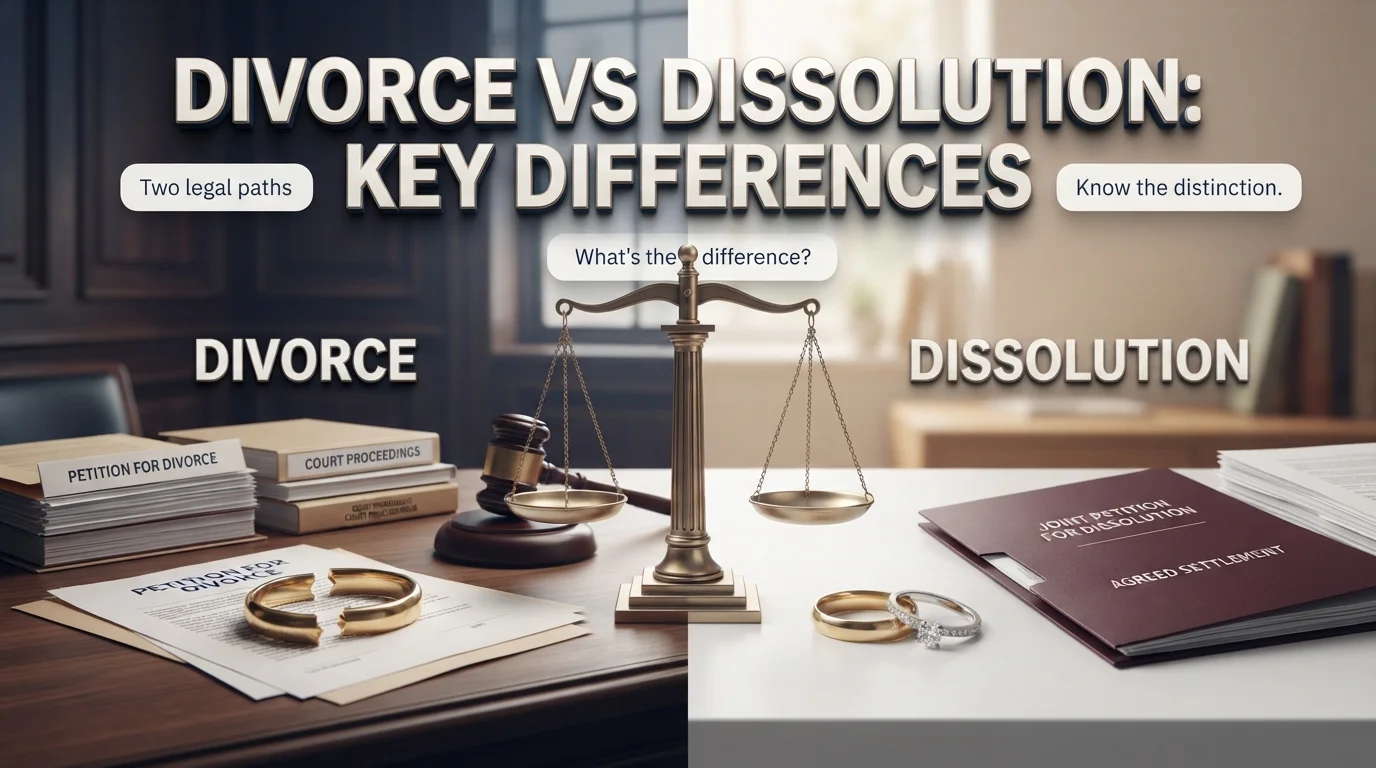
- Divorce is the commonly used term.
- Dissolution is often the legal or statutory term.
- Divorce focuses on ending the marriage.
- Dissolution focuses on the legal process of ending and settling the marriage.
- Both ultimately result in the termination of a marriage.
- Usage varies by jurisdiction.
Comparison Table
| Feature | Divorce | Dissolution |
|---|---|---|
| Meaning | Legal end of a marriage | Legal process ending a marriage |
| Common Usage | Everyday language | Legal documents and statutes |
| Focus | Marital termination | Formal legal procedure |
| Legal Context | Family law | Family law |
| Result | Marriage ends | Marriage ends |
| Popularity | More commonly used | More technical/legal term |
Real-World Usage Scenarios
Example 1
Person A: “Are you getting a divorce?”
Person B: “Yes, we’ve started the legal process.”
🎯 Lesson: In everyday conversation, divorce is the most natural term.
Example 2
Attorney: “We will file a petition for dissolution of marriage.”
Client: “So that’s basically a divorce?”
Attorney: “Yes, that’s the legal terminology used by the court.”
🎯 Lesson: Many courts use dissolution as the official legal term for divorce.
Example 3
Reporter: “The celebrity finalized her divorce.”
Lawyer: “The court records actually refer to it as a dissolution.”
🎯 Lesson: Media often prefers divorce, while legal documents may use dissolution.
Example 4
Spouse: “Have all financial matters been settled?”
Attorney: “Yes, the dissolution agreement covers assets, debts, and custody.”
🎯 Lesson: Dissolution often includes the complete legal settlement process.
Common Mistakes
Mistake #1
❌ Divorce and dissolution are always different legal actions.
✅ In many jurisdictions, they refer to essentially the same legal outcome.
Why it happens: Legal terminology varies by state and country.
Mistake #2
❌ Dissolution only applies to business entities.
✅ Dissolution can apply to businesses, partnerships, and marriages.
Why it happens: Many people are familiar with business dissolution but not marital dissolution.
Mistake #3
❌ Divorce is always the official legal term.
✅ Some courts officially use “dissolution of marriage.”
Why it happens: Popular language and legal language are not always identical.
Easy Memory Tricks
Trick #1
Divorce = The Ending
Think of divorce as the simple word most people use for ending a marriage.
Trick #2
Dissolution = The Process
“Dissolution” sounds more formal and legal.
Think:
- Dissolution paperwork
- Dissolution proceedings
- Dissolution agreement
Trick #3
Courtroom vs Conversation
- Everyday conversation → Divorce
- Legal documents → Dissolution
This shortcut works in many jurisdictions.
Expert Insight
From a legal perspective, the distinction between divorce and dissolution often depends on local family law terminology. Historically, “divorce” became the common public term for ending a marriage, while many legislatures adopted “dissolution of marriage” to emphasize a no-fault legal process rather than assigning blame to either spouse.
Today, many modern family law systems focus less on proving fault and more on fairly resolving issues such as property division, child custody, support obligations, and parental responsibilities. As a result, the term dissolution is frequently used in statutes because it describes the formal unwinding of the legal relationship.
However, for most practical purposes, both terms lead to the same outcome: the marriage legally ends.