
Quick Answer
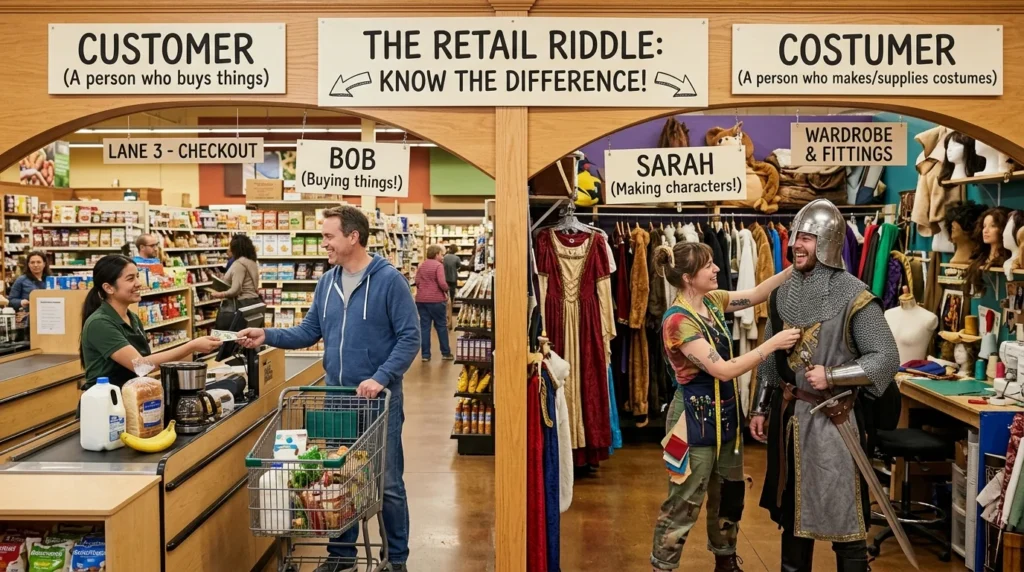
Customer is a person who buys goods or services from a business.
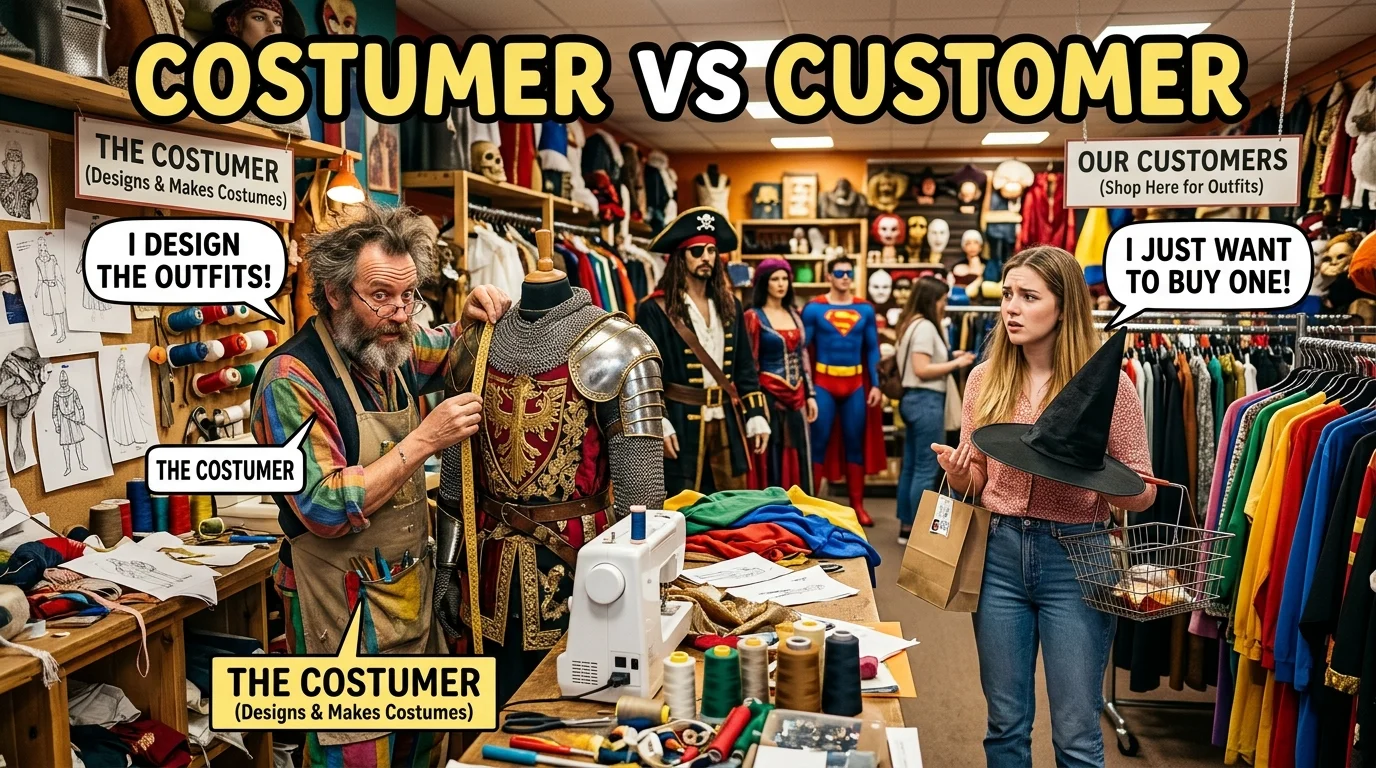
Costumer is a person who designs, makes, sells, or provides costumes.
If you’re talking about a buyer, client, shopper, or consumer, use customer.
Deep Explanation: Costumer
Definition
A costumer is a person or business involved with costumes.
The word commonly refers to someone who:
- Designs costumes
- Makes costumes
- Sells costumes
- Rents costumes
- Supplies costumes for theater, film, or events
Usage Rules
Use costumer when discussing:
- Fashion for performances
- Theater productions
- Movie wardrobes
- Halloween costumes
- Costume design
Common Contexts
- Professional costumer
- Theater costumer
- Costume designer
- Film costumer
- Costume rental business
Real Examples
- The costumer created outfits for the stage production.
- A professional costumer designed the actors’ clothing.
- The movie hired an experienced costumer for the project.
- She works as a theatrical costumer.
Key Insight
A costumer works with costumes, not customers.
Deep Explanation: Customer
Definition
A customer is a person who purchases goods or services from a business.
Usage Rules
Use customer whenever referring to:
- Buyers
- Clients
- Shoppers
- Consumers
- Purchasers
Common Contexts
- Customer service
- Customer support
- Customer satisfaction
- Customer experience
- Loyal customer
- New customer
Real Examples
- The customer purchased a new laptop.
- We value every customer.
- Customer satisfaction is our top priority.
- The store welcomed hundreds of customers.
Key Insight
A customer is someone who buys something.
Costumer vs Customer
Key Differences
- Customer buys products or services.
- Costumer works with costumes.
- Customer is common in business.
- Costumer is common in theater, film, and fashion.
- The two words are not interchangeable.
Comparison Table
| Feature | Costumer | Customer |
|---|---|---|
| Meaning | Person who works with costumes | Person who buys goods or services |
| Industry | Theater, film, fashion | Retail, business, services |
| Common Usage | Relatively specialized | Extremely common |
| Example Role | Costume designer | Shopper |
| Related Term | Costume | Purchase |
| Example Sentence | The costumer designed the outfits. | The customer bought the outfits. |
Real-World Usage Scenarios
Scenario 1
Store Manager: “The customer requested a refund.”
Employee: “I’ll assist them.”
🎯 Lesson: Buyers are customers.
Scenario 2
Film Director: “The costumer finished the wardrobe designs.”
Producer: “Excellent work.”
🎯 Lesson: Costume professionals are costumers.
Scenario 3
Business Owner: “Customer satisfaction drives growth.”
Consultant: “Absolutely.”
🎯 Lesson: Business discussions typically use customer.
Scenario 4
Theater Manager: “Our costumer prepared outfits for every actor.”
Actor: “The costumes look amazing.”
🎯 Lesson: Theater productions often involve a costumer.
Scenario 5
Marketing Team: “Understanding customer needs is essential.”
Manager: “That’s our focus.”
🎯 Lesson: Marketing departments work with customers, not costumers.
Common Mistakes
Mistake 1: Using Costumer Instead of Customer
Incorrect:
- Customer service helps every costumer.
- We appreciate our loyal costumers.
Correct:
- Customer service helps every customer.
- We appreciate our loyal customers.
Why It Happens
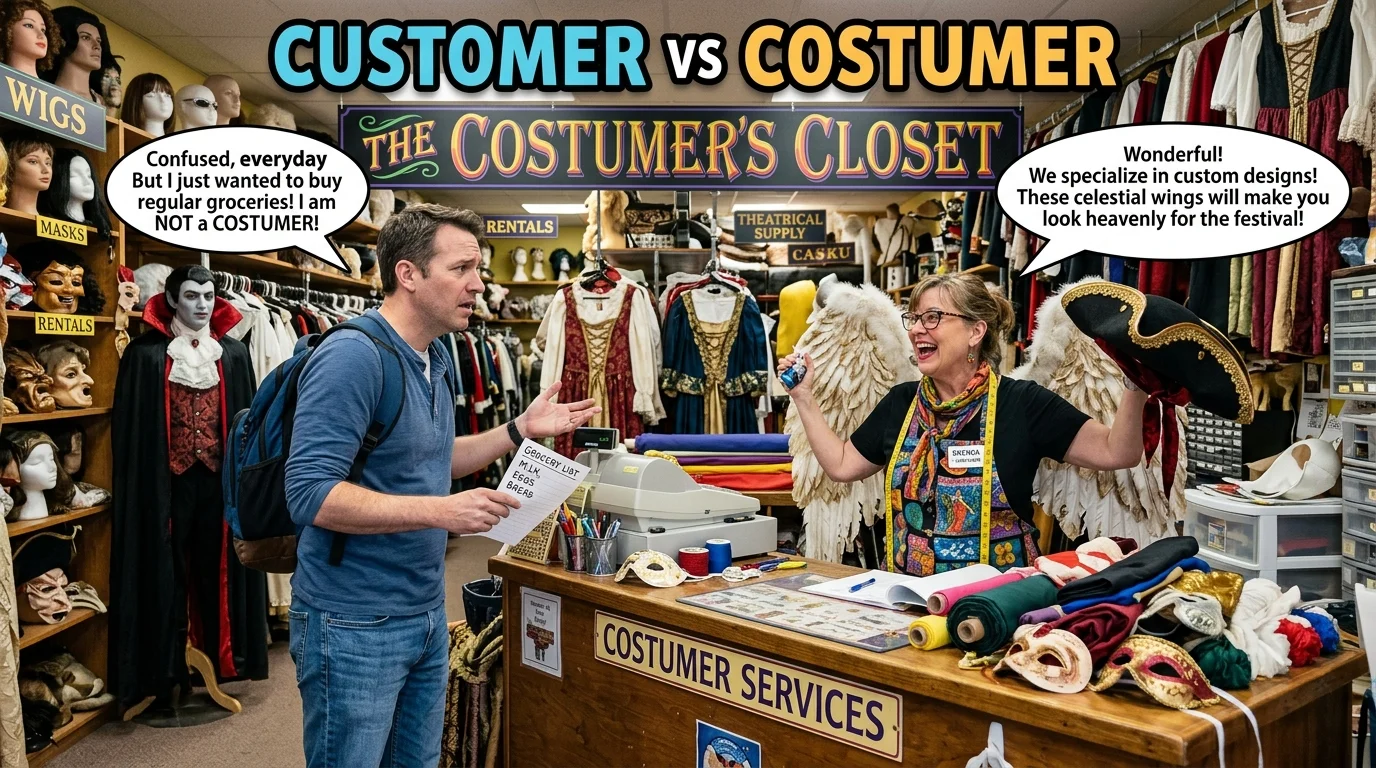
The words differ by only one letter, making them easy to confuse.
Mistake 2: Assuming Costumer Means Buyer
Many people see the word and assume it relates to consumers.
However, costumer comes from costume, not commerce.
Mistake 3: Business Writing Errors
Using costumer instead of customer in professional communication can make a company appear careless.
Always double-check the spelling.
Memory Tricks
Trick 1: Customer Contains “Custom”
Think about businesses serving customers according to their needs.
Customer = Buyer
Trick 2: Costumer Contains “Costume”
The connection is simple:
Costumer = Costume Professional
Trick 3: Use the Costume Test
Ask yourself:
“Does this person buy something or create costumes?”
- Buys something → Customer
- Creates costumes → Costumer
Expert Insight
Although customer and costumer differ by only one letter, they come from entirely different linguistic origins.
Customer evolved from terms related to trade, commerce, and customary dealings between buyers and sellers. Over time, it became the standard word for someone who purchases goods or services.
Costumer, on the other hand, developed from the word costume and refers to people who design, make, rent, or manage costumes. The term is especially common in theater, film, television, and fashion industries.
Because the two words sound similar, spell-checkers may not always catch the mistake if the wrong word is still a valid English word. That’s why understanding the meaning is more important than relying solely on spelling tools.