
Quick Answer
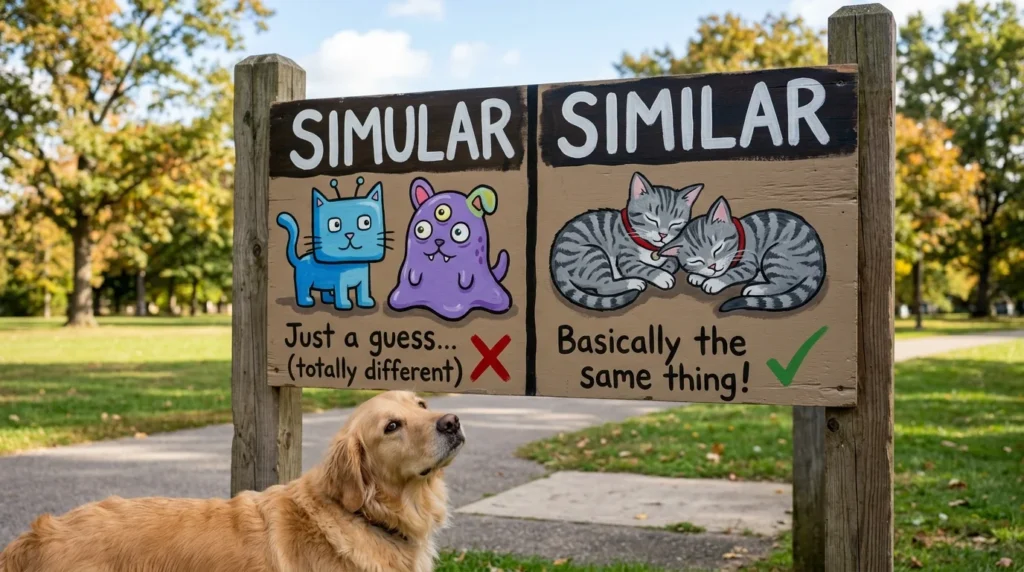
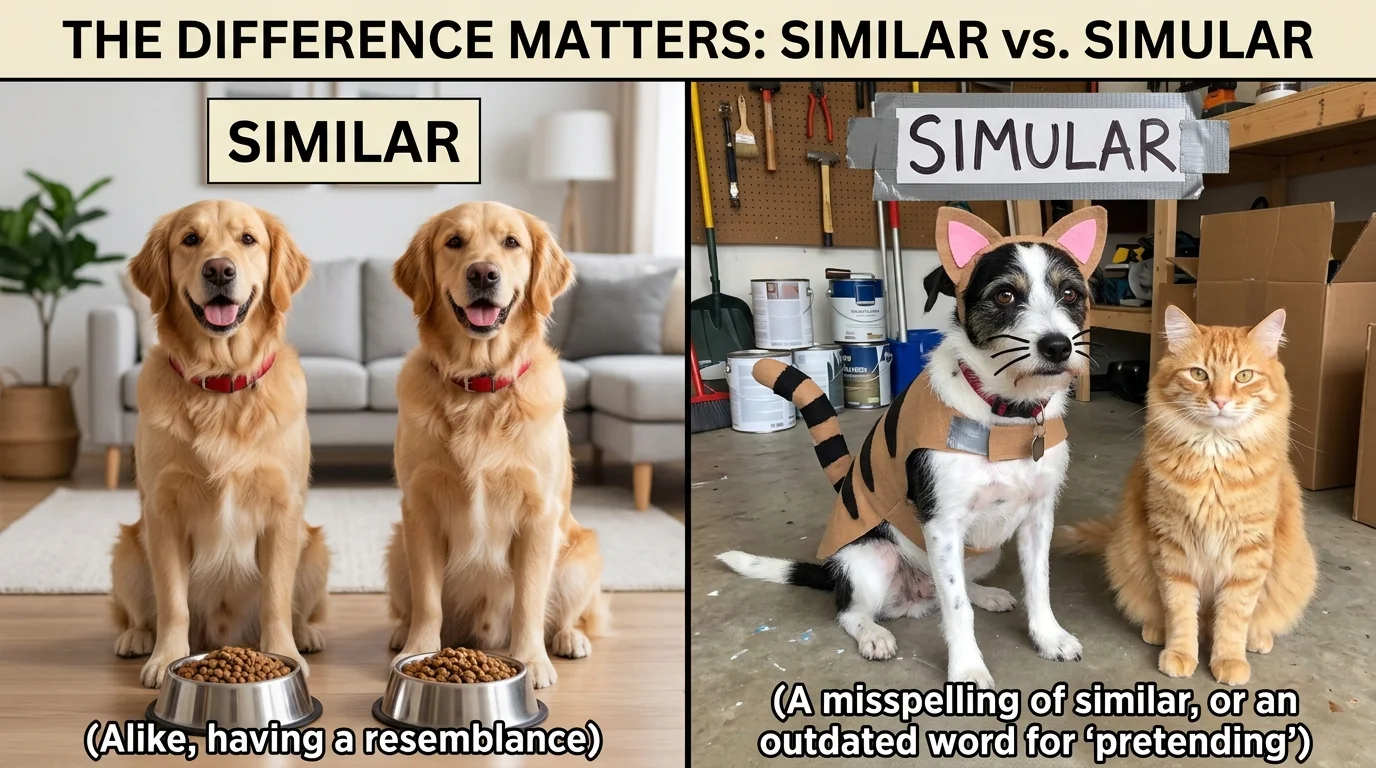
Similar is the correct English word and means “alike,” “resembling,” or “having characteristics in common.”
Simular is not recognized as a standard English word and is considered a spelling mistake in most contexts.
If you’re writing in English, always use similar.
What Does “Simular” Mean?
Definition
Simular is not a standard English word found in major dictionaries.
In most cases, it appears because someone accidentally misspells similar.
Usage Rules
There are no accepted grammar rules for simular because it is not considered a valid English word.
Examples
Incorrect examples:
- ❌ These two products are simular.
- ❌ Their experiences were very simular.
- ❌ We noticed simular patterns in the data.
Correct versions:
- ✅ These two products are similar.
- ✅ Their experiences were very similar.
- ✅ We noticed similar patterns in the data.
Key Insight
Whenever you see simular, it should usually be corrected to similar.
What Does “Similar” Mean?
Definition
Similar is an adjective that means:
- Alike in appearance
- Resembling something else
- Sharing common characteristics
- Nearly the same, though not identical
Usage Rules
Use similar when comparing:
- People
- Objects
- Ideas
- Experiences
- Behaviors
- Designs
- Results
Examples
- The two houses look very similar.
- Their opinions are similar on most topics.
- We faced similar challenges last year.
- The products have similar features.
- Her writing style is similar to mine.
Key Insight
Similar describes resemblance, not exact sameness. Two things can be similar without being identical.
Simular vs Similar: Key Differences
Bullet Point Differences
- Similar is a valid English word.
- Simular is a misspelling.
- Similar means alike or resembling.
- Simular has no recognized meaning in standard English.
- Similar appears in dictionaries.
- Simular should be avoided in professional writing.
Comparison Table
| Feature | Simular | Similar |
|---|---|---|
| Valid English Word | No | Yes |
| Dictionary Recognition | No | Yes |
| Meaning | None | Alike or resembling |
| Professional Writing | Incorrect | Correct |
| Academic Usage | Incorrect | Correct |
| Example | Simular products | Similar products |
Real-World Usage Scenarios
Scenario 1
❌ These two smartphones are simular.
✅ These two smartphones are similar.
🎯 Lesson: Similar is the correct word when comparing items.
Scenario 2
❌ We observed simular results during testing.
✅ We observed similar results during testing.
🎯 Lesson: Similar is commonly used in research and analysis.
Scenario 3
❌ Their backgrounds are remarkably simular.
✅ Their backgrounds are remarkably similar.
🎯 Lesson: Similar describes shared characteristics.
Scenario 4
❌ The companies offer simular services.
✅ The companies offer similar services.
🎯 Lesson: Business writing should always use similar.
Scenario 5
❌ The designs look simular from a distance.
✅ The designs look similar from a distance.
🎯 Lesson: Similar is the standard dictionary spelling.
Common Mistakes
Mistake 1: Replacing “I” with “U”
Many people accidentally write simular instead of similar.
Why It Happens
The pronunciation can make the middle vowel sound unclear.
Correction
Remember that the correct spelling contains i, not u.
Mistake 2: Typing Too Quickly
Fast typing often causes spelling errors.
Why It Happens
The words look visually similar.
Correction
Proofread your work carefully before publishing.
Mistake 3: Assuming Simular Is an Alternative Spelling
Some writers think simular may be a British or regional variation.
Why It Happens
English contains many accepted spelling variants.
Correction
There is no standard English variant called simular.
Memory Tricks
Trick 1
Think:
Similar = Same-ish
Both words contain the letter i after “sim.”
Trick 2
Remember:
Similar things are alike.
The word alike also contains the letter i, helping reinforce the correct spelling.
Trick 3
If you’re making a comparison, choose:
Similar
Never simular.
Expert Insight
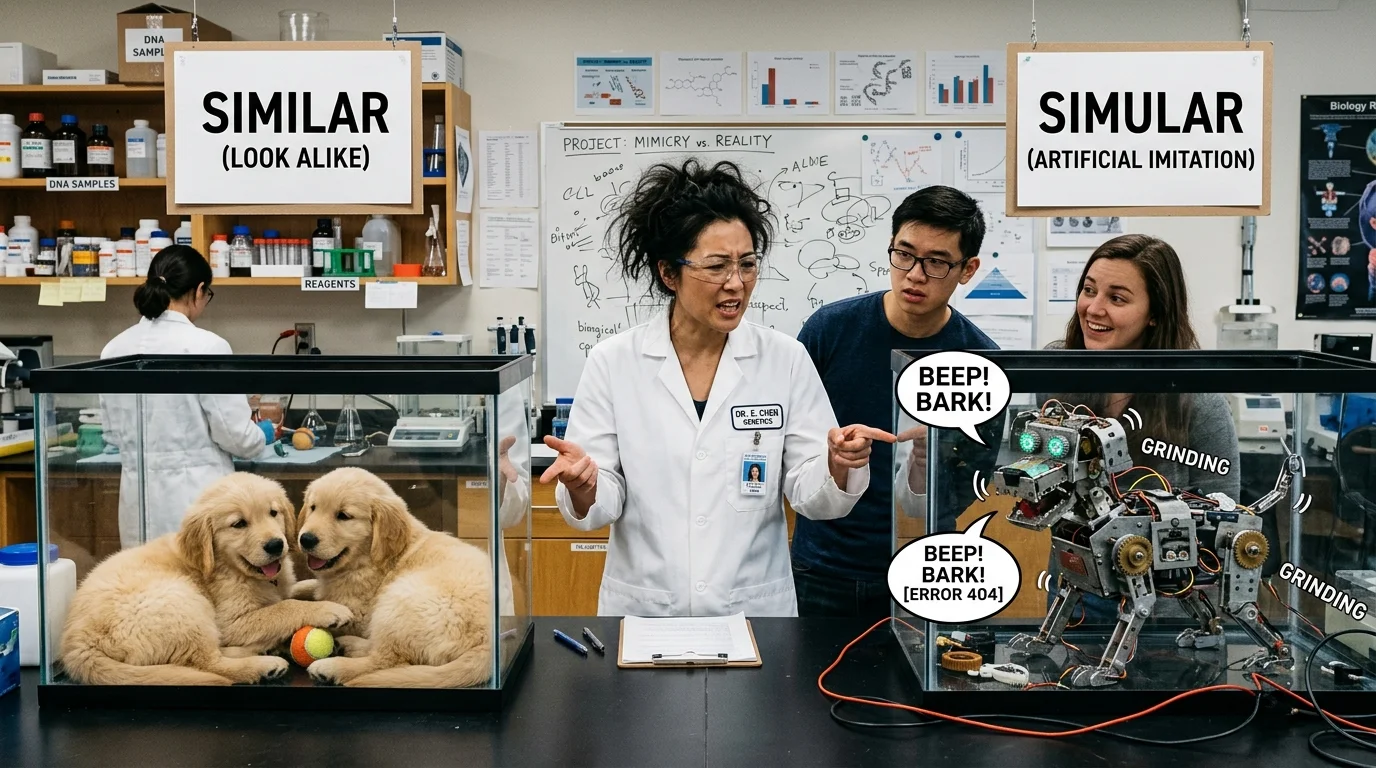
The word similar comes from the Latin word similis, meaning “like” or “resembling.” Over centuries, it became one of the most frequently used comparison words in the English language.
Today, similar appears in education, science, technology, business, law, and everyday conversation. Because it is so widely used, it is also commonly misspelled as simular.
Professional editors, dictionaries, grammar guides, and style manuals consistently recognize similar as the only standard spelling in modern English.