
Quick Answer
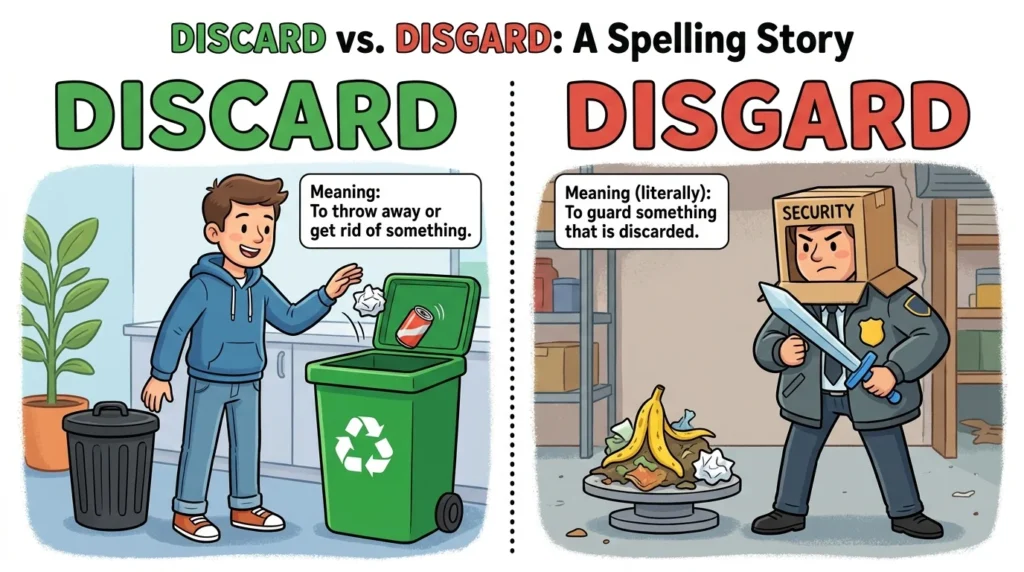
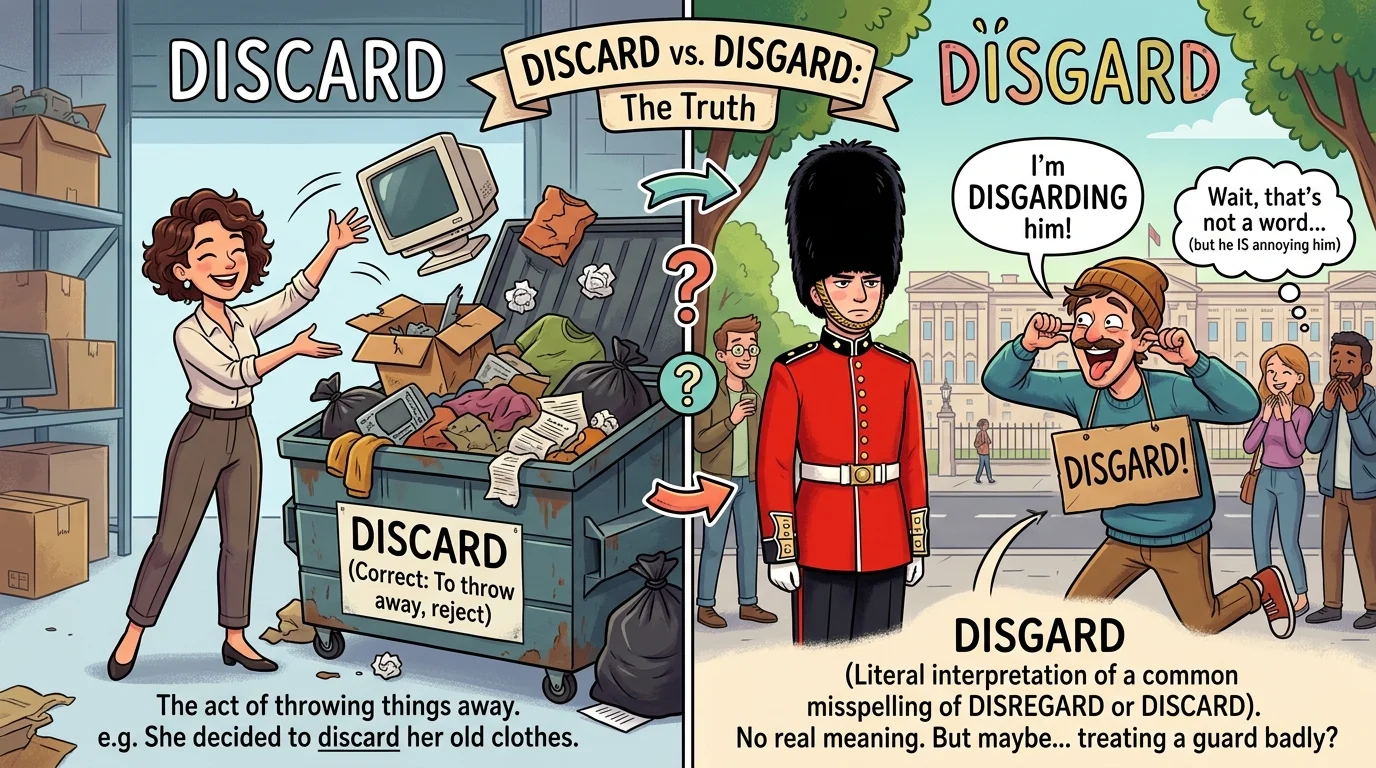
Discard is the correct English word and means to throw away, get rid of, reject, or no longer use something.
Disgard is not a standard English word and is considered a spelling mistake.
If you’re writing in modern English, always use discard.
What Does “Discard” Mean?
Definition
Discard is a verb that means:
- To throw away something unwanted
- To get rid of an item
- To reject or abandon something
- To stop using something because it is no longer needed
It can also be used as a noun in some contexts.
Usage Rules
Use discard when referring to:
- Throwing away objects
- Rejecting ideas
- Removing unnecessary items
- Eliminating outdated information
Examples
- Please discard the empty box.
- The company decided to discard the old policy.
- She discarded the damaged clothes.
- Unnecessary files should be discarded regularly.
- Scientists discarded the inaccurate data.
Key Insight
Discard is widely used in everyday conversation, business, technology, science, and academic writing.
What Does “Disgard” Mean?
Definition
Disgard is not recognized as a standard English word.
In nearly all situations, it is simply a misspelling of discard.
Usage Rules
There are no accepted grammar rules for disgard because it is not a valid English word.
Examples
Incorrect examples:
- ❌ Please disgard the old papers.
- ❌ The manager disgard the proposal.
- ❌ You should disgard damaged products.
Correct versions:
- ✅ Please discard the old papers.
- ✅ The manager discarded the proposal.
- ✅ You should discard damaged products.
Key Insight
Whenever you see disgard, it should almost always be corrected to discard.
Discard vs Disgard: Key Differences
Bullet Point Differences
- Discard is a valid English word.
- Disgard is a misspelling.
- Discard appears in dictionaries.
- Disgard has no recognized meaning.
- Discard is accepted in professional writing.
- Disgard should be avoided in all contexts.
Comparison Table
| Feature | Discard | Disgard |
|---|---|---|
| Valid English Word | Yes | No |
| Dictionary Recognition | Yes | No |
| Meaning | Throw away or reject | None |
| Professional Writing | Correct | Incorrect |
| Academic Usage | Correct | Incorrect |
| Example | Discard the file | Disgard the file |
Real-World Usage Scenarios
Scenario 1
❌ Please disgard these old documents.
✅ Please discard these old documents.
🎯 Lesson: Use discard when throwing away unnecessary items.
Scenario 2
❌ The scientist disgard the incorrect results.
✅ The scientist discarded the incorrect results.
🎯 Lesson: Discard is commonly used when rejecting inaccurate information.
Scenario 3
❌ You should disgard expired food.
✅ You should discard expired food.
🎯 Lesson: Discard means to get rid of something no longer useful.
Scenario 4
❌ The company decided to disgard the proposal.
✅ The company decided to discard the proposal.
🎯 Lesson: Businesses often use discard when rejecting plans or ideas.
Scenario 5
❌ Please disgard the packaging after opening.
✅ Please discard the packaging after opening.
🎯 Lesson: Discard is the standard spelling in instructions and manuals.
Common Mistakes
Mistake 1: Replacing “C” with “G”
Many people accidentally write disgard because the pronunciation can make the middle consonant sound unclear.
Why It Happens
English spelling does not always match pronunciation exactly.
Correction
Remember that the word contains card, not gard.
Mistake 2: Typing Too Quickly
Fast typing often leads to letter substitutions.
Why It Happens
The letters “c” and “g” can easily be mistyped.
Correction
Proofread your writing before publishing or submitting it.
Mistake 3: Learning the Word by Sound Alone
Some writers spell words based entirely on how they sound.
Why It Happens
English contains many words with irregular spelling patterns.
Correction
Memorize the correct visual spelling: discard.
Memory Tricks
Trick 1
Think:
Dis + Card = Discard
Imagine throwing away an old card.
Trick 2
Remember:
You discard a card.
The word itself contains card.
Trick 3
If you’re getting rid of something, the correct spelling uses C, not G.
Expert Insight
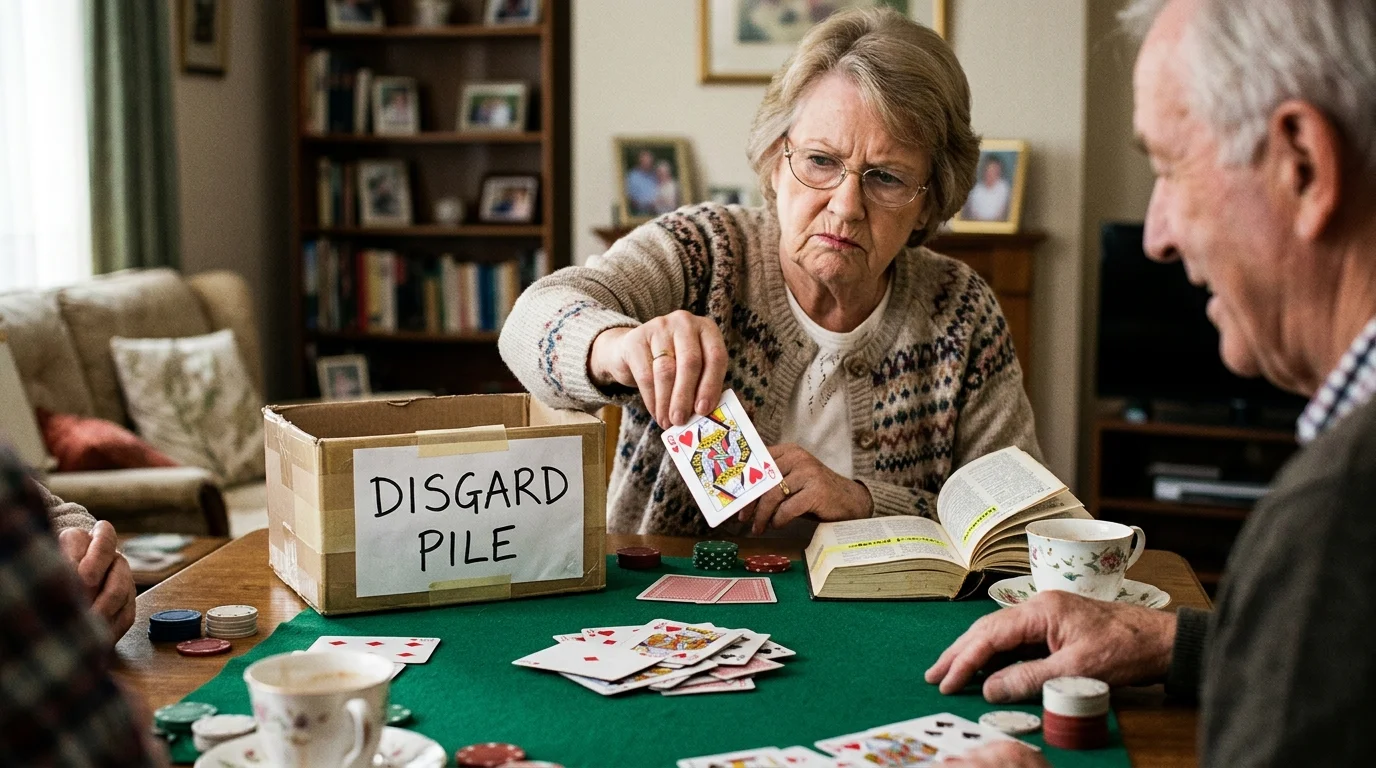
The word discard originates from Old French and ultimately developed through card-playing terminology. Historically, it referred to removing unwanted cards from a hand. Over time, its meaning expanded to include throwing away, rejecting, abandoning, or eliminating anything no longer needed.
Today, discard is widely used across many fields, including technology, science, business, healthcare, and everyday communication. Because the word appears frequently in professional documents and instructions, using the correct spelling is important for clarity and credibility.
Language experts, dictionaries, and style guides consistently recognize discard as the standard spelling, while disgard is treated as an error.