
Quick Answer: Cancell vs Cancel
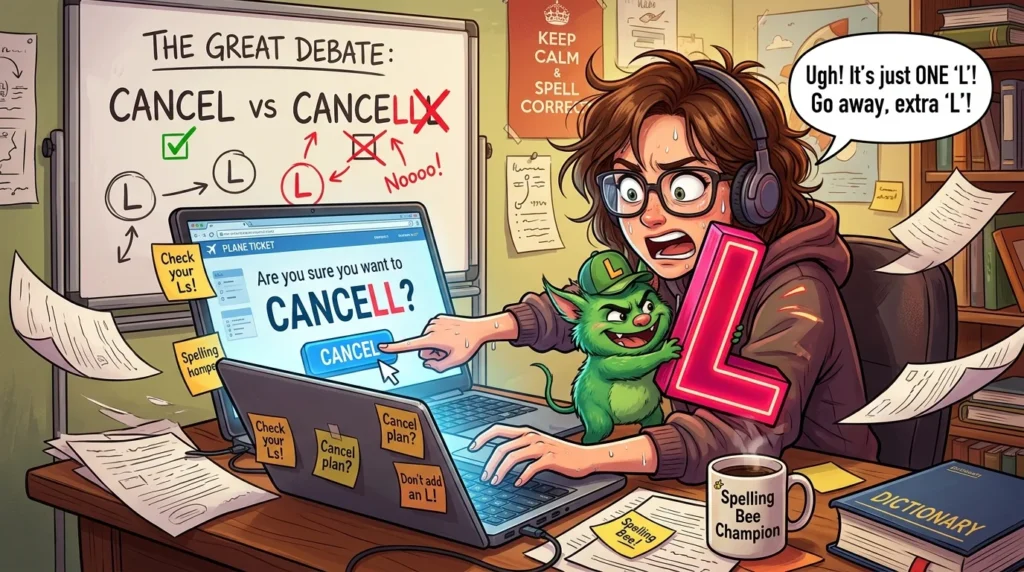
Cancel is the correct spelling in modern English.
Cancell is not recognized as a standard English word and is considered a spelling error in almost all contexts.
If you’re writing in English, always use cancel.
What Does “Cancell” Mean?
Definition
The word cancell is generally not a valid English word.
Most dictionaries do not recognize it as a standard spelling.
People usually write “cancell” because they confuse it with:
- Cancelled
- Cancelling
- Cancellation
Why It Appears
The extra “l” often comes from misunderstanding how related words are formed.
Examples of incorrect usage:
❌ I need to cancell my subscription.
❌ They decided to cancell the event.
❌ Please cancell the order.
All of these examples should use cancel instead.
Key Insight
If you see “cancell” in English writing, it is almost always a spelling mistake.
What Does “Cancel” Mean?
Definition
Cancel means to stop, revoke, call off, terminate, or decide that something will not happen.
It can be used as both a verb and a noun in certain contexts.
Common Uses of Cancel
1. Ending an Event
Examples:
- They decided to cancel the meeting.
- The concert was cancelled due to rain.
- We may have to cancel our plans.
2. Stopping a Service
Examples:
- I want to cancel my membership.
- She cancelled her subscription.
- Customers can cancel anytime.
3. Revoking an Arrangement
Examples:
- The airline cancelled the flight.
- The reservation was cancelled.
- He cancelled the appointment.
Key Insight
Whenever you want to express stopping, ending, or calling something off, cancel is the correct spelling.
Cancell vs Cancel: Key Differences
Difference Summary
- Cancel = Correct English spelling
- Cancell = Misspelling
- Cancel = Appears in dictionaries
- Cancell = Not standard English
- Cancel = Used in professional and academic writing
- Cancell = Should be avoided
Cancell vs Cancel Comparison Table
| Feature | Cancell | Cancel |
|---|---|---|
| Valid English Word | No | Yes |
| Dictionary Recognition | No | Yes |
| Standard Usage | Incorrect | Correct |
| Professional Writing | Avoid | Use |
| Meaning | None | Stop or call off something |
| Example | Incorrect spelling | Cancel the meeting |
Real-World Usage Scenarios
Scenario 1
❌ I need to cancell my order.
✅ I need to cancel my order.
🎯 Lesson: Use cancel when stopping a purchase.
Scenario 2
❌ They will cancell the flight tomorrow.
✅ They will cancel the flight tomorrow.
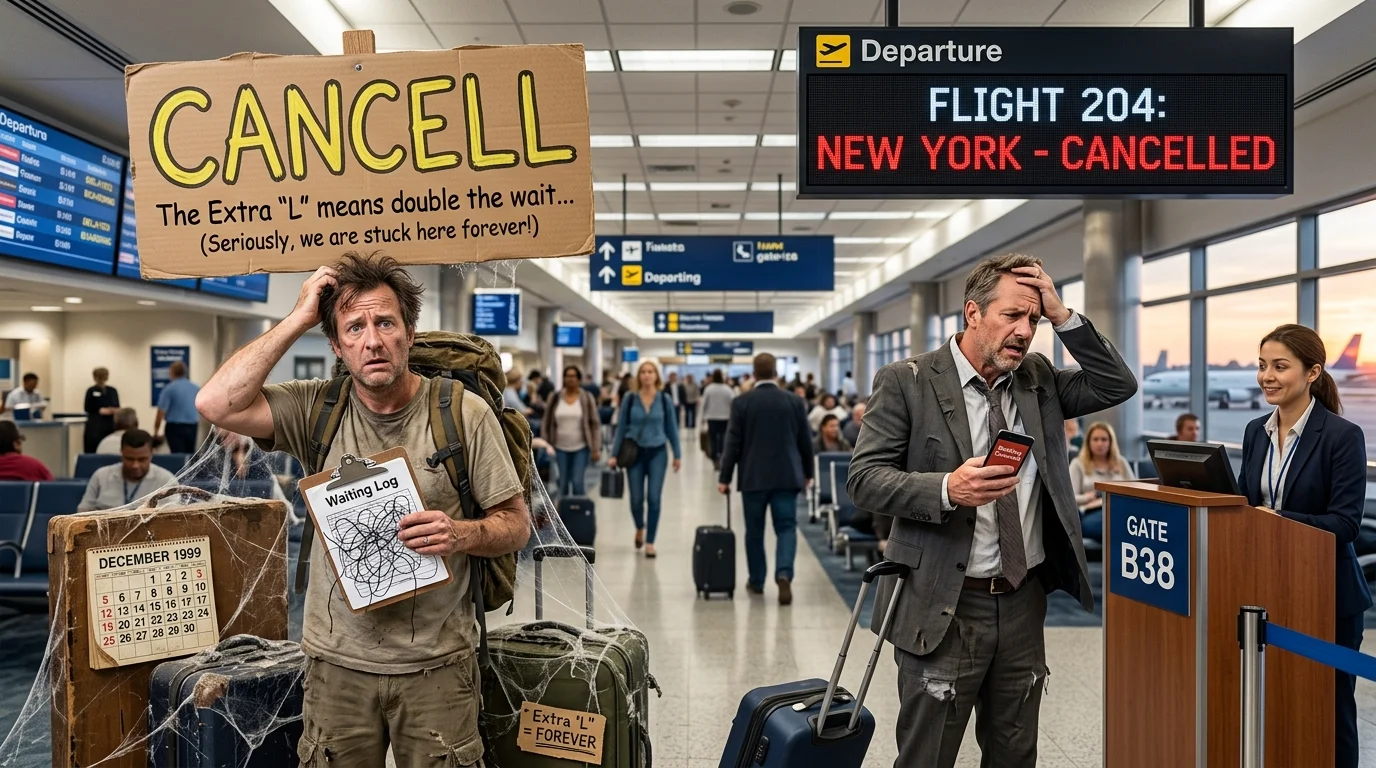
🎯 Lesson: Airlines cancel flights, not cancell them.
Scenario 3
❌ Please cancell my appointment.
✅ Please cancel my appointment.
🎯 Lesson: Appointments are cancelled using the verb cancel.
Scenario 4
❌ We might cancell the event.
✅ We might cancel the event.
🎯 Lesson: The correct base form is always cancel.
Scenario 5
❌ She wants to cancell her membership.
✅ She wants to cancel her membership.
🎯 Lesson: Subscriptions and memberships are cancelled using the word cancel.
Common Mistakes People Make
Mistake 1: Adding an Extra “L”
Many writers mistakenly think the base word contains two Ls.
Why It Happens
People see words such as:
- Cancelled
- Cancelling
- Cancellation
and assume the root word must be “cancell.”
Correction
The root word is always:
✅ Cancel
Not:
❌ Cancell
Mistake 2: Confusing British and American English
Some writers believe “cancell” is a British spelling.
Correction
This is incorrect.
Both British and American English use:
✅ Cancel
The difference appears only in some related forms:
British English:
- Cancelled
- Cancelling
American English:
- Canceled
- Canceling
The base verb remains cancel in both varieties.
Mistake 3: Copying Typographical Errors
Writers sometimes repeat the incorrect spelling after seeing it online.
Correction
Always verify spelling with reputable dictionaries and style guides.
Memory Tricks to Remember the Difference
Trick 1
Think:
Cancel = One action, one L
Only one L is needed.
Trick 2
The dictionary entry is:
Cancel
Not cancell.
Trick 3
If you’re using the base verb, remove the extra L.
Examples:
- Cancel the meeting.
- Cancel the order.
- Cancel the subscription.

Expert Insight: Why the Confusion Exists
The confusion comes from how English forms related words.
In British English, many words double the final consonant before adding endings:
- Cancel → Cancelled
- Cancel → Cancelling
This leads some people to incorrectly assume that the root word is “cancell.”
However, the original dictionary form remains cancel regardless of whether you’re writing in British or American English.
This pattern also appears in other verbs where endings affect spelling, but the root form stays unchanged.